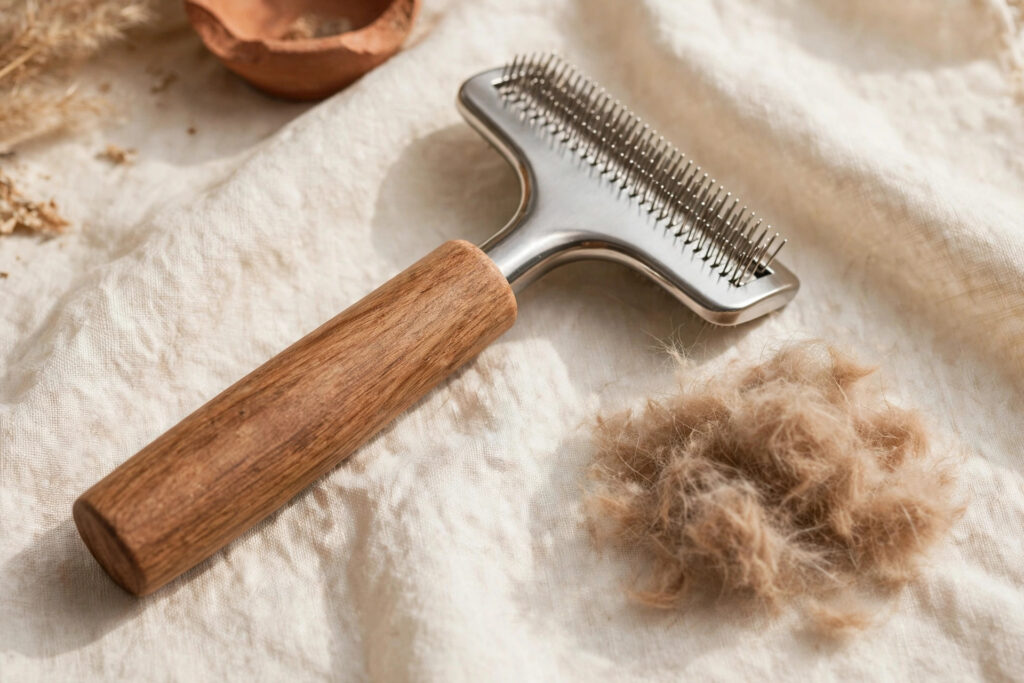
The short answer: A good deshedding tool has fine stainless steel teeth that reach through the topcoat to the loose undercoat without scratching skin. The best ones remove shocking amounts of fur in one session — but technique matters as much as the tool.
Shedding is normal. But the right tool, used weekly, can cut the tumbleweeds rolling across your floor dramatically. The wrong tool just scratches skin and annoys your dog.
Here’s how we picked: we compared tooth design, handle ergonomics, and skin-safety features across the most-recommended tools, cross-checking owner reviews specifically from double-coated breed owners (huskies, shepherds, retrievers) who shed the most. No sponsored picks.
Our picks
Pick 1
Best overall: Stainless deshedding tool with fur ejector
What to look for
- Fine, rounded teeth. They should glide through the coat and catch loose undercoat. Sharp or widely-spaced teeth either scratch or do nothing.
- Skin guard or limited blade exposure. Especially for short-coated dogs, the tool shouldn’t press teeth directly into skin.
- Comfortable handle. You’ll use this for 10–15 minutes at a time. A slippery or tiny handle ruins the experience.
- Easy fur release. The best tools have a button or mechanism that pushes collected fur off the teeth in one motion.
How we evaluate
We compared tooth fineness and edge safety across popular deshedding tools, checking that teeth are rounded enough to glide without scratching. We assessed handle comfort during extended 10–15 minute sessions, since a slippery grip ruins the experience. We also prioritized feedback from double-coated breed owners — husky, shepherd, and malamute people — who put these tools through the heaviest real-world use.
Pros
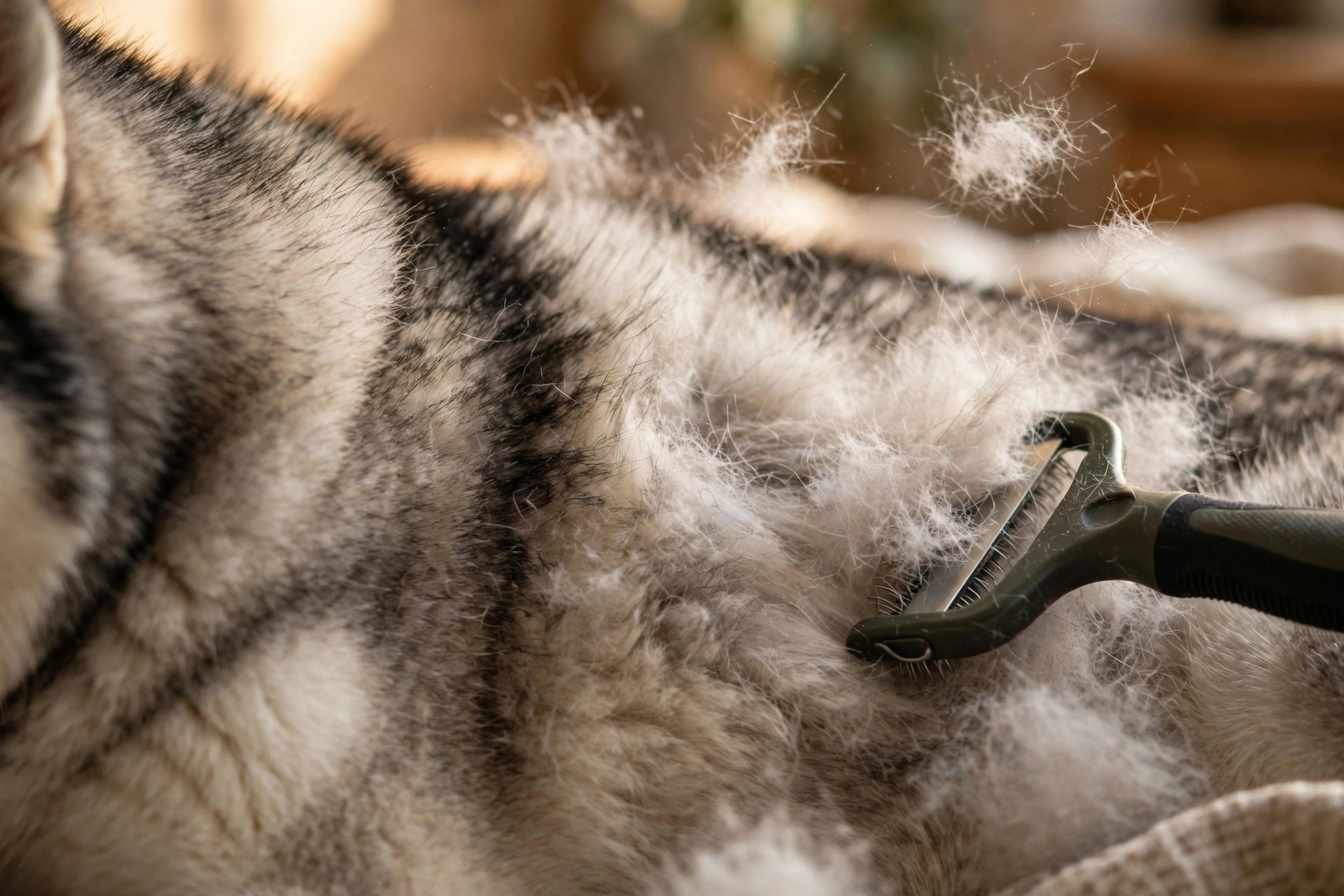
- Enormous fur removal. Fine teeth reach the loose undercoat that brushes miss — one session can fill a grocery bag on a shedding husky. Nothing else in the grooming kit pulls this volume of dead coat in a single pass.
- One-press cleanup. The ejector button clears the teeth instantly instead of you picking fur out with your fingers. That small mechanism is the difference between a tool you reach for weekly and one that gathers dust.
- Multiple sizes. Match tooth length to coat type — short teeth for beagles, long for shepherds. Using the wrong size is the most common reason people think deshedders “don’t work.”
Cons
- Easy to overdo. Pressing too hard or repeating strokes causes brush burn — red, irritated skin. Discipline required: light pressure, steady strokes, and stop the moment skin looks pink.
- Not for every coat. Useless on poodles and other non-shedding breeds; can damage silky single coats. This is a specialist tool for double coats, not a universal groomer.
The classic for a reason. If your dog has an undercoat, start here.
Pick 2
Best for sensitive skin: Rubber curry brush
What to look for
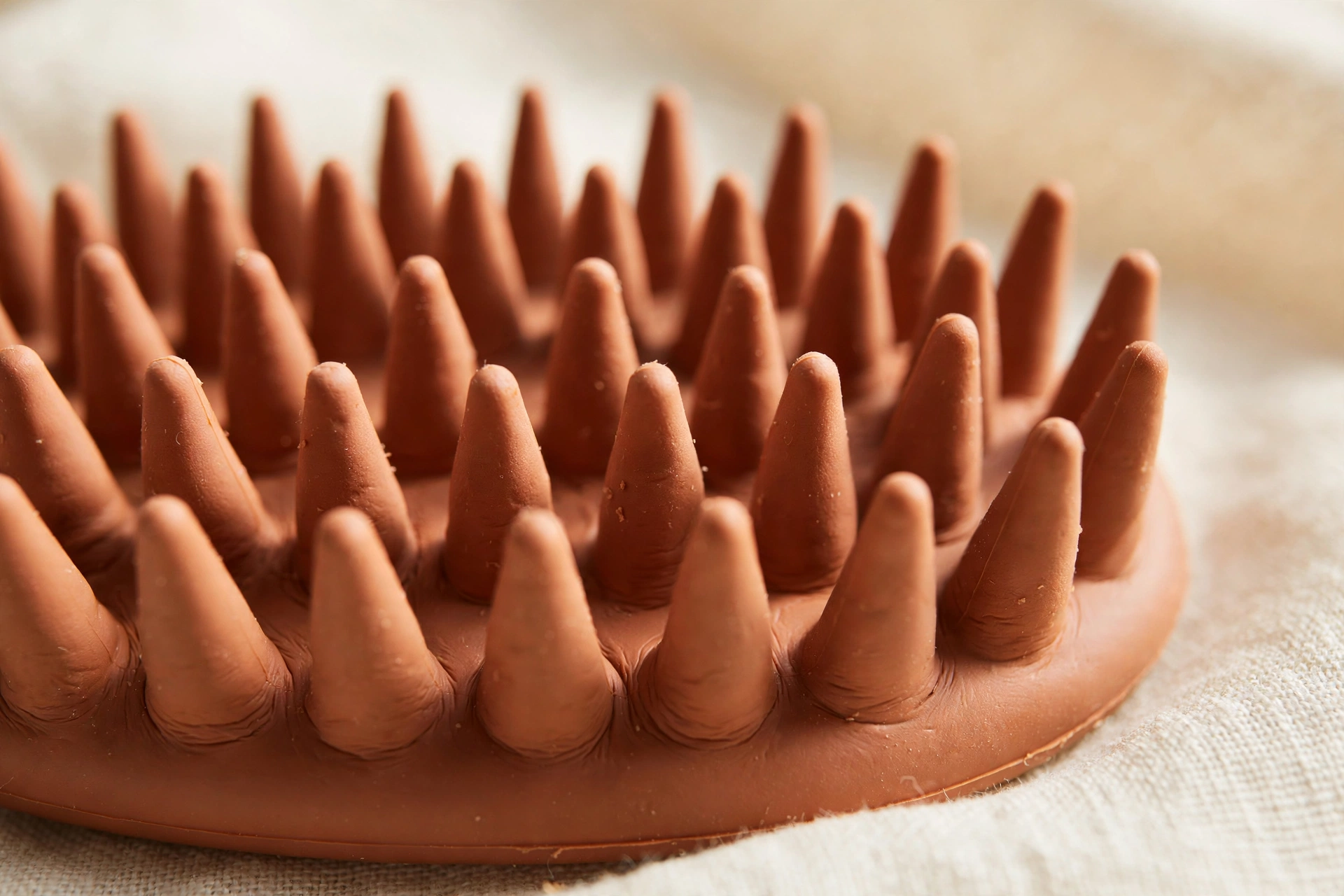
- Soft, flexible nubs. Rubber tips should bend under pressure, not poke. Stiff plastic nubs defeat the purpose.
- Ergonomic grip. Look for a strap or contoured handle that stays put on wet hands.
- Dual wet/dry use. The best curry brushes work in the bath (lathering shampoo) and dry (lifting loose hair).
- Right size for your pet. Palm-sized for cats and small dogs; larger blocks for big breeds.
How we evaluate
We assessed nub softness and flexibility — rubber tips should bend under pressure, not poke. We checked grip security on wet hands, since the best curry brushes double as bath tools. We also read owner reports from thin-skinned breeds and nervous pets, where gentleness isn’t a preference but a requirement.
Pros
- Impossible to hurt. Soft rubber physically cannot scratch or cut — the safest grooming tool that exists. For anxious rescues, elderly pets, or anyone with thin skin, that safety margin matters more than raw fur-removal power.
- Pets often enjoy it. The massaging action feels good, so even grooming-haters tolerate longer sessions. A tool the pet accepts beats a “better” one that triggers a wrestling match.
- Bath-time multitasker. Works shampoo into the coat while lifting loose fur — two jobs, one tool. Fewer gadgets in the bathroom cabinet is its own reward.
Cons
- Less dramatic results. Won’t pull the astonishing fur piles a steel tool does on heavy undercoats. Manage expectations: this maintains, it doesn’t excavate.
- Fur clings to rubber. You’ll rinse it off repeatedly — no ejector button here. Keep it near the sink or accept the mid-session rinse breaks.
Less dramatic fur piles, but the safest option for thin-skinned or nervous pets.
3. Best for heavy shedders: Undercoat rake
What to look for
- Long teeth for dense coats. Standard deshedders can’t reach through a husky’s undercoat in blowout season. Rakes can.
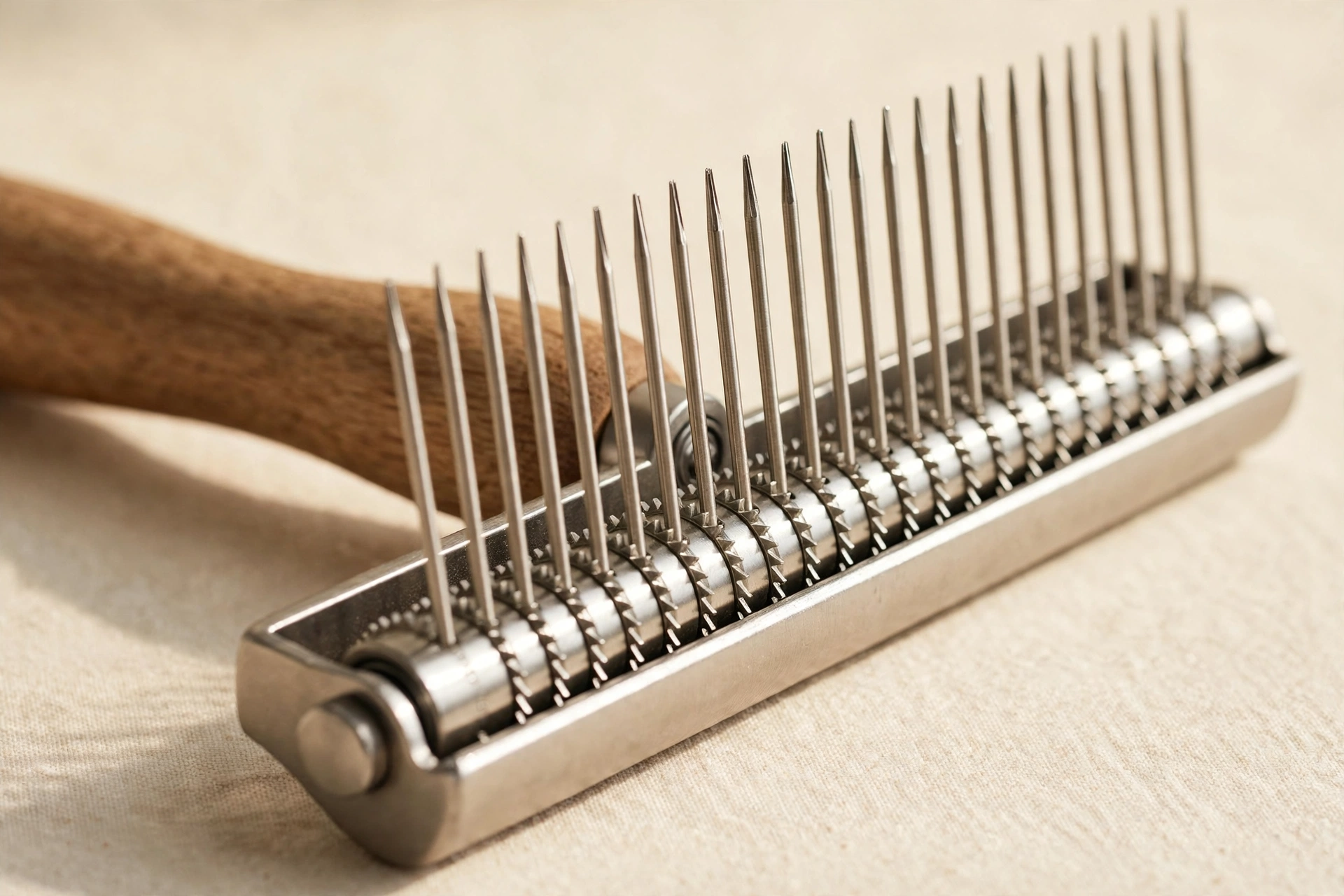
- Rotating pins. Pins that spin reduce pulling and tugging compared to fixed teeth.
- Rounded tips. Even long teeth should have smooth, rounded ends — never sharp points near skin.
- Sturdy handle. Dense coats create resistance; flimsy handles flex or snap.
How we evaluate: We focused on penetration depth in dense double coats — standard deshedders can’t reach through a husky’s undercoat in blowout season, and rakes can. We checked pin rotation smoothness, since spinning pins reduce pulling versus fixed teeth. We also read reviews from owners of huskies, malamutes, and shepherds during seasonal blowout, the exact scenario this tool exists for.
Pros
- Reaches what others can’t. The only tool type that effectively clears a blowing double coat down to the skin. When undercoat is matting at the base, nothing else gets through.
- Less pulling. Rotating pins glide where fixed teeth would snag and yank. Dogs notice the difference — less flinching means longer, more productive sessions.
- Built for the job. Heavy-duty construction handles the resistance of the thickest coats without flexing. Flimsy handles snap under exactly the pressure dense coats require.
Cons
- Overkill for most dogs. On short or single coats it does little and can irritate — match the tool to the coat. Buying a rake for a beagle is like buying a snowblower for Florida.
- Technique-sensitive. Long teeth demand a light touch; heavy hands will scratch. First-timers should practice pressure on their own forearm before touching the dog.
Verdict: Overkill for short coats, essential for the fluff factories.
Matching the tool to the coat is one instance of a bigger rule: measure first, then buy. Our buyer’s guide to choosing pet gear that actually works lays out the checks for every category.
FAQ
How often should I deshed my dog?
Can I overdo it and hurt my dog?
Do deshedding tools work on cats?
This article was created with AI assistance and reviewed by our editorial team before publishing.
 5 Best Dog Grooming Clippers for Thick Coats (2026)
 5 Best Cat Grooming Brushes for Longhair Cats (2026)
 How to Choose Pet Gear That Actually Works: The Honest Buyer’s Guide