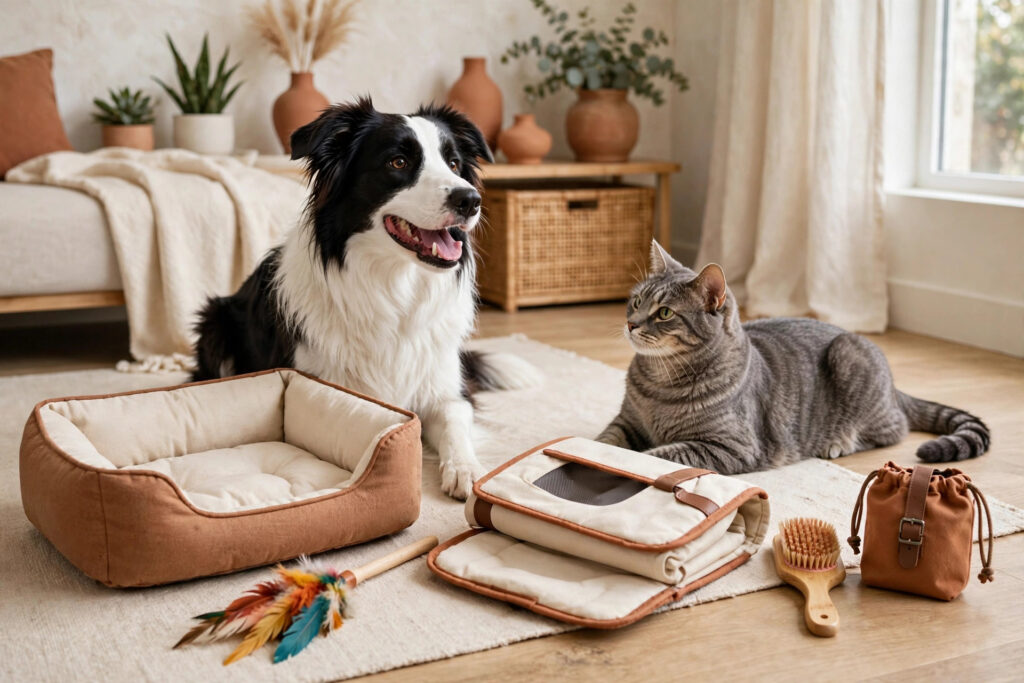
Choosing pet gear that actually works comes down to three habits: measure your pet before you shop, read the manufacturer’s spec sheet instead of the marketing blurb, and buy for the animal in front of you — their size, age, coat, and habits — not the one in the product photo. Do those three things and most “disappointing” purchases never happen.
That sounds simple. It is simple. Yet most gear fails for boring, predictable reasons: the bed is six inches too short, the carrier fits the cat but not the cat plus her dignity, the toy was sized for a dog three times bigger. None of those are quality problems. They’re measuring problems, and measuring is free.
This guide is the hub for how we think about every category we review on PetStreets — toys, beds, carriers, grooming tools, food, and health gear. Each section gives you the short version of what matters, then links out to the full review where we apply it pick by pick.
The one rule that decides almost every purchase
Match the gear to your pet’s measurements and habits, and it will work; buy for an imaginary average pet, and it won’t.
Pets don’t come in “average.” A 12-pound cat who sleeps stretched out like a rug needs a different bed from a 12-pound cat who sleeps in a tight donut curl. A dog who shreds plush toys in four minutes needs a different toy strategy from a dog who carries the same stuffed duck around for a year. The product photo won’t tell you which pet you have. Ten minutes of watching yours will.
So before any category below, get three numbers: your pet’s weight, their length nose-to-tail-base, and their height at the shoulder. Write them in your phone. Half the advice in this guide is just “compare the spec sheet to those three numbers,” and it works because sizing is where gear quietly succeeds or fails.
Habits are the other half, and they don’t need measuring — just honesty. Does your dog destroy soft things or carry them? Does your cat sleep in the sun patch, on your pillow, or inside the wardrobe? Does your rabbit thump at new objects or climb into every box you open? Gear that fights an animal’s habits loses, no matter how well it’s built. Gear that fits them disappears into daily life, which is exactly what “works” means.

Measure first: the spec table behind every review
Five minutes with a tape measure and your pet’s current weight prevents most bad buys; the table below is the checklist we start from in every category.
Read it as a shopping filter, not gospel. The “good” column reflects what manufacturers print on labels and spec sheets for well-designed products in each category — the ranges a serious maker will state openly. The red-flag column is the giveaway: when a listing hides the number, the number is usually embarrassing.
| Category | What to measure | What good looks like | Red flag |
|---|---|---|---|
| Toys | Your pet’s weight and jaw size | Toy sized for your pet’s weight class on the label; too big to swallow whole; no glued-on parts | “One size fits all” with stitched or glued eyes, buttons, or bells that can come off |
| Beds & Furniture | Stretched-out sleeping length; cat’s weight for perches | Bed at least 6 inches longer than your pet stretched out; foam 3–4 inches thick for large or senior dogs; perch weight rating printed and comfortably above your cat’s weight | Size listed only as “medium”; perch with no weight rating at all |
| Carriers & Travel | Pet length and height; the carrier’s interior, not exterior, dimensions | Interior at least 2–4 inches longer than your pet, tall enough to stand and turn; weight limit printed on the label | Only exterior dimensions listed; no weight limit anywhere |
| Grooming | Coat length and thickness; the tool’s speed or pin length | Nail grinders with variable speeds (roughly 6,000–8,000 RPM on typical models) and replacement heads sold separately; brush pins matched to coat length | Sealed unit with no replacement heads; one brush marketed for every coat type |
| Food & Treats | Your pet’s weight class and daily calorie budget | Named protein first on the ingredient list; an AAFCO adequacy statement on the label; chew size matched to your dog’s weight class on the pack | “Meat by-products” as the headline ingredient; no feeding or adequacy statement |
| Health & Wellness | What’s actually in the kit or fountain — item by item | First aid contents listed piece by piece with expiry dates; fountain capacity (commonly 1.5–2.5 L) with dishwasher-safe parts | Kit contents described only as “100 pieces!” with no list and no dates |
One more habit hides inside that table: if a number matters, a good maker prints it. Foam thickness, interior carrier dimensions, perch weight ratings, grinder speeds — serious brands publish these because their products survive the comparison. When a listing gives you adjectives instead of numbers, that’s your answer about the product.
Toys: buy for the play style, not the shelf appeal
Watch how your pet already plays — stalking, chasing, carrying, or shredding — and buy toys that feed that exact style.
Cats are the clearest example. A stalk-and-pounce cat wants something that moves like prey and fights back a little; a bunny-kicker wants something long enough to grab and rake. Our roundup of the best cat toys for indoor cats sorts seven picks by play style for exactly this reason, and adds the other half of toy buying: rotation. Three toys out and four put away keeps old toys feeling new for weeks.
Dogs split just as sharply. Gentle carriers can keep a soft plush toy for years. Power chewers go through the same toy before lunch, and for them the safety question flips — the toy has to fail slowly, in big pieces, or not at all. Our guide to toys for power chewers covers what “tough” construction actually looks like. Whatever the species, retire any toy the moment pieces start coming off. A toy on its way out is a vet bill on its way in.
Beds and furniture: size it to the stretched-out pet
Measure your pet fully stretched, add a few inches, and buy that bed — a curled-up measurement is how good beds end up donated.
For senior dogs and big breeds, the fill matters as much as the footprint. A thin polyester pad flattens in a month; thick foam keeps supporting joints night after night. Our review of orthopedic dog beds for senior dogs compares foam builds and cover designs, and our bed setup guide covers the part people skip: where the bed goes. A perfect bed in a drafty hallway loses to a decent bed in the warm corner your dog already chose.

Cats add a vertical dimension. A window perch lives or dies on two specs: the weight rating (printed, with margin above your cat’s weight) and the mount (suction cups on clean glass are fine for most cats; brackets are the safer call for heavy breeds). Our comparison of cat window perches and hammocks works through the three mounting styles and which cats each suits.
Carriers and travel: interior room beats exterior looks
Judge a carrier by its interior dimensions and weight limit, never its exterior — your pet rides on the inside.
The stand-and-turn test settles most arguments: inside the carrier, your pet should be able to stand up, turn around, and lie down stretched. That usually means an interior 2–4 inches longer than the pet, which is why the cat who “hates her carrier” often just hates that carrier. Our guide to cat carriers that don’t stress cats out starts from that fit check, and our dog backpack guide applies the same logic on the trail — fit, then comfort, then capacity, in that order.
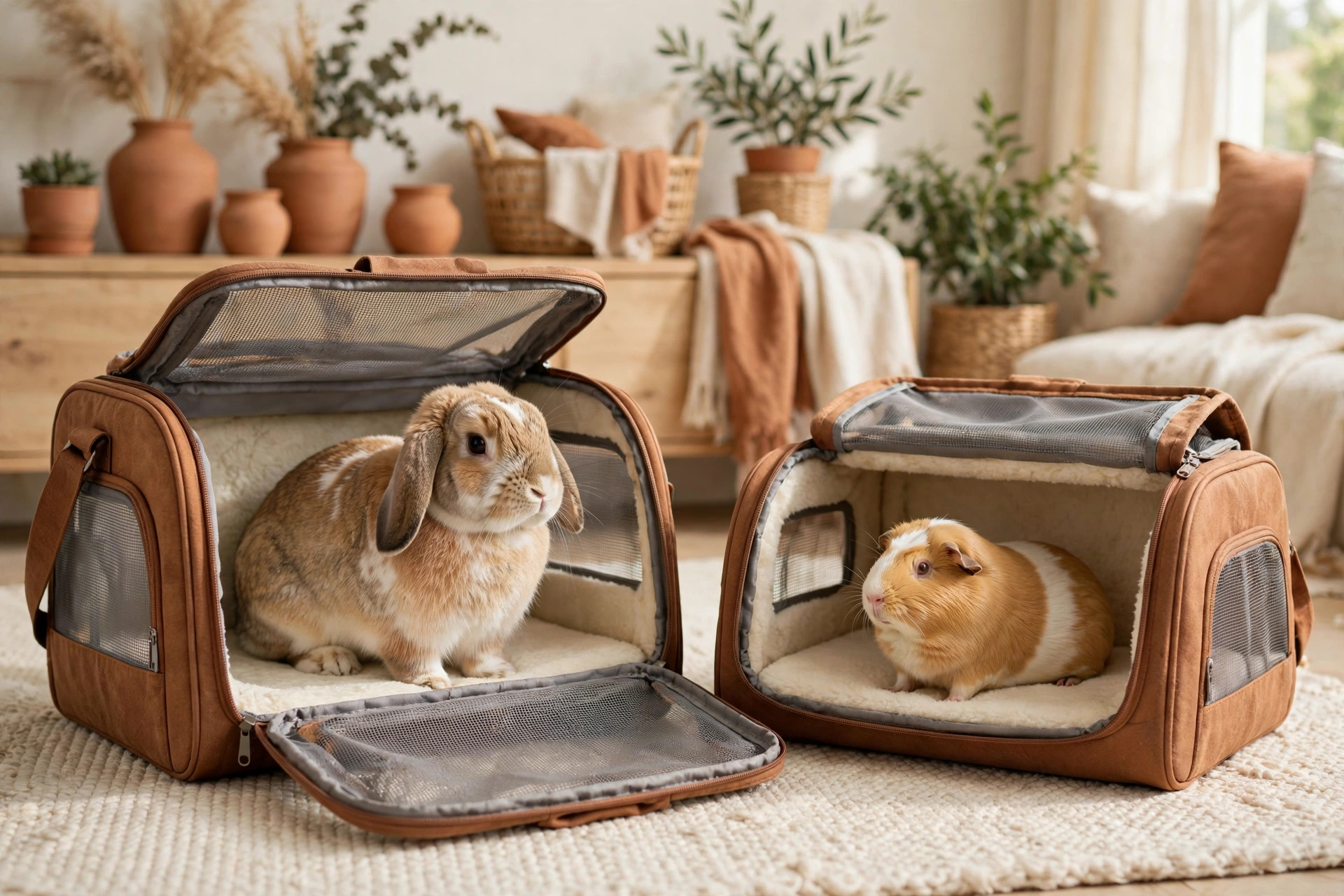
And carriers aren’t only a cat-and-dog topic. Rabbits and guinea pigs travel to the vet too, and their carriers need solid floors (never wire), chew-safe construction, and ventilation a small pet can’t stress-chew through. Our newest review covers travel carriers for rabbits and guinea pigs — same measuring rules, smaller passengers. Flying adds one more layer: airlines print their own under-seat limits, so check the carrier against the airline’s numbers before you book, not at the gate.
Grooming: quiet, washable, and matched to the coat
The best grooming tool is the one your pet tolerates weekly — quiet motors, replaceable parts, and a brush matched to the coat beat raw power every time.
Nails are where tolerance gets tested. A grinder your dog accepts at a low, quiet speed will do more for her feet than a “pro” tool she flees from. Our roundup of dog nail grinders for home grooming weighs noise, speed settings, and battery design pick by pick, because those three specs decide whether nail day is a routine or a wrestling match.
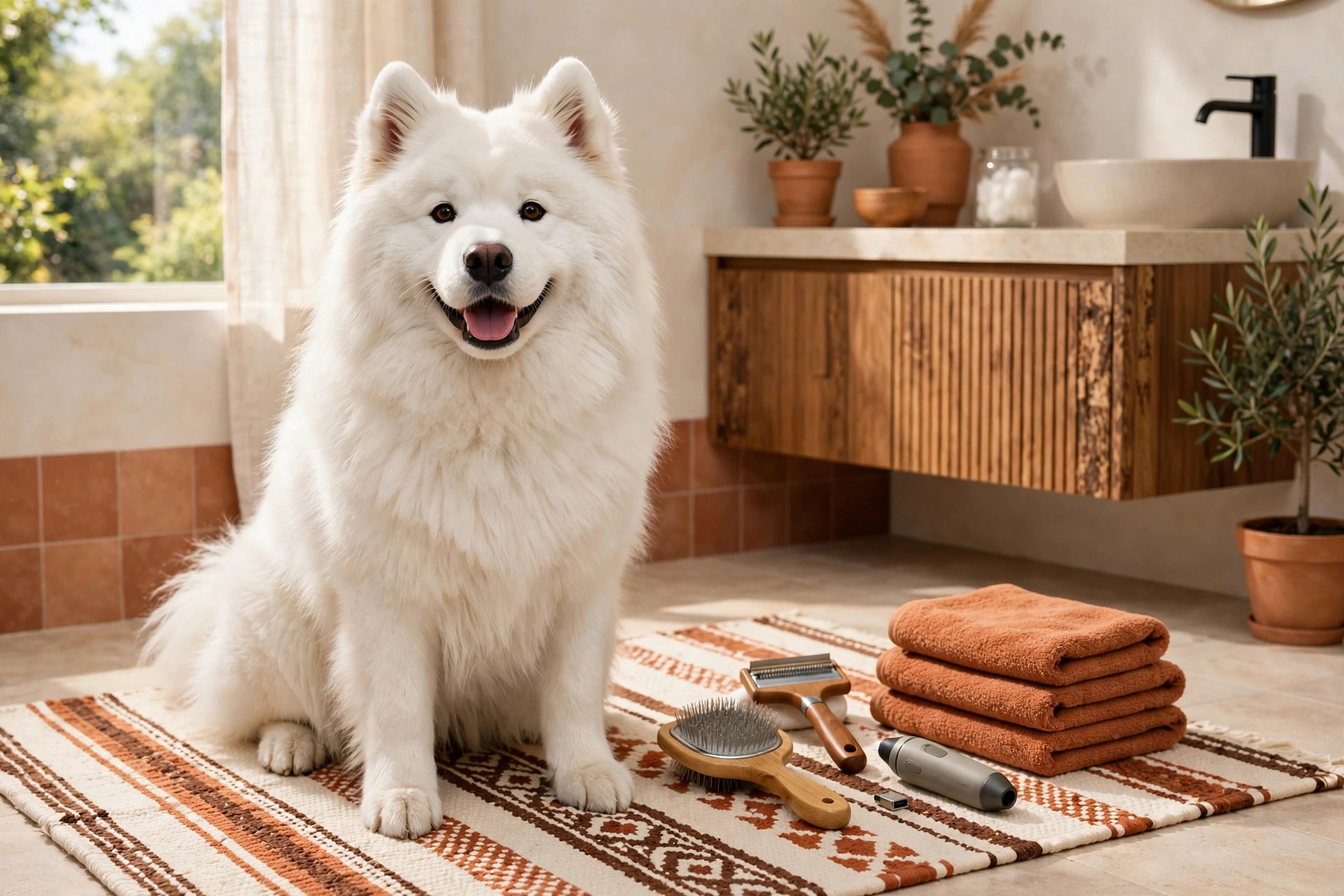
Shedding tools split by coat, not by brand. A deshedding blade that works wonders on a double-coated dog can strip a fine single coat, which is why our comparison of deshedding tools ranks them by coat type. Whichever tool you land on, check that heads, blades, or batteries can be replaced. A grooming tool you can’t refresh is a subscription to buying it again.
Food and treats: the label is the spec sheet
For anything edible, the ingredient list and the AAFCO adequacy statement are the specs — read them the way you’d read a carrier’s dimensions.
Start with the first ingredient. A named protein (“chicken,” “salmon”) tells you something; a vague one tells you something else. Then find the adequacy statement, which says whether the food is formulated for your pet’s life stage — growth, adult maintenance, or all life stages. It is one sentence on the bag, and it separates serious food from flavored filler.
Sensitive stomachs raise the stakes on label reading, because the fix is usually an ingredient change, not a brand change. Our review of dog foods for sensitive stomachs compares formulas by protein source and fiber approach so you can match the food to the dog. Treats get the same treatment in our dental chews comparison — and whatever you buy, keep the vet-cited rule of thumb in view: treats should stay under about 10% of your pet’s daily calories. The chew sized for your dog’s weight class, given at the frequency on the pack, is the whole system.
Health and wellness gear: boring, stocked, and in date
Buy health gear before you need it, check what’s inside piece by piece, and replace anything expired — this is the one category where “later” doesn’t work.
A first aid kit is the purest spec-sheet purchase on this page. Ignore the piece count on the box; read the contents list. Bandages, antiseptic, tweezers, a digital thermometer, styptic powder, and saline wash should all be named, with expiry dates you can check twice a year. Our roundup of pet first aid kits for dogs and cats opens every kit and lists what’s actually in it — which is the only honest way to compare them. A kit is also the one product in this guide where the red flag is simple: if you can’t find out what’s inside without buying it, don’t buy it.
Hydration gear is quieter but similar. A fountain’s job is to make water fresher and more appealing than a bowl, so capacity, filter cost, and whether the parts survive a dishwasher decide its real value. Our test of the question in whether cat water fountains actually work covers which cats drink more from them — and which cats ignore a fountain completely in favor of the tap.
How we judge gear (and how you can copy it)
Every judgment above comes from published specs, safety records, and patterns across owner reports — our reviews are research-based, and we show the criteria so you can check our work.

We say this plainly because plenty of review sites don’t: PetStreets doesn’t run a testing lab, and our picks don’t come from pretending otherwise. They come from manufacturer specifications, recall databases, and the complaints and praise that repeat across hundreds of verified buyers. The full method — the five parts every review follows, what the research rests on, and what we never do — lives on our How We Review Pet Gear page. Steal it freely. A reader who can judge gear without us is the best outcome this site can produce.
The five-minute pre-buy checklist
Run these five checks before any gear purchase and you’ll dodge nearly every common regret.
- Measure the pet. Weight, stretched length, shoulder height — compare all three to the product’s printed dimensions, not its size name.
- Find the hidden number. Foam thickness, interior size, weight rating, RPM, contents list. If the maker won’t print it, walk away.
- Match the habit. Chewer or carrier? Donut sleeper or sprawler? Buy for the behavior you actually see at home.
- Check the consumables. Replacement heads, filters, refills, covers. Price the second year, not just the first purchase.
- Search the recalls. Two minutes in the official recall databases before checkout. A recalled product is never a bargain.
FAQ
What is the most common mistake people make buying pet gear?
Sizing by the label name instead of the numbers. “Medium” means something different at every brand, and pets pay for the gap. Measure your pet, compare against the printed dimensions, and the mistake mostly disappears.
How do I know a pet product’s specs are trustworthy?
Cross-check them in two places: the manufacturer’s own site and the pattern across owner reports. Specs that match in both places are usually real. A number that appears only in a marketplace listing, with no source behind it, deserves suspicion.
Is expensive pet gear actually better?
Sometimes — when the money buys measurable things: thicker foam, quieter motors, replaceable parts, printed weight ratings. When the price buys only branding and prettier photos, it isn’t. The spec sheet tells you which kind of expensive you’re looking at.
How often should I replace worn pet gear?
Toys go the moment pieces start coming off. Bed covers and fountain filters follow the maker’s schedule. First aid supplies get checked against their expiry dates twice a year. Anything a pet puts in their mouth gets the strictest standard in the house.
What should I buy first for a brand-new pet?
The unglamorous basics, sized correctly: a bed that fits them stretched out, a carrier that fits them standing, food matched to their life stage, and one or two toys matched to the play style you observe in the first week. Everything else can wait until you know the animal. Buying the basics twice because the first set was the wrong size costs more than waiting ever does.
Do your reviews come from hands-on testing?
No — and we’d rather say so than fake it. Our reviews are research-based: manufacturer specifications, published safety standards and recall records, and patterns across large numbers of verified owner reports, weighed against the criteria on our How We Review Pet Gear page.
This article was created with AI assistance and reviewed by our editorial team before publishing.
 5 Best Cat Grass Growing Kits for Indoor Cats (2026)
 5 Best Dog Grooming Clippers for Thick Coats (2026)
 5 Best Training Treats for Small Dogs (2026)