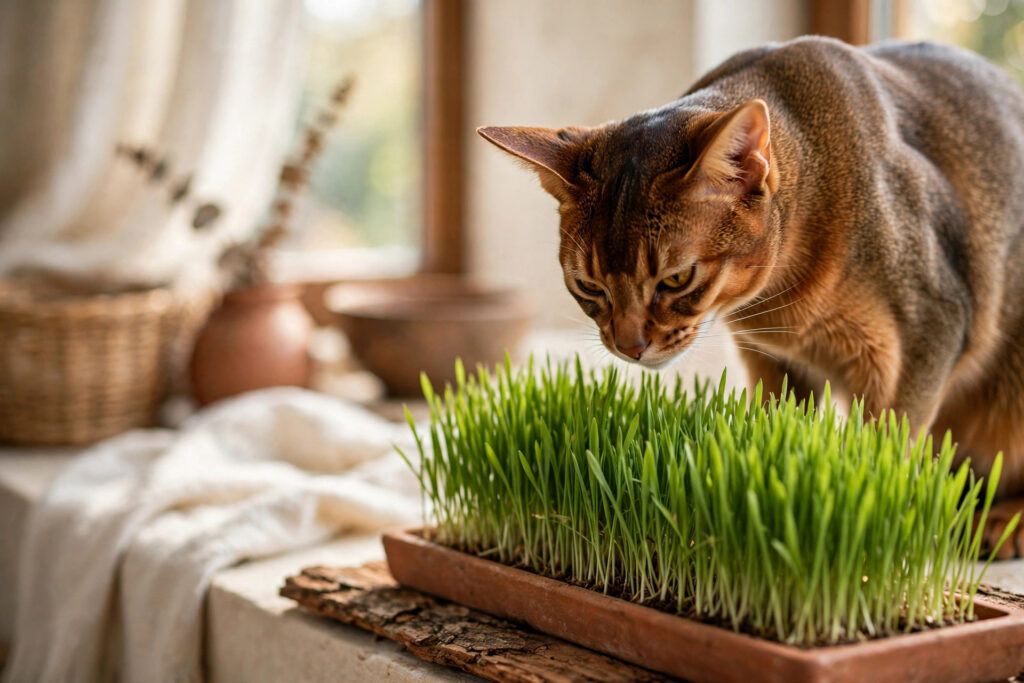
If your indoor cat keeps chewing houseplants, a cat grass growing kit gives them a safer thing to nibble. The best kits sprout fast, stay put on the floor, and make reseeding simple, so fresh grass is ready every week without mess, mould, or a tray dragged across the room.
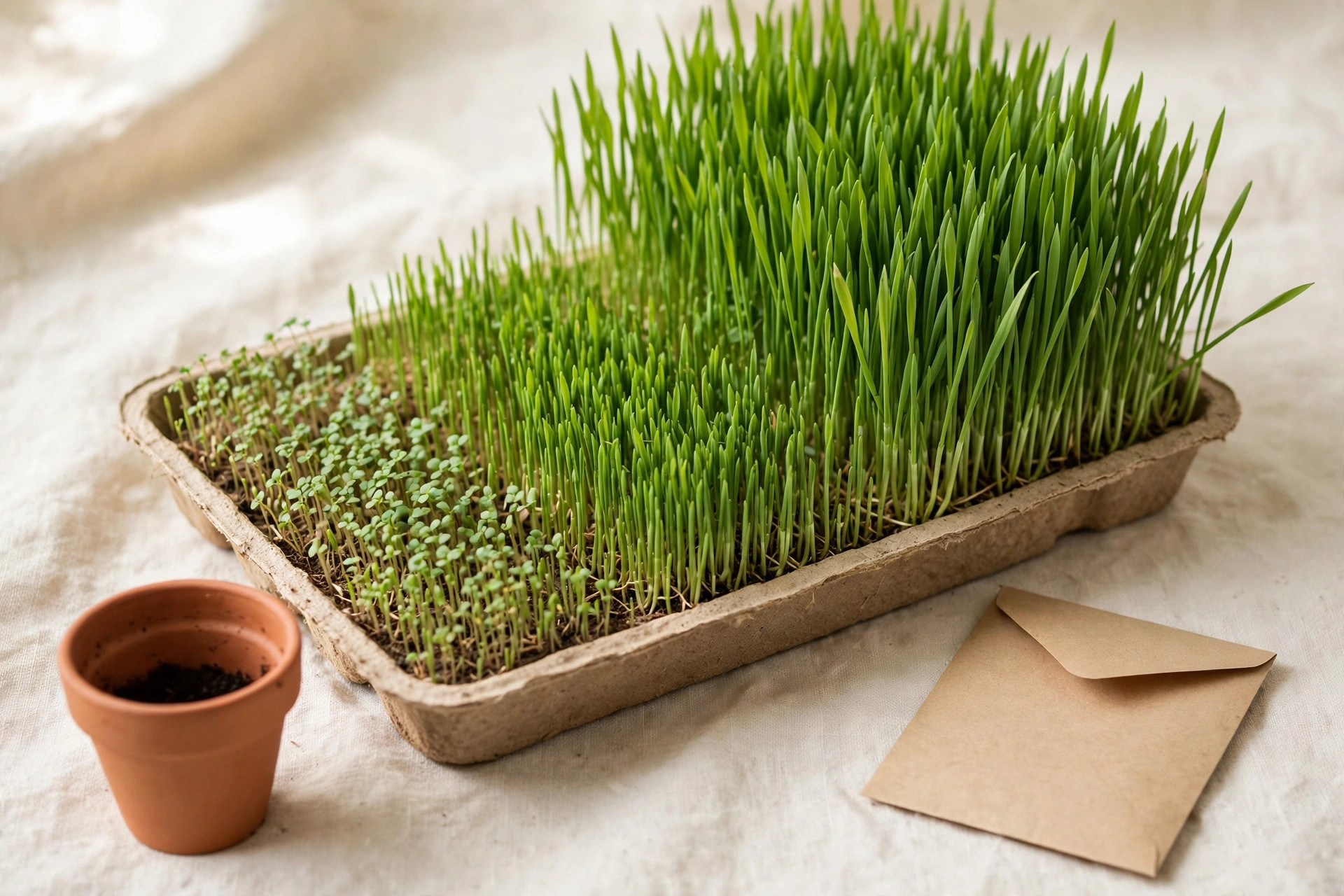
What makes a cat grass growing kit worth buying?
A cat grass kit is worth buying when it does four jobs well, week after week. You want fresh, untreated seed that sprouts reliably. You want a stable, tip-resistant container a cat cannot drag around. You want clean growing medium that stays mould-free. And you want easy reseeding so a fresh batch rotates in weekly.
- Fresh, untreated seed that sprouts reliably — old or coated seed germinates patchily, if it germinates at all.
- A stable, tip-resistant container — a wide, weighted base stops the whole tray tipping the first time your cat leans in.
- Clean growing medium that stays mould-free — soil or mat that drains and breathes, so roots stay sweet instead of sour.
- Easy reseeding — a tray you can empty, rinse, and resow in minutes keeps the rotation going when life gets busy.
Miss one of those and the kit usually ends up in a cupboard. Seed that fails once puts most people off. A flimsy tray spills soil across the floor. Mouldy medium smells. And grass gets ragged fast once a cat has been at it, so the kit you actually keep using beats the clever one you don’t.
What to look for before you buy
Start with the seed. Most kits use wheatgrass, oat grass, barley, rye, or a blend. There’s no single best type. Some cats prefer softer oat blades, others go straight for wheatgrass. A blend hedges your bets.
Check what’s in the box, not just the photo. Seed, medium, and tray, or just the tray? How many sowings before you need refills? Refill cost decides whether a cheap kit stays cheap.
Size matters more than style. One cat needs only a modest tray. Two or three cats sharing a narrow pot will shred it in days. Go wider than you think you need.
Then think about placement. Grass wants light but not a scorching windowsill, and it needs to sit where your cat can reach it. If the tray only fits somewhere awkward, your cat will ignore it and go back to the spider plant.
How we evaluate these kits
Each pick below is judged against the same short list. Does the seed look fresh and untreated, with a clear sowing date or best-before guidance? Does the container sit flat and resist tipping? Does the medium drain instead of staying soggy? Can you reseed it in a few minutes without special tools or pricey proprietary refills?
We also weigh the boring stuff. Clear instructions. A lid or cover for the germination days, when trays are most vulnerable to curious paws. And honest sizing, so the tray in your kitchen matches the one on the box.
One boundary worth stating plainly. Cat grass is enrichment and gentle digestive support for most cats, not a treatment. If your cat vomits often, keeps retching, or goes off their food, that’s a vet conversation, not a grass problem.
The 5 picks, by type
1. The self-watering tray kit — best for forgetful waterers
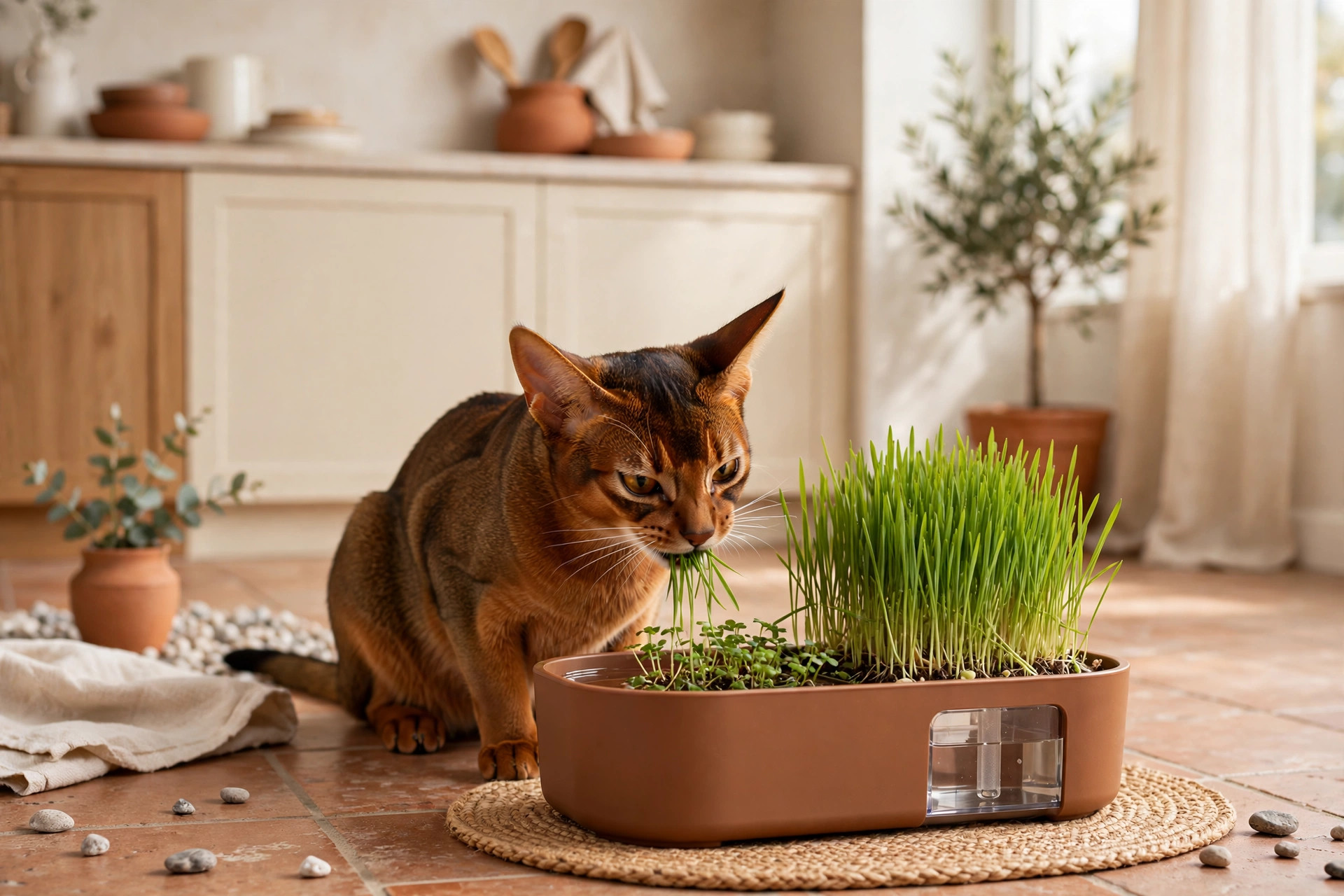
A reservoir under the tray wicks water up to the roots, so the grass doesn’t dry out between waterings. If your plants die of neglect, this is your kit. The tray is usually wide and low, which helps stability too.
Pros
- Forgiving if you forget to water for a few days
- Wide base resists tipping and dragging
- Even moisture helps seed sprout more evenly
Cons
- Reservoirs need regular cleaning or they get slimy
- Bigger footprint than a simple pot
- Skip it if you can’t commit to washing the base weekly

2. The organic seed-and-soil starter kit — best first kit
The classic setup. A simple tray, soil-based medium, and a packet of untreated, often certified-organic seed. Nothing fancy. You sow, you water, you learn what your cat likes.
Pros
- Everything included for the first sowing
- Soil is forgiving for first-time growers
- Easy to find cheap seed refills later
Cons
- Soil can scatter when your cat digs
- Overwatering leads to mould faster than in soil-free kits
- Skip it if loose soil on your floors will drive you mad
3. The compact windowsill planter kit — best for small flats
A narrow planter that sits on a sill or shelf edge. It won’t feed three cats, and it doesn’t pretend to. It fits the homes where floor space isn’t spare.
A small tray your cat actually uses beats a big one you have nowhere to put.
Pros
- Slim shape fits sills, shelves, and desk corners
- Looks tidy enough to leave out
- Good size for one cat
Cons
- Small trays tip more easily — check for a weighted base
- Runs out fast if a second cat joins in
- Skip it for multi-cat homes
4. The no-soil, mat-based kit — best for a mess-free setup
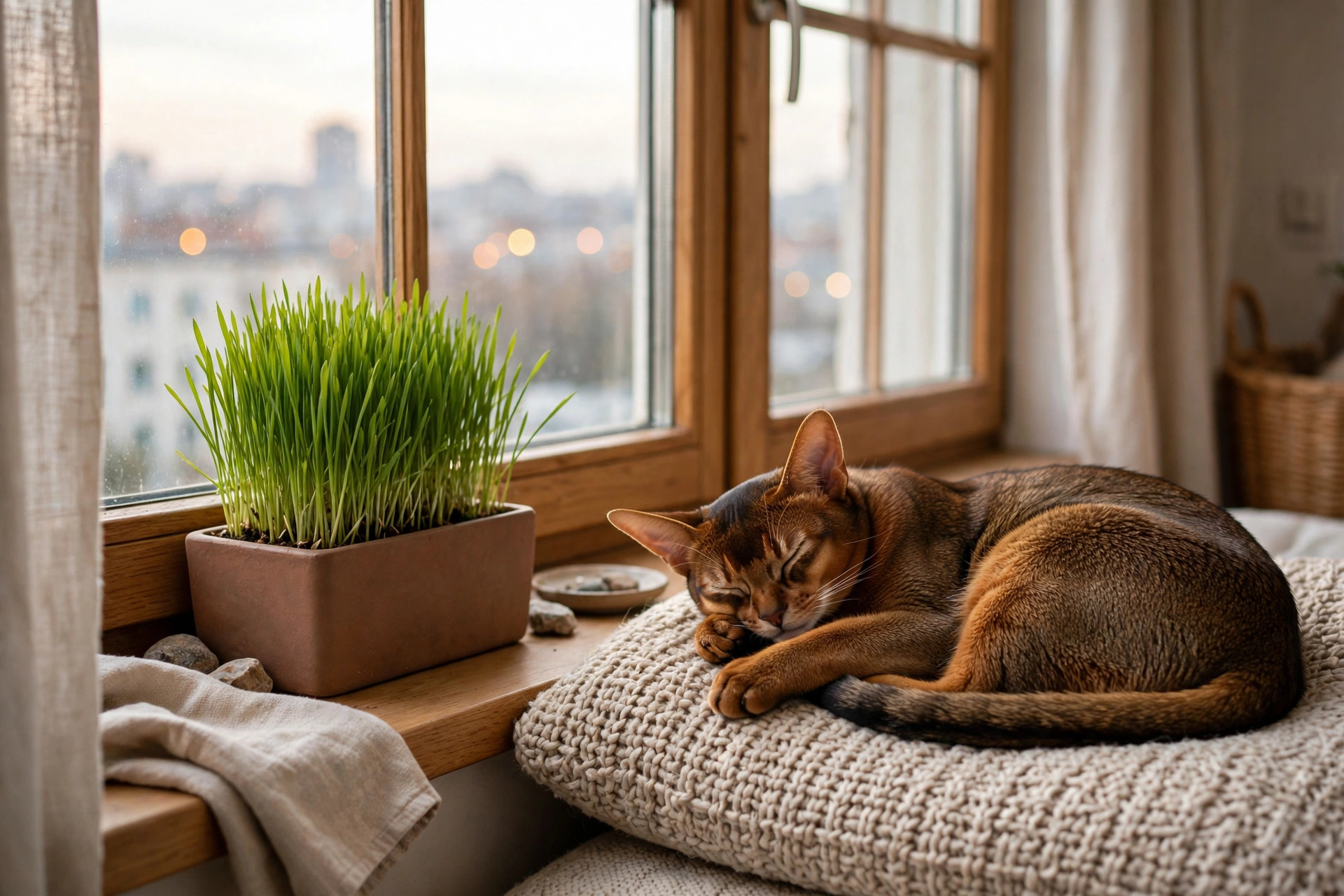
Seeds sprout on a fibre or hydroponic-style mat instead of soil. No compost, no gritty spills, and the whole mat lifts out when the grass is done. Clean-up takes seconds.
Pros
- No soil to scatter, dig up, or trail through the house
- Mats are quick to swap when you reseed
- Good drainage lowers the mould risk
Cons
- Replacement mats are a running cost
- Some cats pull the whole mat up — a snug-fitting tray helps
- Skip it if you don’t want to keep buying refills
5. The large refillable tray kit — best for multi-cat homes
A broad, heavy tray sold with bulk seed or generous refills. It’s built for rotation: one batch growing, one being grazed. If your cats share, this keeps up.
Pros
- Wide and heavy, so it stays where you put it
- Enough grass for two or more cats
- Bulk seed brings the cost per sowing down
Cons
- Takes up real floor space
- More grass than a single cat will ever finish
- Skip it if you’re short on room
Is cat grass actually good for indoor cats?
For most indoor cats, yes — as a simple, safe nibbling outlet. Cats chew grass for the texture, the taste, and, many owners find, to help bring up hair swallowed while grooming. It also gives a bored cat something to do that isn’t your houseplants, some of which aren’t safe to chew.
Keep expectations modest, though. Grass won’t fix a sensitive stomach, and it isn’t food. Think of it like a scratching post. A small, sensible outlet for a normal behaviour.
Verdict
Buy for your habits, not your intentions. Forget to water? Get the self-watering tray. New to this? Start with the organic seed-and-soil kit and see if your cat even cares. Short on space, get the windowsill planter. Hate mess, go mat-based. Got several cats, go large and refillable.
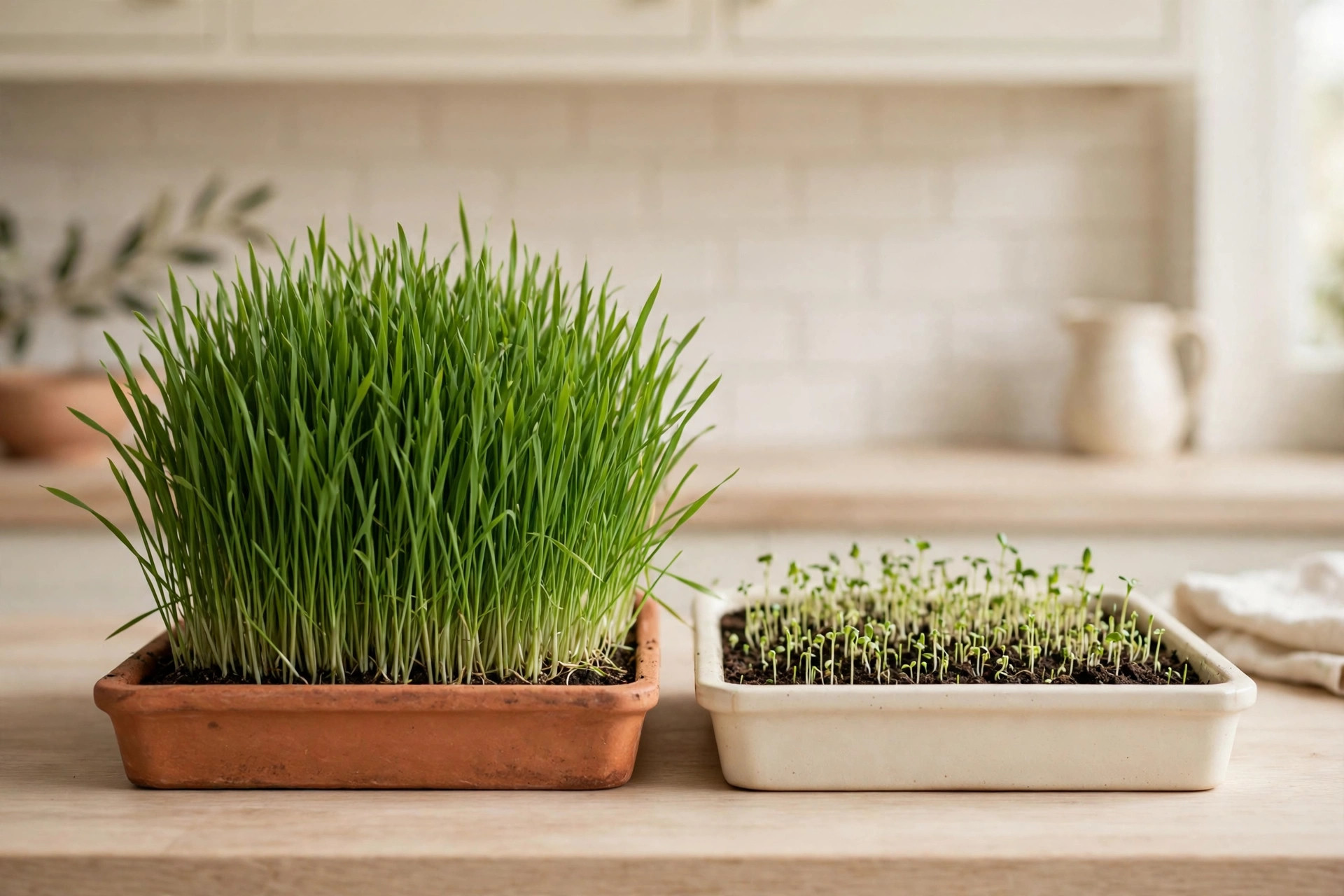
Whichever you pick, sow small and sow often. Cat grass typically sprouts within about a week in a warm, bright spot, and it’s at its best young and green. Once a batch turns yellow, compost it and start the next one. That weekly rhythm, more than any feature on the box, is what makes a kit work.
🐾 Growing it is the easy part — is cat grass actually safe for your cat to eat? Eaoae’s cat grass safety check breaks down what the sources say, in a free checker covering 25 pet species. It’s a reference tool, not a vet — when in doubt, ask yours.
Questions indoor cat owners ask
How long does cat grass take to grow?
Usually about a week from sowing to a height your cat can nibble, in a warm spot with decent light. Cooler rooms run slower. A fresh tray every week or so keeps a steady supply.
How often should I reseed cat grass?
Every one to two weeks works for most homes. Grass gets tough and yellow as it ages, and cats lose interest. When a batch looks tired, tip it out, rinse the tray, and sow again.
Can kittens and older cats eat cat grass?
Most cats, young and old, can nibble cat grass safely once they’re weaned and eating normally. Watch a kitten’s first sessions, keep portions modest, and check with your vet if your cat has ongoing digestive trouble or vomits often.
What if my cat ignores the grass completely?
Some cats just aren’t grazers, and that’s fine. Try a different grass type — oat instead of wheatgrass — and put the tray near a favourite lounging spot. Still no interest after a couple of batches? Don’t force it.
This article was created with AI assistance and reviewed by our editorial team before publishing.
 5 Best Hairball Remedies for Cats (2026)
 How to Choose Pet Gear That Actually Works: The Honest Buyer’s Guide
 6 Best Pet First Aid Kits for Dogs & Cats (2026)