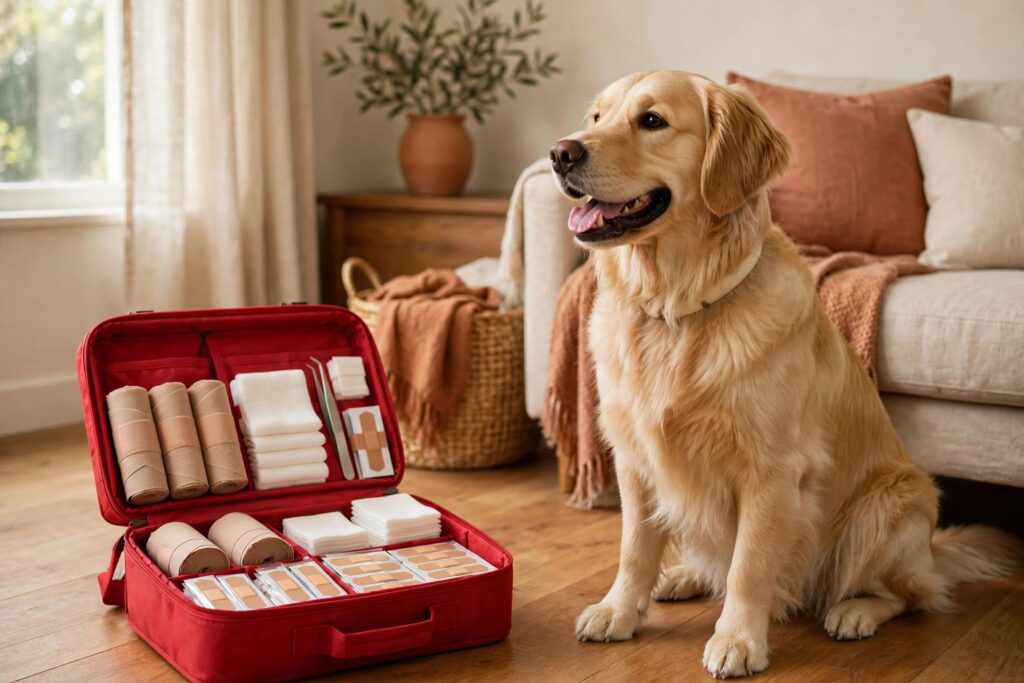
Short answer: the ARCA PET Cat & Dog First Aid Kit is the best all-round pick for most homes — thorough, well organized, and happy to live in your car or closet until the day you need it. For trails, go smaller: the Adventure Medical Kits Trail Dog kit or the ARCA PET Ready-Go Pouch. A kit’s whole job is buying time until you reach a vet.
If you share your home with a dog or a cat, a pet first aid kit is one of those things you buy and hope never to open. Then one Saturday your dog steps on something sharp at the park, or your cat gets into a scuffle with the neighbor’s tabby, and suddenly you’re very glad it’s sitting in the hall closet. This guide rounds up the six kits worth your money in 2026 — no filler, no lab-coat theater, just honest picks based on what’s actually inside each box.

A good kit is organized before the emergency, not during it. Pack it once, check it twice a year.
What to look for in a pet first aid kit
Most kits look identical from the outside. The differences show up in the details — and in the one item you reach for at 9pm on a Sunday. Here’s what separates a genuinely useful kit from a zippered bag of gauze you’ll never touch:
- Wound care basics: sterile gauze pads, non-stick dressings, and self-adhesive vet wrap. Regular adhesive bandages don’t stick to fur — vet wrap does.
- Cleaning supplies: antiseptic wipes or povidone-iodine pads, plus saline wound wash. Skip anything alcohol-based for open wounds; it stings and slows healing.
- Tools: blunt-tip scissors, tweezers, and a tick remover. A digital thermometer sounds excessive until the one time you need it.
- Restraint: an emergency muzzle. Even the sweetest dog can snap when it’s in pain. This is the item most cheap kits skip, and it’s the one vets notice first.
- Styptic powder or pencil: for torn nails. If you’ve ever watched a broken quick bleed, you know exactly why this matters.
- A real guide: a printed first-aid booklet. Your phone might be dead or covered in mud when it counts.
One more thing: size the kit to where it’ll actually live. A 100-piece home kit is useless on a hiking trail, and a minimalist trail pouch won’t cut it for a three-dog household. Two of our six picks exist for exactly that reason.
How we evaluate
Let’s be straight about this: we didn’t run controlled trials on bandage brands. What we did was read every kit’s contents list line by line, compare it against what veterinary first-aid guidelines actually recommend, dig through owner reviews to see what broke or went missing in real use, and cross-check against hands-on roundups — Treeline Review put a batch of these through real-world testing for its 2026 guide. Kits missing basics like a muzzle or thermometer dropped fast. Kits stuffed with filler (does anyone need forty identical bandages?) dropped too.
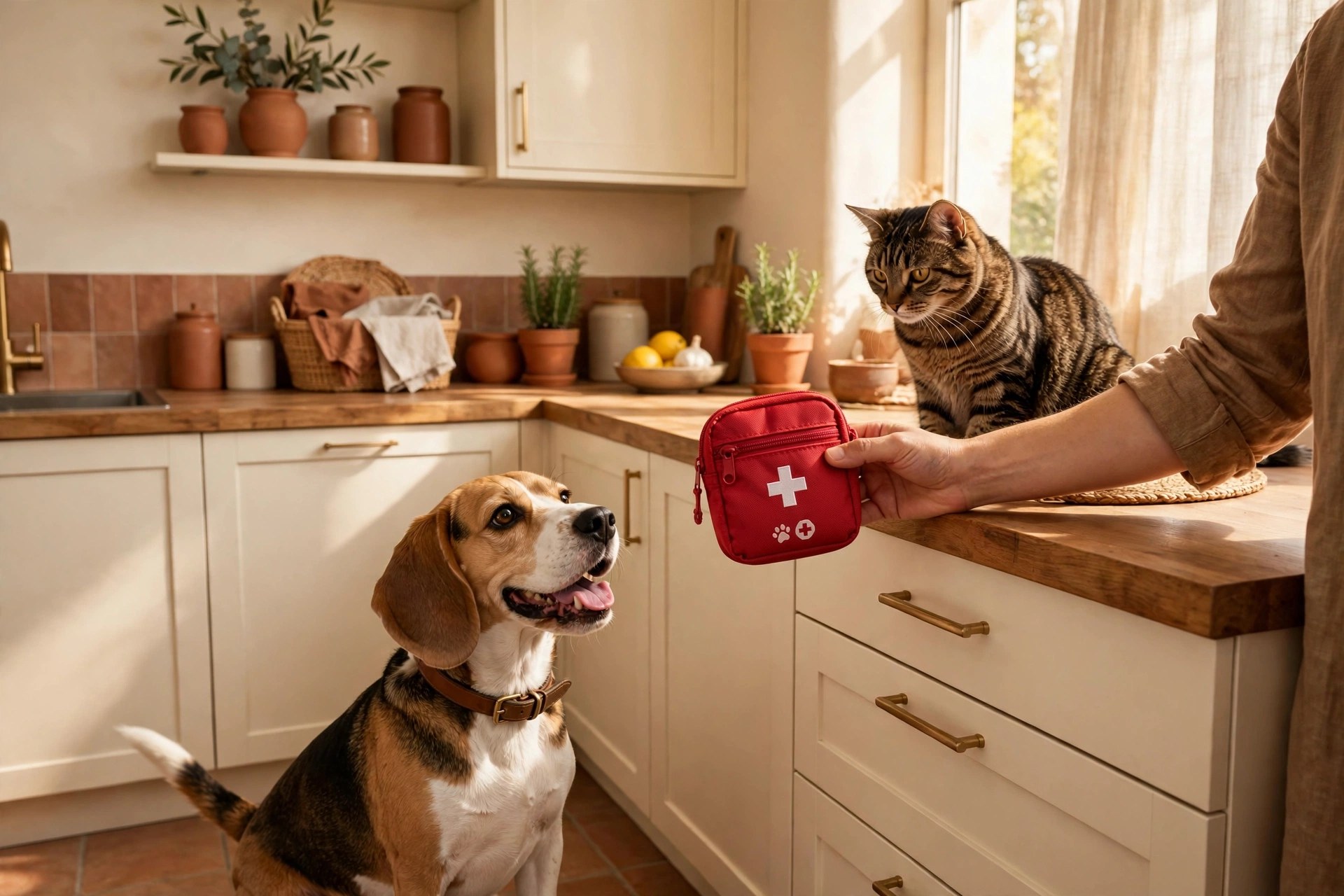
Different pets, different risks — but the core supplies overlap more than you’d think.
The 6 best pet first aid kits of 2026
1. ARCA PET Cat & Dog First Aid Kit — best overall
If you only buy one, make it this one. The 100-piece ARCA PET kit feels assembled by someone who’s actually dealt with a bleeding paw at night. Treeline Review named it the best overall kit in its 2026 roundup, and the contents back that up: waterproof hard-shell case, emergency muzzle, slip lead, styptic pencil, tick remover, digital thermometer, vet wrap in two sizes, eye wash, cold compress, gloves, and a printed first-aid book.
Who it’s for: multi-pet homes, road-trippers, anyone who wants one kit covering the realistic scenarios.
Who should skip: hikers and trail runners — at nearly two pounds in a hard case, this one stays in the car.
- Pros: genuinely complete contents; tough waterproof case; includes muzzle and slip lead, which is rare at this price
- Cons: bulky; the printed guide could go deeper
2. Adventure Medical Kits Trail Dog — best for hiking
The Trail Dog kit is built for exactly one job: disappearing into your daypack. Twenty-seven pieces, flat enough to slide into a side pocket. It covers the trail greatest-hits — paw cuts, ticks, stings — and Treeline picked it as the best hiking-specific kit of 2026.
Who it’s for: day hikers and trail runners who bring the dog along.
Who should skip: anyone shopping for a home kit — this is a supplement, not a base.
- Pros: light and packable; covers the injuries trails actually produce
- Cons: no muzzle; you’ll want to add your own styptic
3. ARCA PET Ready-Go Pouch — best budget grab-and-go
Thirty-five pieces in a pouch barely bigger than your hand, around twenty bucks. It won’t handle a crisis, but it handles the walk-around-the-block version of one: a torn pad, a bee sting, a tick. Clip it to the leash bag and forget about it until the day you don’t.
Who it’s for: daily walkers who want “better than nothing” within arm’s reach.
Who should skip: multi-pet or adventure households that need real capacity.
- Pros: cheap, tiny, includes a first-aid guide
- Cons: limited contents; no muzzle, no styptic
4. My Medic Pet Medic Med Pack — best ultralight
Eighteen pieces, about six ounces. My Medic’s Med Pack is for the weight-counters: backpackers and runners who measure every gram. It carries the true essentials — bandaging, a slip lead, basic wound care — in a package you’ll actually carry. Treeline’s testers flagged it as the lightest workable option.
Who it’s for: ultralight hikers, runners, minimalists.
Who should skip: everyone else — the small piece count means improvising sooner.
- Pros: genuinely ultralight; includes a slip lead
- Cons: only 18 pieces; no printed guide
5. EVERLIT Pet Medic 95-piece — best stocked home kit
Think of this as the ARCA’s main rival: 95 pieces in a rugged waterproof hard shell with a vet-curated feel — metal tick remover, flex-tip thermometer, sting relief pads, ice pack, thermal blanket, reflective exterior. Owners consistently say nothing in it feels like filler.
Who it’s for: the be-prepared household that wants the deepest bench at home.
Who should skip: minimalists — like the ARCA, this one isn’t leaving the house much.
- Pros: deep, well-chosen contents; tough waterproof case; easy to spot in the dark
- Cons: heavy; costs more than the ARCA
6. rubyloo Dog First Aid Kit — best for the car
The rubyloo travel kit wins on the details that matter in a glovebox: a reflective case you can find in the dark, a vet-approved supply list, and a genuinely clear manual. It’s compact enough to live in the car permanently — which is exactly where a surprising number of pet emergencies begin.
Who it’s for: drivers; anyone who wants a dedicated car kit.
Who should skip: if you already own the ARCA or EVERLIT, this is redundant.
- Pros: reflective case; clear manual; truly portable
- Cons: limited for serious injuries; home users should size up
Our verdict
Buy the kit that matches where your pet actually gets into trouble. Most households: the ARCA PET Cat & Dog First Aid Kit — the best balance of completeness and price we’ve found. Active trail life: pair the Adventure Medical Kits Trail Dog with a bigger kit at home. And whatever you buy, open it once the day it arrives. Knowing where the muzzle is before you need the muzzle is half the battle.
🐾 A kit handles cuts and scrapes — but what about the thing your dog just swallowed? No first aid kit can tell you whether that dropped piece of chocolate is an emergency or a non-event. Ask Eaoae’s toxic-food checker looks up whether a food, plant, or household item is actually dangerous for your pet’s species — free, no account, about ten seconds.

The non-negotiables: bandaging, wound wash, tick remover, thermometer, styptic, muzzle.
Frequently asked questions
What should every pet first aid kit contain, at minimum?
Gauze pads, non-stick dressings, self-adhesive vet wrap, antiseptic wipes, saline wash, blunt-tip scissors, tweezers, a tick remover, styptic powder, an emergency muzzle, disposable gloves, and a printed first-aid guide. Anything missing more than two of these isn’t a kit — it’s a pouch.
Can I just use my human first aid kit on my dog?
For basics like gauze and saline, yes. But human kits miss pet-specific essentials — vet wrap that sticks to fur, styptic powder for nails, a muzzle — and they often include medications that are dangerous for animals. Never give your pet human painkillers or antihistamines unless your vet specifically directs it.
Does a first aid kit replace a vet visit?
No. A kit stabilizes — it stops bleeding, protects a wound, keeps your pet calm — so you can get to a vet safely. Think of it as the bridge, not the destination. For anything beyond a minor scrape, call your vet or an emergency clinic on the way.
How often should I check and restock my kit?
Twice a year. Ointments expire, adhesive dries out, and you’ll discover you “borrowed” the scissors for something else months ago. Tie it to the daylight saving time changes and you’ll never forget.
Should I take a pet first aid course?
If your pet hikes, swims, or roams with you — yes. The American Red Cross runs pet first aid classes in many areas, and knowing the basics of pet CPR beats any kit on the shelf. A course plus a kit is the actual gold standard.
One last thing: tape your vet’s number and the ASPCA poison-control hotline ((888) 426-4435) to the inside lid of your kit. Future-you, mid-panic, will be grateful.
The contents-list habit applies to every category, not just first aid. Our buyer’s guide to choosing pet gear that actually works shows the measurements and red flags we check before any pick makes a list.
This article was created with AI assistance and reviewed by our editorial team before publishing.
 5 Best Cat Grass Growing Kits for Indoor Cats (2026)
 5 Best Hairball Remedies for Cats (2026)
 How to Choose Pet Gear That Actually Works: The Honest Buyer’s Guide