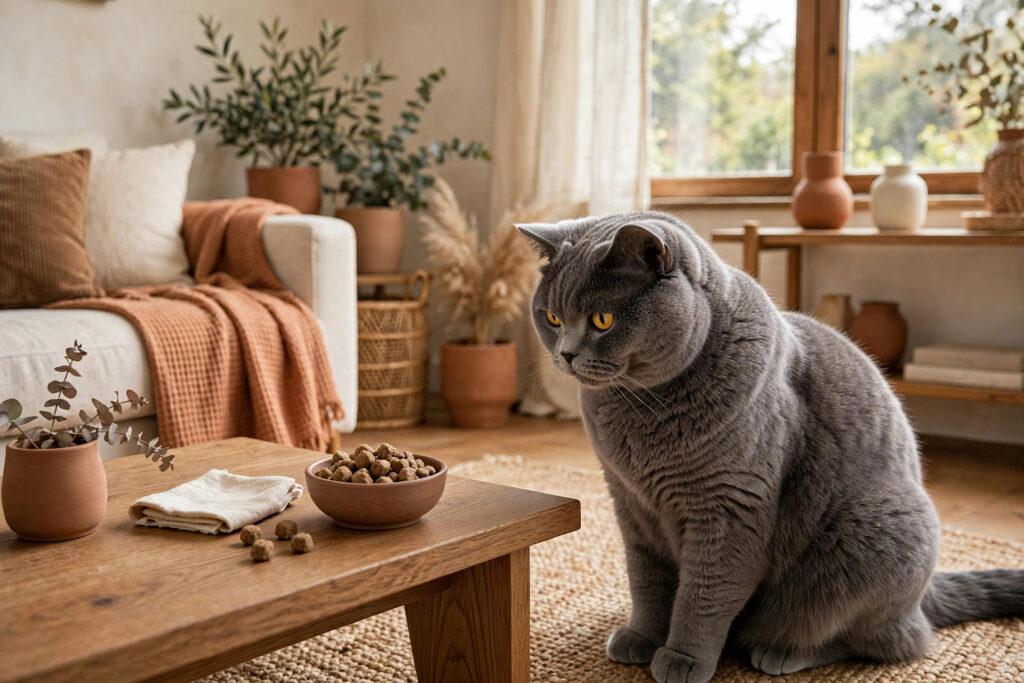
Picky cats rarely reject treats because they’re stubborn. They reject texture, smell, or size. The five styles below give you the best shot: freeze-dried fish cats can smell across the room, lickable pastes for cats that ignore anything crunchy, soft bites, bonito flakes, and filled crunchy treats.
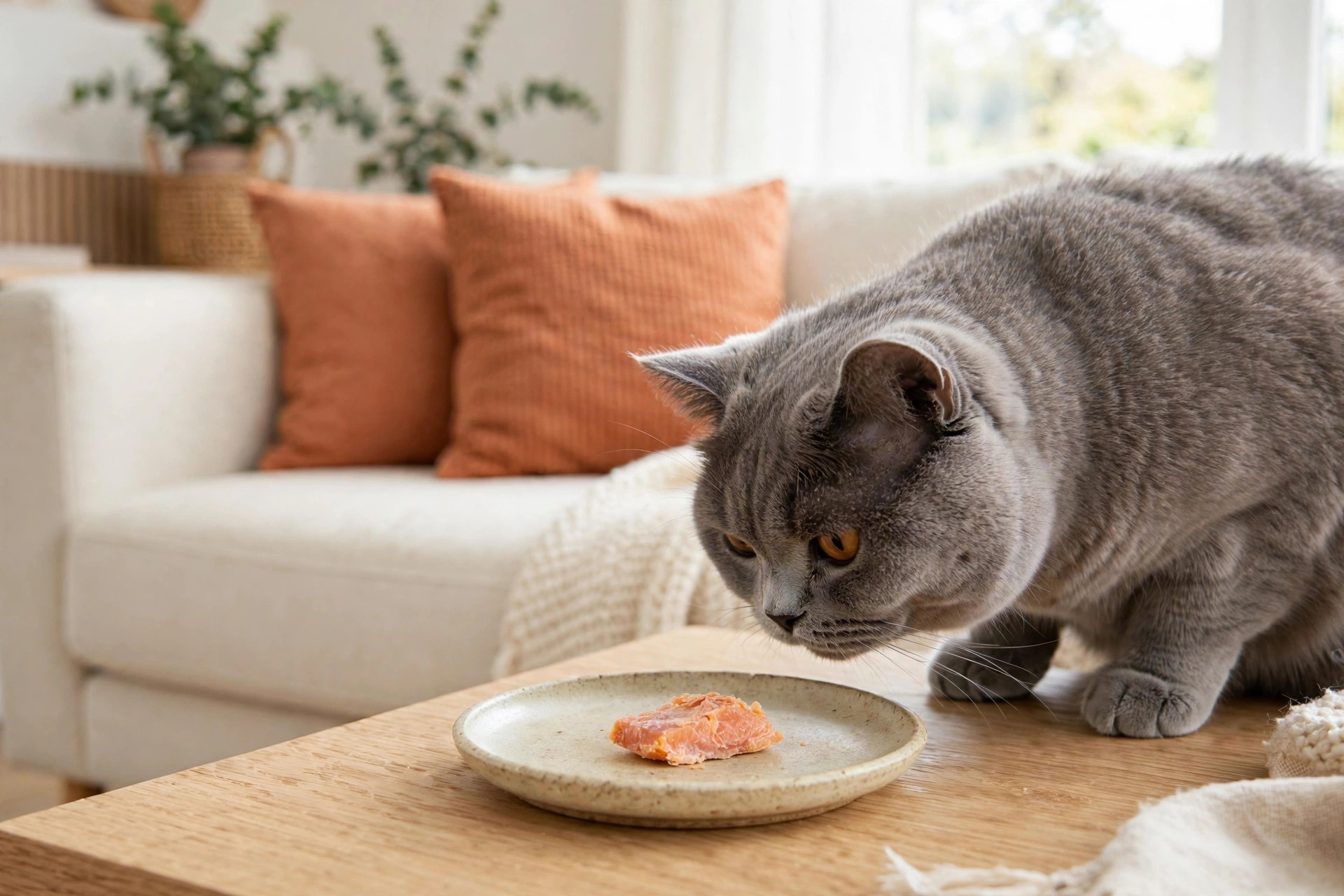
A British Shorthair cat sniffs a small dish of freeze-dried salmon treats in a bright, cozy kitchen.
You shake the bag. Your cat walks over, sniffs once, and leaves.
That sniff tells you a lot. Cats decide with their nose first. If a treat smells bland, feels wrong between the teeth, or comes in a piece that’s too big to bite cleanly, many cats won’t give it a second chance. Not even a polite one.
So don’t buy a bigger bag of the same thing. Change the format. A cat who turns away from a hard biscuit might lick a paste off your finger in seconds, and a cat who ignores soft chews might go silly for a flake that smells like real fish.
What to look for in treats for picky cats
Start with smell, then texture, then size. That order matters more than fancy packaging.
Strong, simple smell
Single-protein treats usually win here. Salmon smells like salmon. Tuna? Unmistakable.
Short ingredient lists help, too. If your cat loves a treat, you’ll know which protein did the job. If she gets an upset stomach, you’ll have fewer suspects. Look for a named meat or fish first on the label, not a vague mix buried under grains and flavourings.
Texture your cat will actually accept
Watch how your cat eats dinner. Some cats crunch happily. Others lick wet food and leave every dry piece behind, so a hard treat never stood a chance.
Keep two textures on hand if you can — one crunchy or flaky, one soft or lickable. A bad first pick won’t end the experiment, and you can rotate before boredom sets in.
Small pieces, easy bites
Big treats ask a picky cat to work. Most won’t. Pieces that break with your fingers, flakes you can crumble, and pastes you can squeeze out a little at a time all lower the effort.
That matters for older cats, too. Sore teeth, a smaller appetite — a soft treat solves problems a crunchy biscuit can’t. If your cat drops hard food, paws at the mouth, or eats on one side only, that’s a vet conversation, not a treat problem.
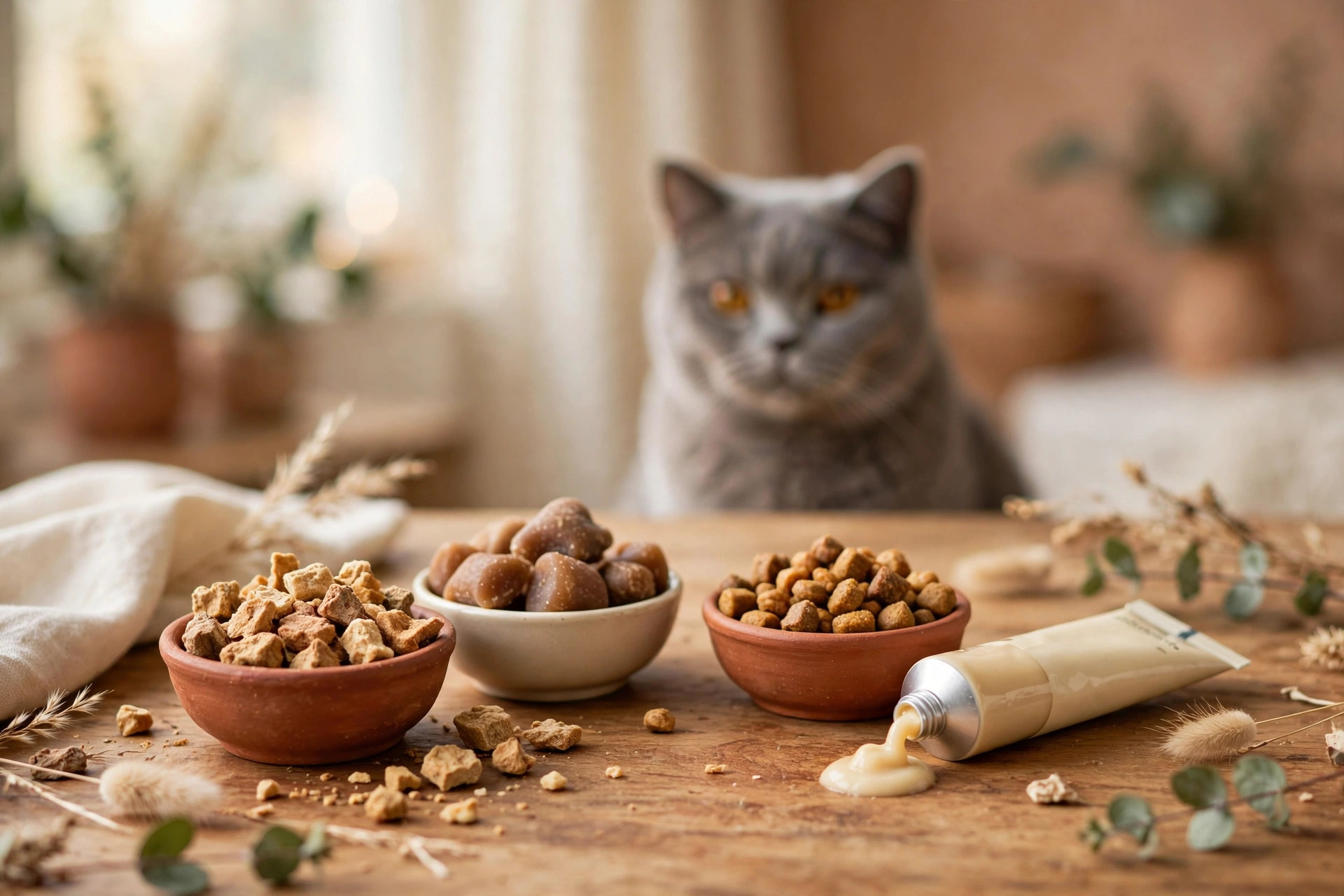
Close-up of cat treat textures side by side: flaky bonito, soft chicken bites, and a squeezable lickable paste.
Freshness you can protect
Stale treats lose smell first. And smell is the whole pitch.
Pick bags you can seal tight, store them away from heat, and buy a small pack first. Always. A great treat on paper is wasted money if your cat sniffs it once and walks off.
How we evaluate
Each pick below is judged on the same plain checks. No lab coats. No mystery scoring.
- First ingredient: a named meat or fish, clearly listed.
- Smell and format: a scent a cat picks up quickly, in a texture for cats who reject biscuits.
- Piece size: small, breakable, crumbly, or squeezable.
- Feeding role: a treat or topper, not a meal replacement, unless the label says complete and balanced.
- Label clarity: feeding guidance and storage instructions a buyer can follow.
- Price tier: $ for everyday buys, $$ for pricier formats like freeze-dried fish.
Treats should stay a small part of the day. Keep them to a modest share of daily calories, and cut the meal back a touch on heavy treat days. Not sure what fits? Ask your vet — especially for cats who need to lose weight or live with kidney, urinary, or stomach issues.
The 5 best cat treats for picky cats
1. Freeze-dried salmon treats — best for smell-first cats
Type: Freeze-dried, single-ingredient fish pieces. Price tier: $$
Open the bag and you’ll understand. Freeze-dried salmon keeps the strong fish scent that gets lost in a baked biscuit, and the pieces break apart easily. Crumble a little over dinner, or offer a small chunk as a reward.
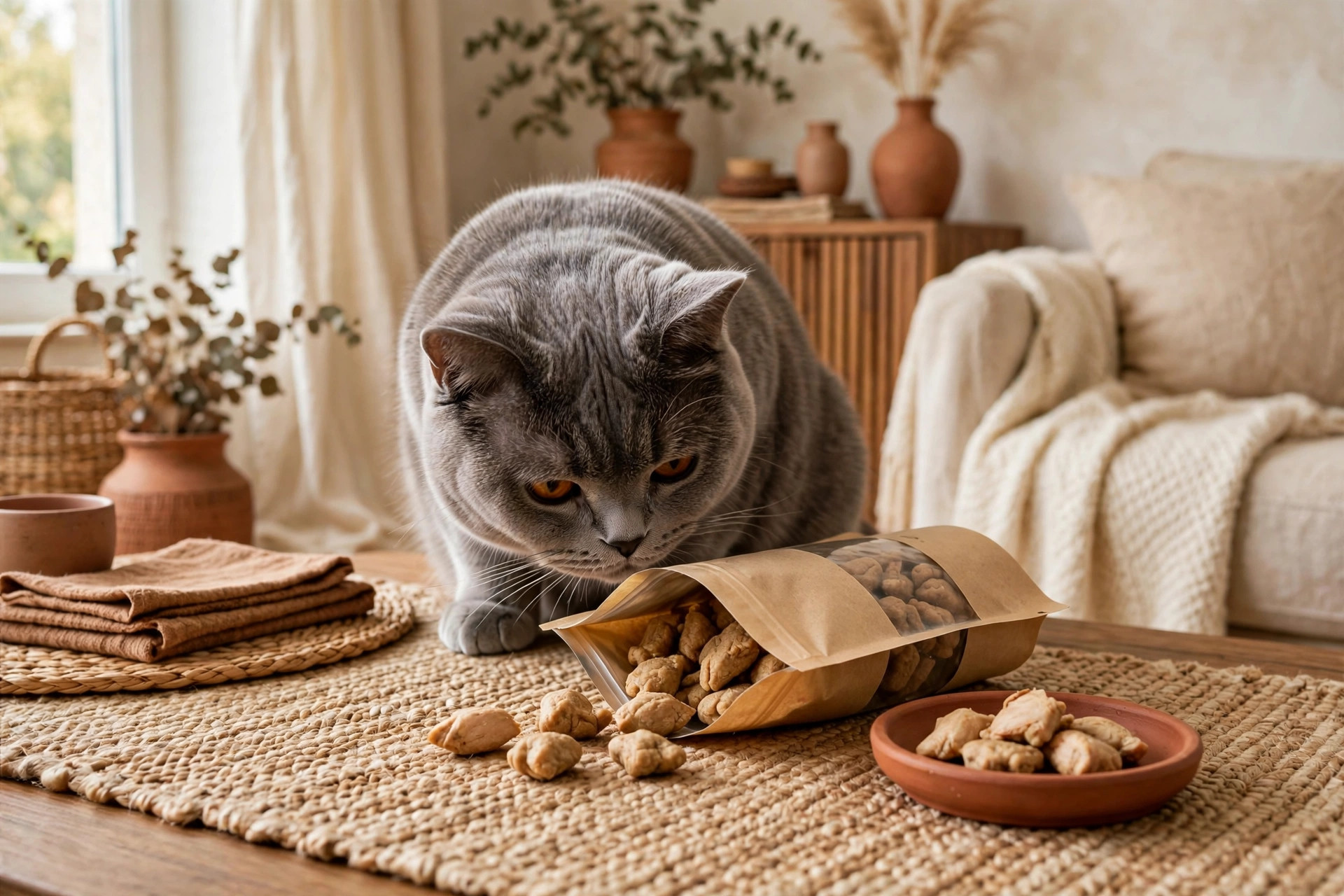
A British Shorthair cat checking a pouch of soft chicken treats, the format picky cats often try first.
Who it’s for: Cats who ignore bland biscuits but come running for fish.
Who should skip: Cats who dislike fish, households that can’t stand a strong fish smell, and anyone on a tight budget. Freeze-dried fish costs more, and the scent doesn’t stay in the cupboard.
Pros:
- Strong natural fish aroma, even in a small piece
- Breaks or crumbles easily over regular food
- Short, simple ingredient list
Cons:
- Pricier than baked treats
- Pieces can turn to dust in the bag
- Smell is too much for some people — and some cats
2. Lickable paste treats — best for cats who reject chewing
Type: Smooth paste in a single-serve tube, usually tuna or chicken. Price tier: $ to $$, depending on pack size
This format changes a lot of minds. You squeeze. Your cat licks. There’s no crunch to reject, no piece to carry off and abandon under the sofa.
Pastes help in stressful moments, too. Squeeze slowly, let the cat set the pace, and don’t chase her with the tube. That backfires.
Who it’s for: Older cats, and any cat who licks wet food but leaves dry pieces behind.
Who should skip: Owners who want a toss-and-walk-away treat. Paste needs a hand, dish, or lick mat, and tubes create more packaging.
Pros:
- No chewing needed, so texture resistance drops away
- Easy to portion a tiny amount at a time
- Useful for training and carrier practice
Cons:
- Messier than dry treats
- More packaging per serving
- Some cats grab the tube itself
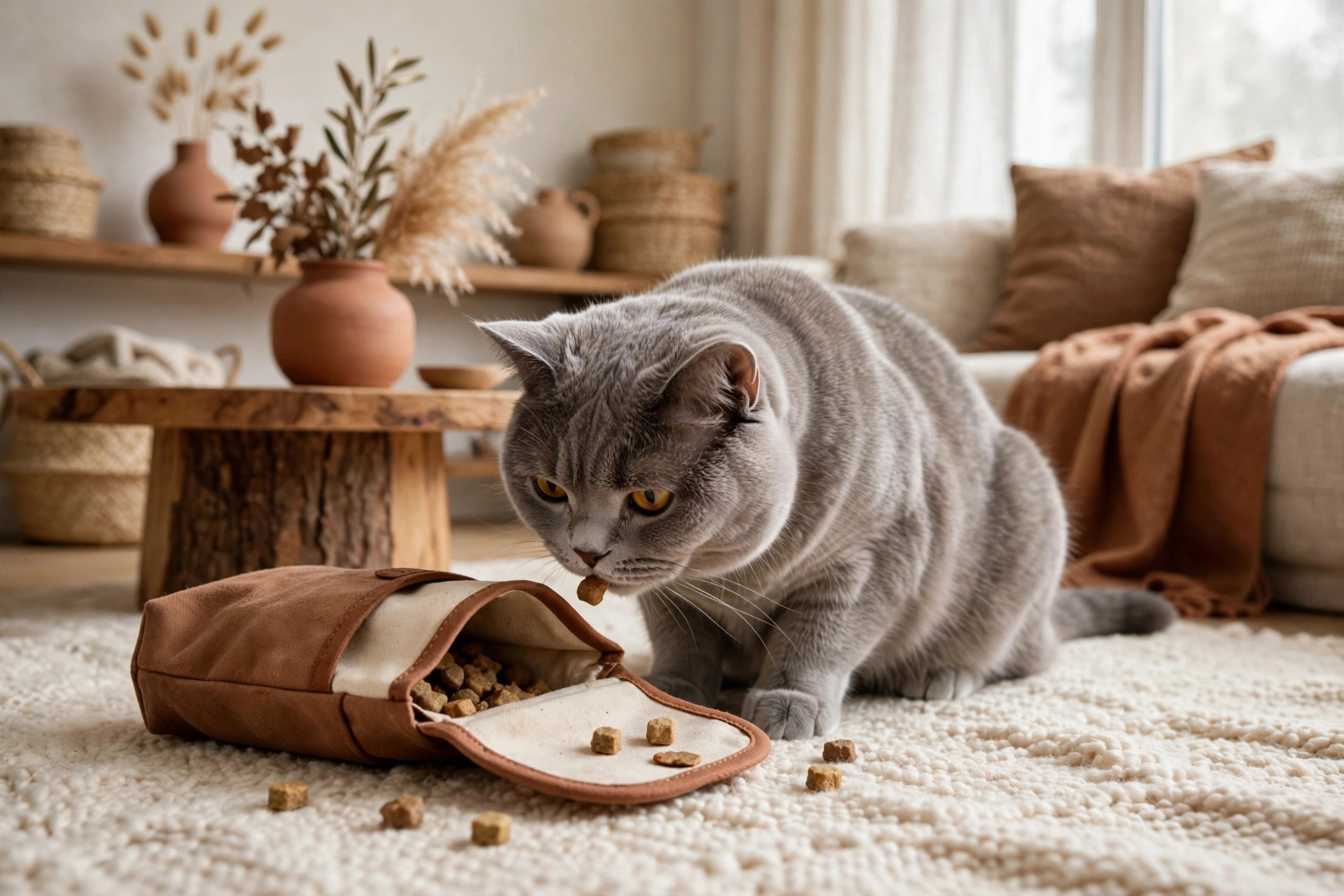
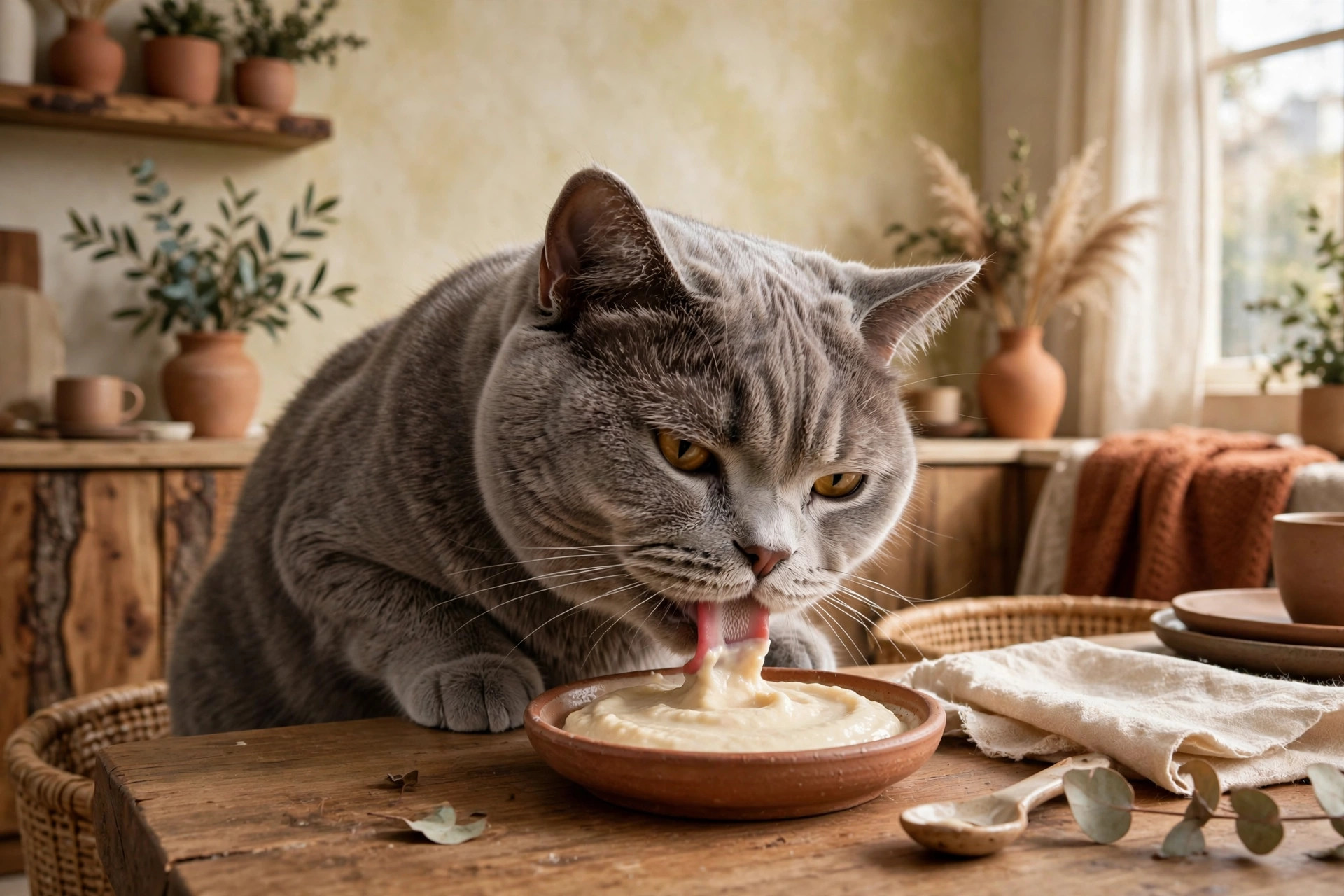
A British Shorthair cat licks a paste treat from a small dish, a gentle option for cats who reject crunchy biscuits.
3. Soft moist chicken bites — best everyday soft treat
Type: Small, soft-baked or moist bites, chicken first. Price tier: $
Not every picky cat wants fish. Some want chicken, soft, in a piece they can bite once and finish. Soft bites sit in the middle — more scent than a dry biscuit, less mess than a paste.
Check texture before you buy a large bag. A good soft bite gives a little when you press it and tears in half without turning to sand. If the bag feels rock hard, pick another one.
Who it’s for: Cats who like poultry, and owners who want a daily reward that isn’t fishy.
Who should skip: Cats who need a very short ingredient list. Soft bites use binders to stay soft, so the label runs longer.
Pros:
- Soft, small, and easy to tear in half
- Milder smell for fish-averse homes
- Usually sits in the lowest price tier
Cons:
- Can dry out fast if the bag isn’t sealed well
- Longer ingredient list than single-protein options
- Too soft for cats who clearly love a crunch
4. Bonito flakes — best light topper that doubles as a treat
Type: Thin, shaved dried fish flakes. Price tier: $$
Bonito flakes look like almost nothing. They weigh almost nothing. Then you open the pack, and your cat appears from a room you didn’t know she was in.
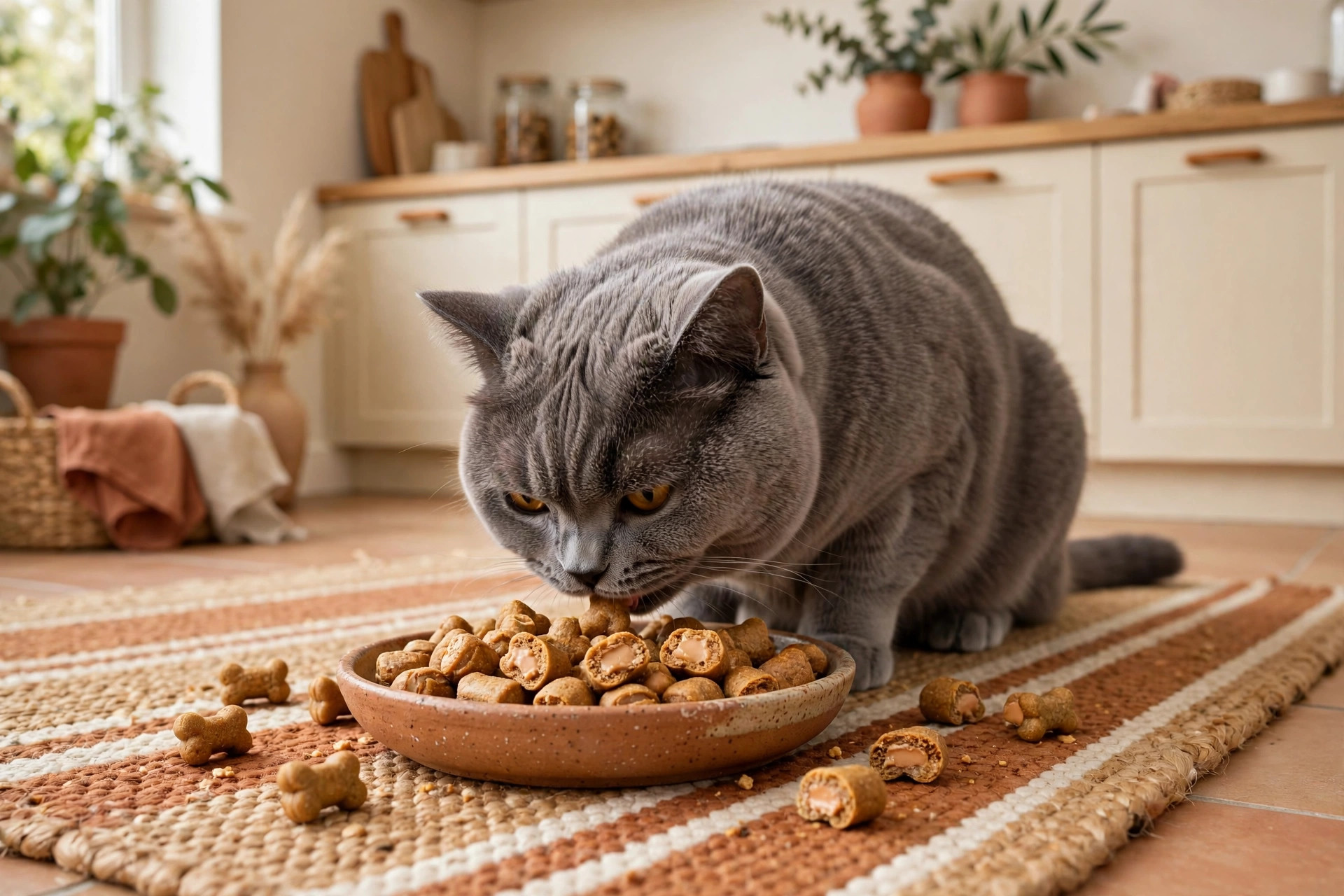
A British Shorthair cat working through a bowl of crunchy filled treats, a texture many picky cats accept.
They work because they’re delicate. A pinch goes on dinner, a few flakes sit in your palm, and there’s no hard chewing at all. They can help a cat start a meal she’s been ignoring — though a cat who stops eating altogether needs a vet, not a topping.
Who it’s for: Cats who love fish but reject chunks.
Who should skip: Anyone who wants tidy, countable pieces. Flakes stick to fingers and drift off plates. Fish-free cats should pass, too.
Pros:
- Very light texture, easy for most cats to eat
- A tiny pinch carries a lot of scent
- Works as both topper and reward
Cons:
- Fragile and messy to handle
- Easy to over-serve because the flakes look so slight
- Not a good fit for fish-free diets
5. Crunchy treats with a soft centre — best for crunch lovers who get bored
Type: Crisp outer shell with a soft filling, salmon or chicken. Price tier: $
Some picky cats aren’t anti-crunch. They’re anti-same. A filled treat gives two textures in one bite — a crisp shell, then a softer centre that carries more flavour.
That contrast holds interest longer, and the pieces pour cleanly. No sticky fingers. No flakes on your sleeves. Just watch portions, because small, tasty, and easy to pour is a risky mix.
Who it’s for: Cats who enjoy crunch but ignore plain biscuits after a few days.
Who should skip: Cats with dental pain, and cats who need a single-ingredient treat for a vet-set diet plan.
Pros:
- Two textures in one small piece
- Clean to store, pour, and carry
- Good rotation option beside soft treats
Cons:
- Not suitable for cats who struggle with hard food
- Filling recipes vary a lot between flavours
- Easy to feed too many in one go
A British Shorthair cat sits beside an open selection of cat treats at home, with bonito flakes and soft bites in view.
Verdict
Don’t start with five bags. Start with two formats that don’t resemble each other.
Pick freeze-dried salmon and a lickable paste first. One brings scent and crumble. The other removes chewing entirely. No fish? Swap the salmon for soft chicken bites. Love crunch? Make the filled treats the second bag instead.
Still stuck? Try the flakes. Bonito often wins over cats who’ve rejected treats that look far more impressive. Offer a little, watch the reaction, and note what worked — protein, texture, piece size. That note saves money on the next bag.
Frequently asked questions
Why does my cat sniff treats and walk away?
Usually it’s scent, texture, or size. Cats judge by smell first, so a bland or stale treat can fail before the first bite. Try a stronger protein, a softer format, or a smaller piece — and check the bag was sealed.
How many treats can I give my cat each day?
Keep treats as a small extra, not a second meal, and follow the pack’s feeding guidance. Many vets advise a modest share of daily calories. Cats who need to lose weight or have health conditions need a number set by their own vet.
Are lickable treats okay for older cats?
Often, yes. They need no chewing and can be served a little at a time. Soft food doesn’t fix dental pain, though. If an older cat drops food, drools, or stops eating, book a vet check.
Can I use treats to get a picky cat to eat regular food?
A crumble of freeze-dried salmon or a pinch of bonito can make a meal more tempting. That’s a sensible short-term trick. If a cat refuses food for a full day or seems unwell, contact a vet instead of adding more toppers.
What if my cat likes a treat once, then refuses it?
That happens. Seal the bag, put it away for a week, and rotate to another texture. Stale scent is a common culprit. If the refusal spreads to regular meals, or your cat loses weight, treat it as a health question.
This article was created with AI assistance and reviewed by our editorial team before publishing.
 5 Best Training Treats for Small Dogs (2026)
 How to Choose Pet Gear That Actually Works: The Honest Buyer’s Guide
 7 Best Dog Foods for Sensitive Stomachs (2026)