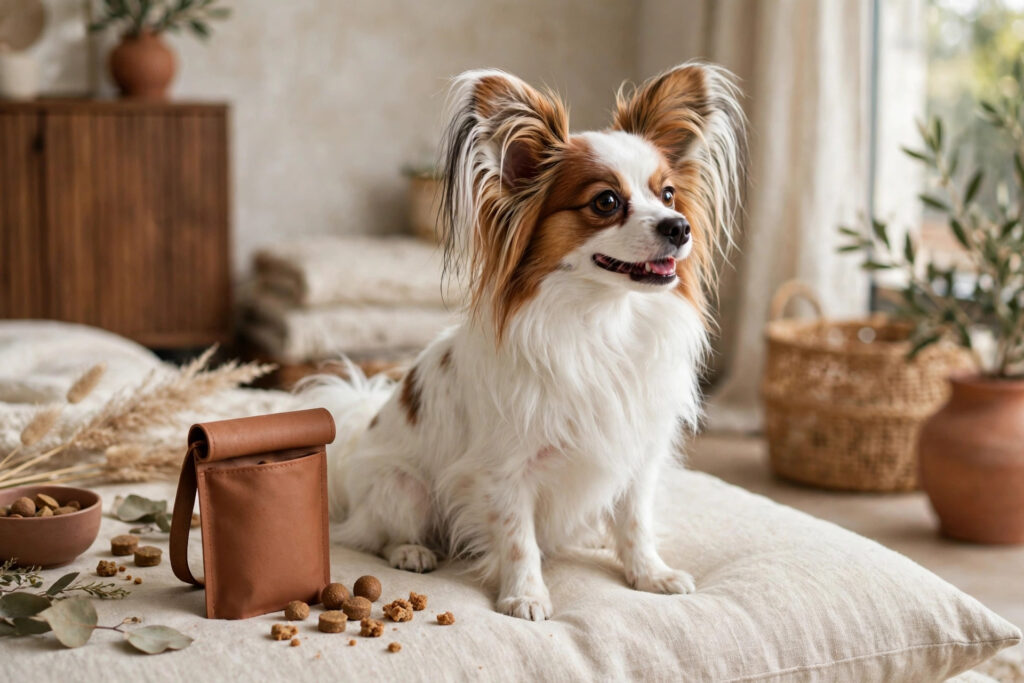
Small dogs learn fast when the reward shows up fast. The best training treats for small dogs are tiny, soft enough to eat in one bite, and smelly enough to hold attention when a squirrel, a bicycle, or another dog walks past. Pick pea-sized soft treats for fast repetitions, freeze-dried single-ingredient pieces for high-distraction work, and keep the whole session’s treats to a small handful so dinner still counts.
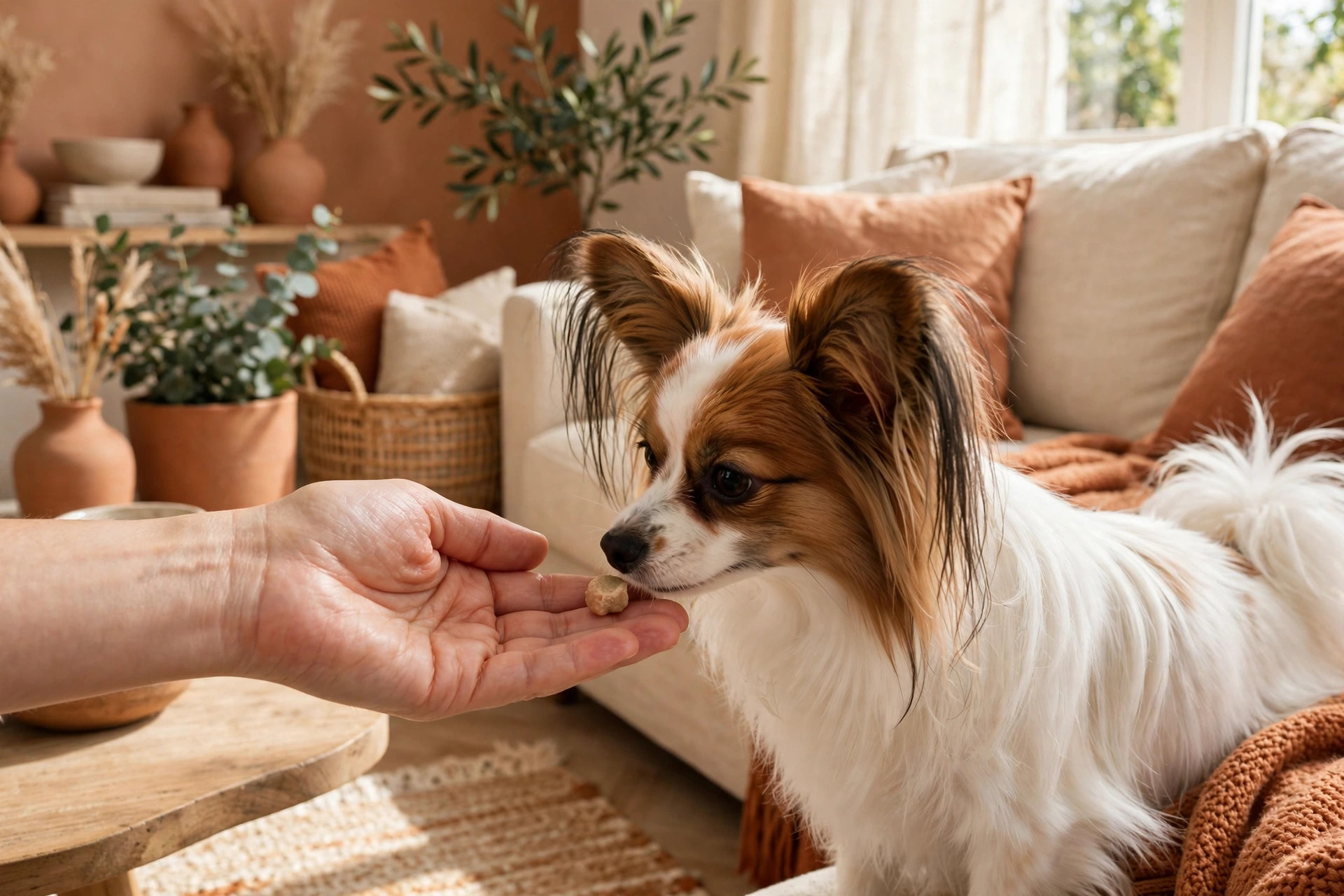
What to look for in a training treat for a small dog
Size comes first. Honestly, it comes second and third too.
A treat for a Papillon, a Yorkie, or a small terrier should be about pea-sized, or easy to tear into pea-sized bits with your fingers. If your dog has to sit down and chew, the moment you were rewarding is already gone. Worse, a few big treats fill a small stomach fast, and then training stops because dinner just happened in instalments.
Texture matters next. Soft treats win for repetition work — recall, loose-leash practice, name games — because they’re gone in a second. Crunchy biscuits have their place as a jackpot at the end, but they’re slow, crumbly, and they pull your dog’s nose down to the floor hunting for bits.
Then smell. A treat that smells like nothing to you might still work at home. Outdoors? You need something your dog can smell before you even open the pouch. That’s why freeze-dried meat pieces punch above their weight with small dogs.
- Size: pea-sized, or tearable to pea-sized in one pinch
- Texture: soft for fast repetitions, crunchy only as a final jackpot
- Smell: strong enough to compete with the park, not just the kitchen
- Ingredients: a named meat or fish first, no long list you can’t pronounce
- Quantity control: a resealable pouch, so you can count out a session’s worth
How we evaluate these treats
No personal taste tests here — your dog does that part. This list is built on criteria you can check yourself on any label: treat size and tearability, how quickly a small dog can eat one, ingredient clarity, smell strength, and whether the format suits the job you’re training.
Each pick below is a treat style, with the kind of product to look for in that style. Brands change recipes. Labels change too. So read the bag you actually buy, and treat the first session as a trial: if your dog spits it out or loses interest by repetition ten, it’s not a training treat for your dog, whatever the bag promised.
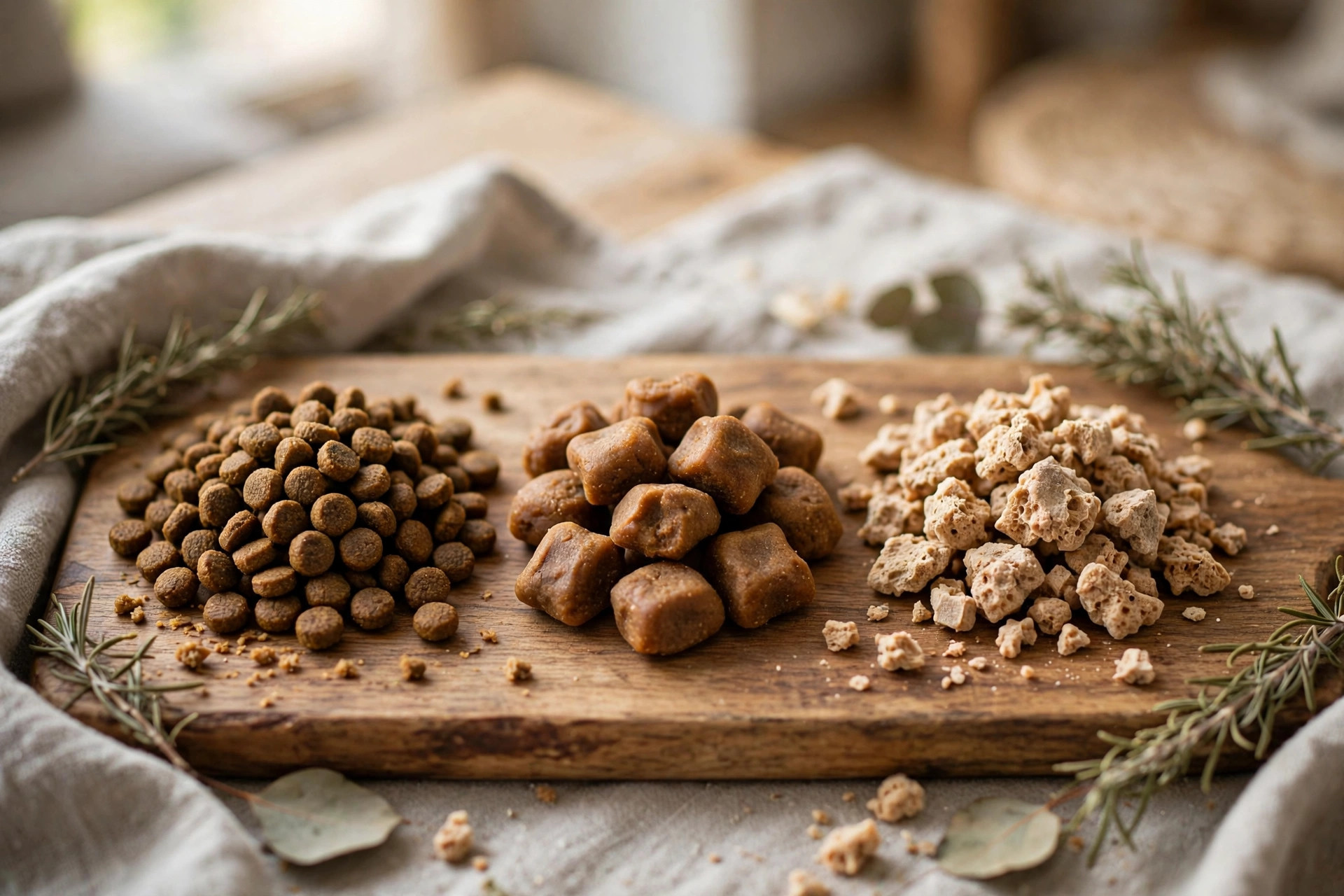
The 5 picks
1. Soft pea-sized training bites — the everyday workhorse
Best for: most small dogs, most sessions. Skip if: your dog has a known sensitivity to the main protein on the label.
These are the little soft morsels sold specifically as training treats, usually in a resealable pouch. They’re small enough that you can reward a sit, a look, and a step of loose-leash walking in quick succession without a chewing pause. Look for a named protein first on the ingredient list and a soft, pliable feel through the bag.
Pros: fast to eat, easy to count, widely available. Cons: they dry out if the pouch stays open, and some recipes lean on glycerin and fillers — check the label.
2. Freeze-dried single-ingredient meat pieces
Best for: recall practice and anywhere distractions compete hard. Skip if: you need dozens of repetitions on a tight budget.
One ingredient. That’s the whole pitch, and it’s a good one. Freeze-dried liver, chicken, or fish pieces smell intense, weigh almost nothing in your pouch, and snap into smaller bits for tiny mouths. Because they’re rich, use them sparingly — a few high-value moments per session, not a steady stream.
Pros: powerful smell, clean label, light to carry. Cons: pricey per piece, crumbly in a pocket, and rich enough to upset a sensitive stomach if you overdo it.
3. Soft salmon or fish-based bites
Best for: dogs who’ve gone bored with chicken everything. Skip if: anyone in your home can’t stand the smell — you’ll know within seconds of opening the bag.
Fish-based treats are the rotation trick. When a dog starts offering you a bored look at the usual chicken bite, a salmon soft treat resets interest fast. The smell is strong, the texture suits fast rewards, and fish is a useful alternative protein for some dogs who react to poultry — ask your vet if you’re working through a suspected food sensitivity rather than guessing on your own.
Pros: novel protein, strong aroma, soft and quick. Cons: the aroma is, let’s say, committed. Store the pouch sealed.

4. Tiny crunchy biscuits — the session-ending jackpot
Best for: marking the end of a session, or rewarding a big effort. Skip if: you want rapid-fire repetitions.
Crunch has a job. Just not the repetition job. A small crunchy biscuit takes time to eat, and that pause can signal “we’re done, good work” better than another soft bite would. Pick the smallest size in the range, check that the biscuit suits your dog’s mouth, and keep it to one or two per session.
Pros: satisfying crunch, long shelf life, easy to store. Cons: slow, crumbly, and easy to overfeed if you treat them like training bites.
5. Lickable treat tubes
Best for: nail trims, vet visits, and nervous small dogs who need a steady distraction. Skip if: you’re teaching fast repetitions — there’s no clean way to count a lick.
A squeeze tube changes the rhythm entirely. Instead of bite, chew, look up, you get continuous calm focus while someone clips a nail or checks an ear. Squeeze slowly, let your dog lick in small amounts, and cap the tube between uses. It’s a handling tool as much as a treat.
Pros: brilliant for grooming and handling, portion control by squeeze. Cons: messy if squeezed hard, and useless for marking an exact behaviour.
Quick comparison
| Pick | Texture | Best job | Watch out for |
|---|---|---|---|
| Soft training bites | Soft | Everyday repetitions | Drying out in an open pouch |
| Freeze-dried meat | Dry, snappable | Recall and distractions | Price and richness |
| Fish-based bites | Soft | Bored, picky dogs | Strong smell |
| Tiny crunchy biscuits | Crunchy | End-of-session jackpot | Slow to eat |
| Lickable tubes | Paste | Nails, vet visits, handling | No precise marking |
Portion sense for small dogs
Here’s the trap. A treat that’s “small” for a Labrador is a meal course for a four-kilo dog.
Keep it simple. Count out your session’s treats before you start — a small handful, not the whole pouch — and if it’s a long training day, take the equivalent out of dinner rather than stacking treats on top of a full bowl. The American Kennel Club’s feeding guidance makes the same general point trainers repeat: treats should stay a small part of a dog’s daily intake, with the balanced meal doing the real nutritional work. When in doubt, ask your vet what suits your dog’s weight and health. That’s their job, and a quick question beats guesswork.
Fresh water, short sessions, and quitting while your dog still wants more — that combination does more for training than any single bag on this page.

Storage and freshness, the boring part that matters
Soft treats go stale. Freeze-dried pieces pick up moisture and lose that smell you paid for. None of this is glamorous, and all of it shows up in training.
Seal the pouch after every session. Squeeze the air out first. Keep it somewhere cool and out of direct sun, and if you decant treats into a pouch or jar for walks, take only what that day needs and refresh it often — a treat that’s sat in a warm pocket pouch for a week won’t hold a small dog’s attention, and it shouldn’t have to. When a bag smells off or the texture has changed, bin it. Your dog’s nose noticed long before you did.
Questions people ask
How small should a training treat be for a small dog?
About pea-sized. Your dog should swallow it in one bite and look straight back at you. If there’s chewing, tearing, or nose-down crumb hunting, go smaller or softer.
Can I just use my dog’s regular kibble?
Sometimes, at home, for easy behaviours — yes. Outdoors or for hard new skills, kibble usually loses to distractions. Keep a higher-value treat for the hard stuff and use kibble for the easy wins.
How many training treats can a small dog have in a day?
Count them, keep them to a small handful across the day, and offset a big training day against dinner. Treats should stay a small share of daily intake, per the American Kennel Club’s feeding guidance, and your vet can set the right amount for your dog’s weight.
What if my dog won’t work for any treat outdoors?
You’re probably asking for too much, too far from home, too soon. Shorten the distance, lower the distraction, and raise the treat’s value — in that order. Distance first, most of the time.
This article was created with AI assistance and reviewed by our editorial team before publishing.
 5 Best Cat Treats for Picky Cats (2026)
 How to Choose Pet Gear That Actually Works: The Honest Buyer’s Guide
 7 Best Dog Foods for Sensitive Stomachs (2026)