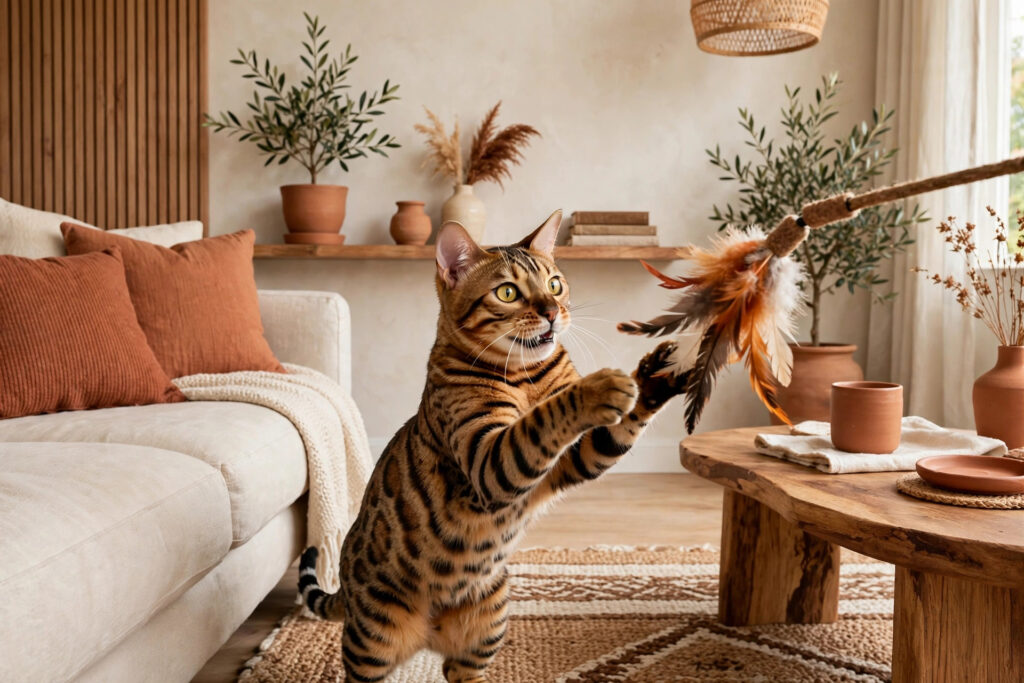
The best cat toys for indoor cats do three jobs at once: they get a cat moving, they let her hunt something that fights back a little, and they end before she gets bored. A feather wand, a refillable catnip kicker, a crinkle ball, a puzzle feeder, a track toy, a soft mouse, and a sturdy scratcher toy cover most play styles without filling your floor with plastic.
That short list hides a real problem. Cats don’t all play the same way. One cat stalks. Another chases. A third ignores anything that doesn’t smell interesting, then loses her mind over a plain cardboard roll at 2 a.m. Buying for the cat in front of you beats buying the toy with the loudest packaging.
What to look for
Movement that mimics prey. Toys that dart, pause, and change direction hold attention longer than toys that roll in a straight line. A wand you control can do the darting for you, which is why simple wands outlast many battery toys.
A way to finish the hunt. Play theorists and feline behavior resources such as International Cat Care describe the hunt cycle as search, stalk, chase, catch, and eat. A session that stops at chase leaves some cats wired. End with a catch, then a small meal or treat, and the energy settles.
Materials your cat can bite safely. Look for tight stitching, no glued-on plastic eyes, and no loose string. String and ribbon toys belong in supervised play only, and they go back in a drawer afterwards. Swallowed string can cause a serious intestinal emergency, a risk vets raise again and again.
Easy cleaning. Catnip toys pick up dust and drool fast. Refillable, washable designs last longer and smell fresher, so your cat keeps coming back to them.
Size that fits the cat. Kittens do fine with light mice and balls. A big, strong cat needs a kicker long enough to bunny-kick without hitting his own chin. Senior cats often prefer softer, quieter toys that don’t startle.
How we evaluate
This guide uses published product details, maker specifications, and widely reported owner feedback patterns rather than personal test claims. Each pick is judged on five points: does it trigger a clear play behavior, can it be used safely under normal supervision, how long the materials should hold up, how easy it is to clean or refill, and what it costs to replace. A toy that scores well on paper but only suits one narrow play style gets marked as such, so you can skip it if your cat plays differently.
The picks
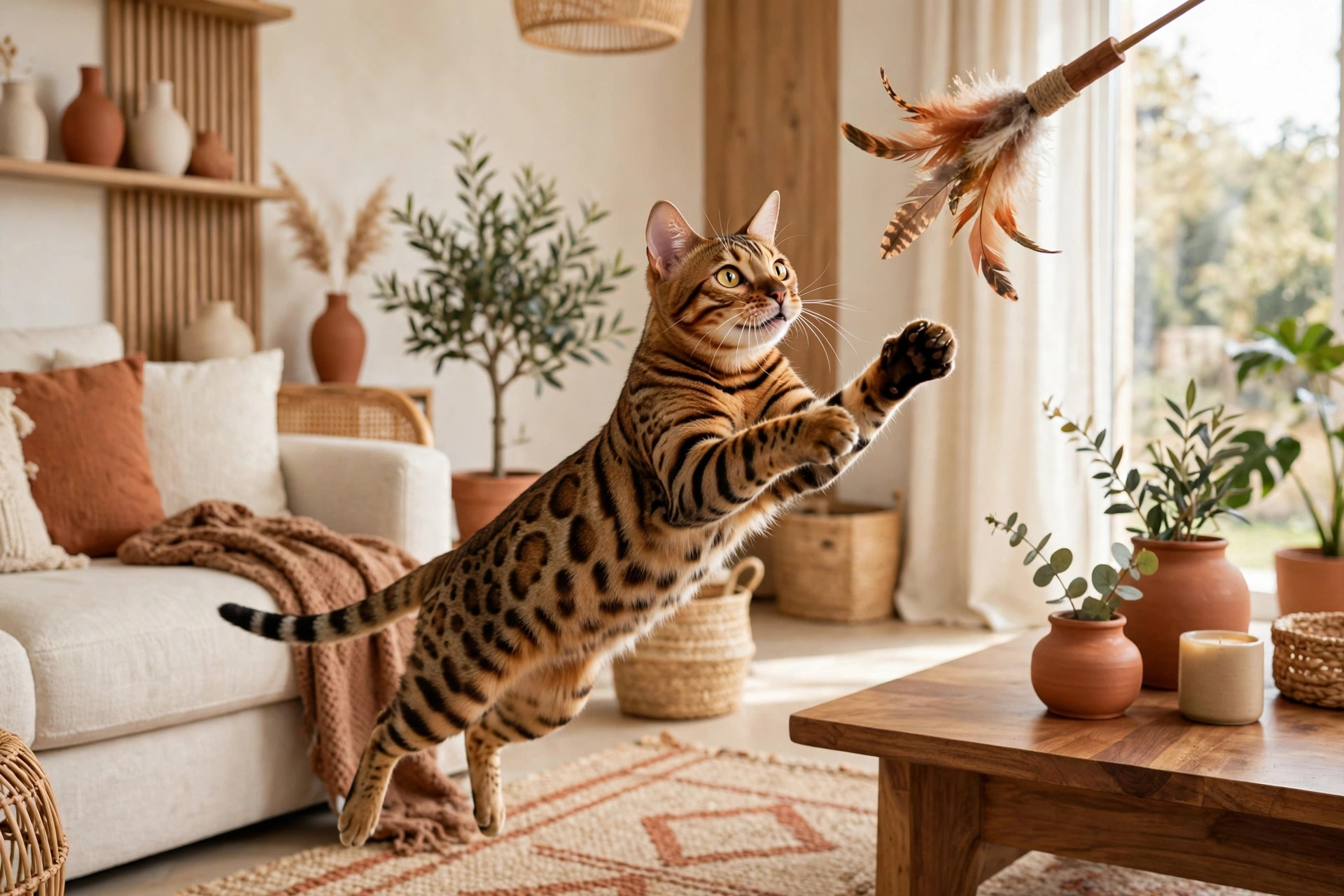
1. Feather wand toy — best for stalkers and chasers
A long wand with a feather or fabric lure at the end gives you full control of the chase. Drag it around a chair leg. Freeze. Twitch it once. That pause is the magic part.
Pros: Works for almost every age; you control speed and difficulty; replacement lures are cheap.
Cons: Needs you at the other end; feathers wear out; string demands supervised play and closed storage.
Who should skip: Anyone wanting a toy that entertains a cat while nobody is home.
2. Refillable catnip kicker — best for bunny-kickers
A kicker is a long, soft tube a cat can grab, bite, and rake with her back feet. Refillable versions have a pocket for fresh catnip, which keeps the scent strong month after month.
Pros: Satisfies grab-and-kick play; refillable scent stays interesting; soft enough for indoor floors.
Cons: Not every cat reacts to catnip; fabric can tear under determined chewing; loose filling means retiring the toy.
Who should skip: Cats who ignore catnip completely — try a silver vine filling instead, a plant many non-responders do react to.
3. Crinkle ball set — best cheap chase toy
Light balls with a crinkly core make a faint prey-like rustle as they roll. They’re light enough for a kitten to bat across a room and cheap enough to lose under a sofa without tears.
Pros: Very low cost per toy; sound draws cats who track by ear; good for solo batting.
Cons: They vanish under furniture; thin film can split, so inspect and toss damaged ones; some cats find the sound annoying rather than fun.
Who should skip: Heavy chewers who shred film toys.
4. Puzzle feeder toy — best for smart, food-driven cats
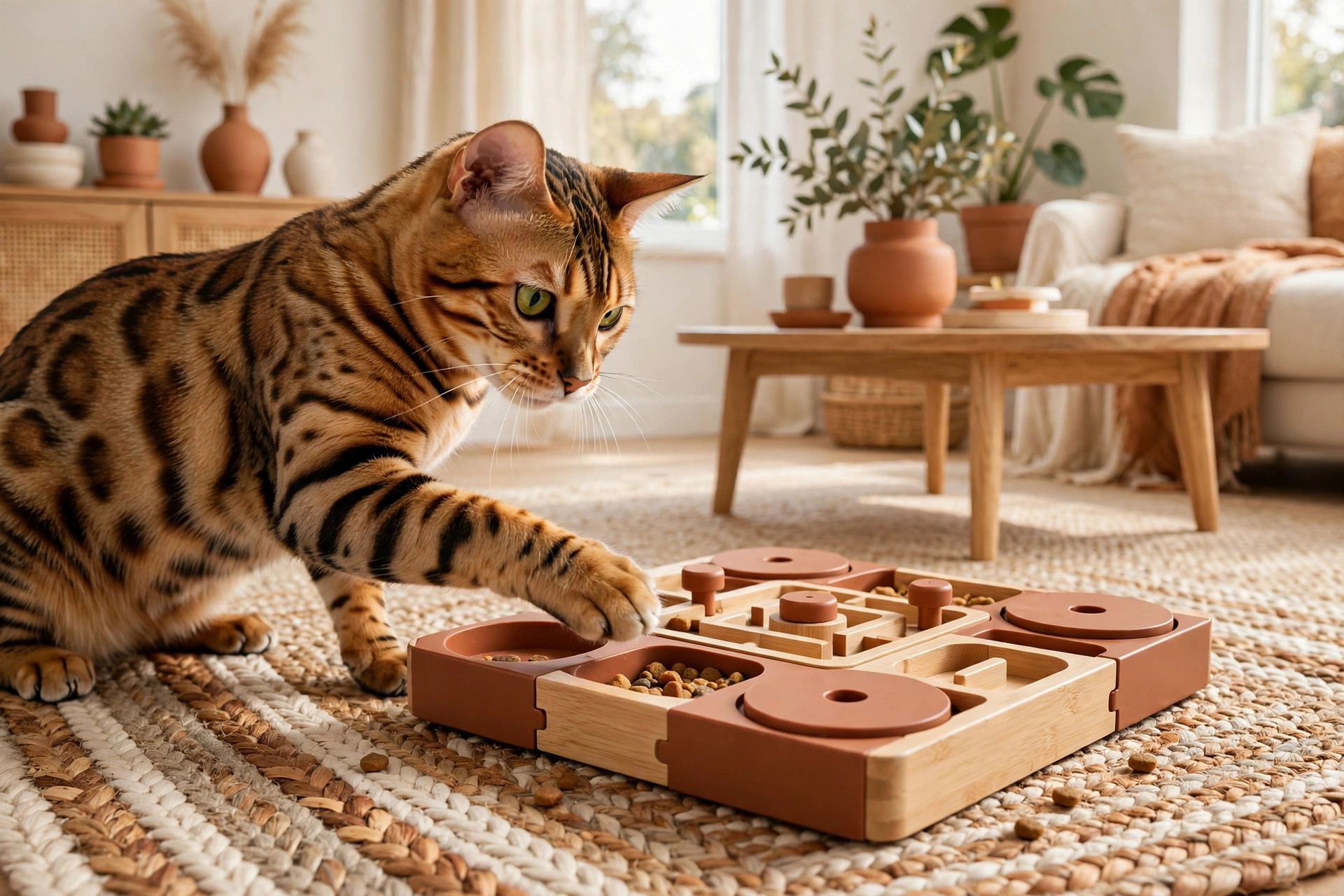
A puzzle feeder turns a portion of daily kibble into a job. Cats slide covers, flip cups, or roll a ball that drops food a piece at a time. Start easy. A cat who can’t solve day one should still win some food, or she’ll walk away and not return.
Pros: Slows fast eaters; burns mental energy on rainy days; portion comes out of the normal food allowance, not extra treats.
Cons: Needs washing; clever cats master one puzzle and need a harder level; not ideal for multi-cat homes where one cat guards food.
Who should skip: Cats on a strict prescription diet, unless your vet approves the food used inside.
5. Track ball tower — best for solo play
A tiered track with captive balls lets a cat bat and chase without the ball escaping. It sits in a corner, ready at any hour, which suits cats whose play mood strikes at dawn.
Pros: Balls can’t get lost; kittens and seniors can both use it; no batteries or refills.
Cons: Takes floor space; some cats bore of it within weeks; plastic tracks get noisy on hard floors at night.
Who should skip: Cats who only engage when a human moves the toy.
6. Soft mouse with rattle — best for carriers and fetchers
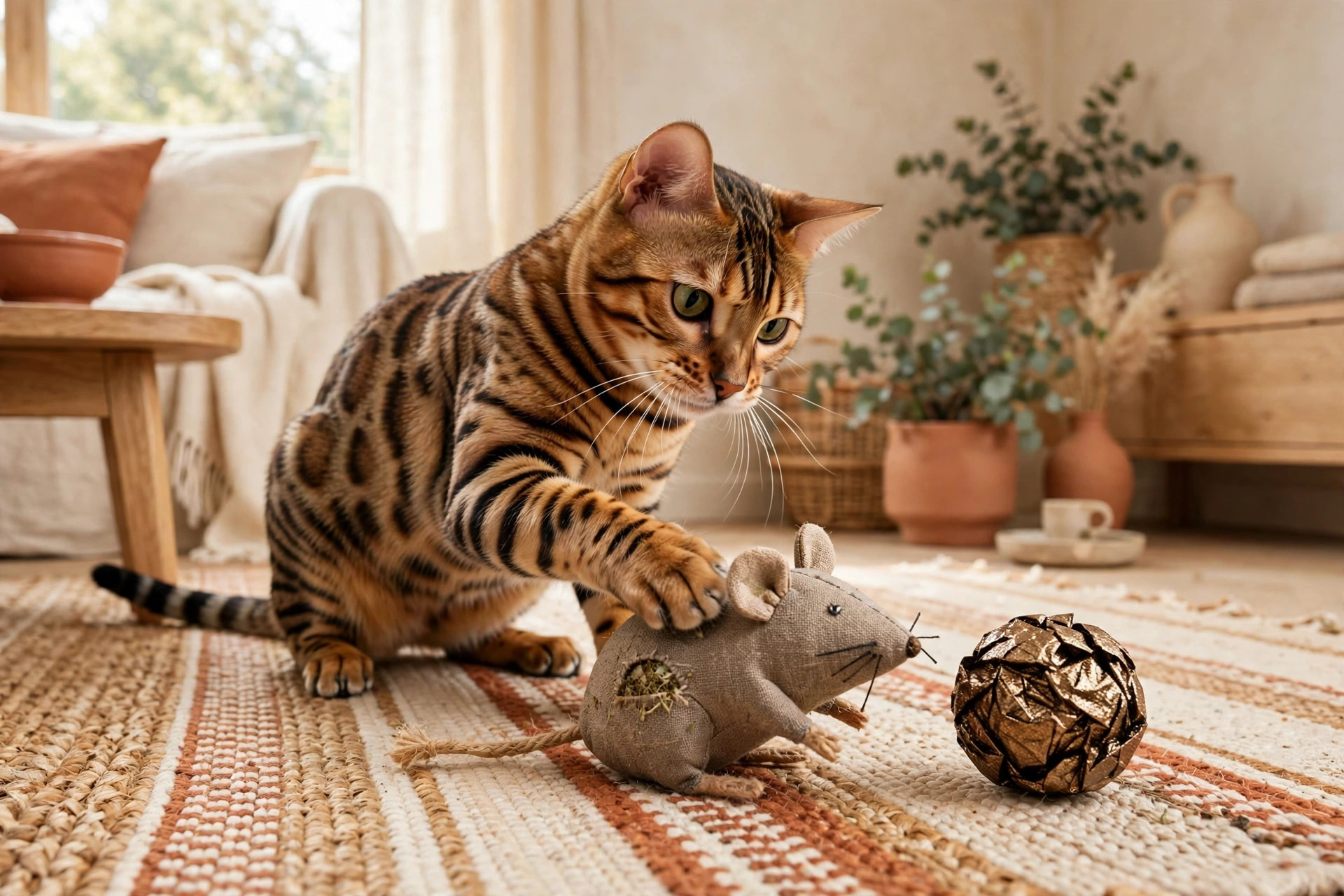
Some cats carry toys around and drop them at your feet. A small soft mouse is built for exactly that. A gentle rattle helps you find it, and helps the cat track it mid-toss.
Pros: Light to carry; good for fetch-style play; multi-packs soften the pain of losses.
Cons: Small parts and glued features vary by maker, so check stitching; determined chewers can open the seams; rattles bother light sleepers.
Who should skip: Cats who eat fabric or wool — choose solid rubber or silicone toys instead.
7. Cardboard scratcher with toy track — best two-in-one
A flat cardboard scratcher with a ball track around the edge pairs claw care with play. Cardboard gives a satisfying shred, replaceable pads keep the cost sane, and a sprinkle of catnip introduces the spot to a new cat.
Pros: Two jobs in one footprint; refill pads are widely sold; most cats take to cardboard fast.
Cons: Cardboard flakes get everywhere; pads need regular replacement; not a toy for cats who prefer vertical scratching.
Who should skip: Anyone who hates sweeping up cardboard dust.
A simple rotation that keeps toys interesting
Don’t leave every toy out at once. Put three out. Box the rest. Swap the set every few days and old toys feel new again, a trick shelters and behavior guides use because novelty fades fast. Play in short bursts, two or three sessions of five to ten minutes spread across the day, and stop while your cat still cares. Ending early beats playing until she wanders off mid-chase.
Watch what she picks. A cat who always chooses the kicker is telling you something. Buy her a better kicker, not a fourth wand.
Verdict
Start with the feather wand. It suits the widest range of cats and costs little. Add a refillable kicker if your cat grabs and kicks, a puzzle feeder if she’s food-driven and bright, and a track tower for solo hours. The crinkle balls, soft mouse, and scratcher fill gaps cheaply. Seven toys, each with a clear job, beat a basket of random plastic every time.
Judging any cat toy — or any gear — comes back to the same few measurements. Our buyer’s guide to choosing pet gear that actually works lays out the spec checks and red flags we use across every category.
FAQ
How many toys does an indoor cat need?
Three to five toys out at a time is plenty for most cats, with a few more stored for rotation. Variety of play type matters more than raw count: one chase toy, one kick toy, one puzzle, and one solo toy cover the main behaviors.
How long should a play session last?
Five to ten minutes, two or three times a day, works for most adult cats. Kittens often want shorter, more frequent bursts. End the session with a catch and a small meal to complete the hunt cycle.
Are laser pointers a good cat toy?
They can frustrate some cats because the hunt never ends in a catch. If you use one, finish by landing the dot on a treat or a physical toy your cat can grab. Behavior organizations such as International Cat Care advise care with toys that never let a cat succeed.
When should I throw a cat toy away?
As soon as stitching opens, film splits, or small parts loosen. A toy that sheds pieces becomes a swallowing risk. Inspect wand strings and feather lures before each session, and store string toys out of reach between sessions.
This article was created with AI assistance and reviewed by our editorial team before publishing.
 5 Best Puzzle Toys for Dogs Who Get Bored Fast (2026)
 How to Choose Pet Gear That Actually Works: The Honest Buyer’s Guide
 Indestructible Dog Toys: 9 Picks for Power Chewers