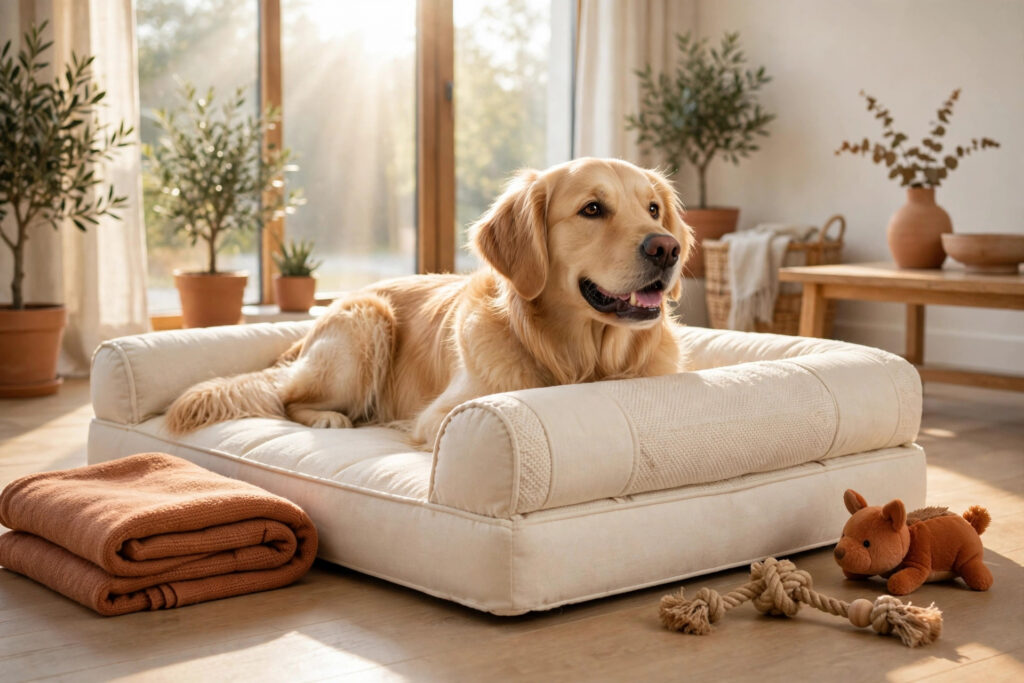
The short answer: Set up your new dog’s bed in a quiet corner of the room where you spend your evenings, choose a washable bed one size up from what the measurements suggest, and add one item carrying a familiar scent — a worn T-shirt of yours or another familiar-scented item. Then leave it alone. Consistency in the first two weeks does more for settling in than any product.
The day a new dog walks through your front door, everything is new. New smells, new sounds, new people, new rules. No dog arrives fully relaxed — most are running on adrenaline and confusion. In that first week, a dog doesn’t need a bigger house or a toy basket. She needs one small, predictable place that is hers.
That’s what the bed is. Not furniture — a landmark.
Why their own bed matters more than you think
Dogs are den animals. When everything around them is unfamiliar, a defined resting spot gives their nervous system permission to stand down. Experienced owners see this constantly: the dog that paces the house for three days finally exhales the moment it claims a corner and nobody moves it.
A bed also gives you a training anchor from day one. “Go to your bed” becomes the first polite request you can teach without any pressure — reward the dog for choosing the bed, and within days you have a default calm behavior you can use when guests arrive or dinner is on the table. It works because the bed was never a punishment zone, only a good place.
There’s a practical side too. A new dog may have accidents, chew when anxious, or shed stress for weeks. A designated, washable bed concentrates all of that in one manageable spot instead of your sofa.
Picking the right bed
You don’t need the expensive one. You need the right one — and “right” for a new dog is different from “right” for a settled dog.
Size: go one up
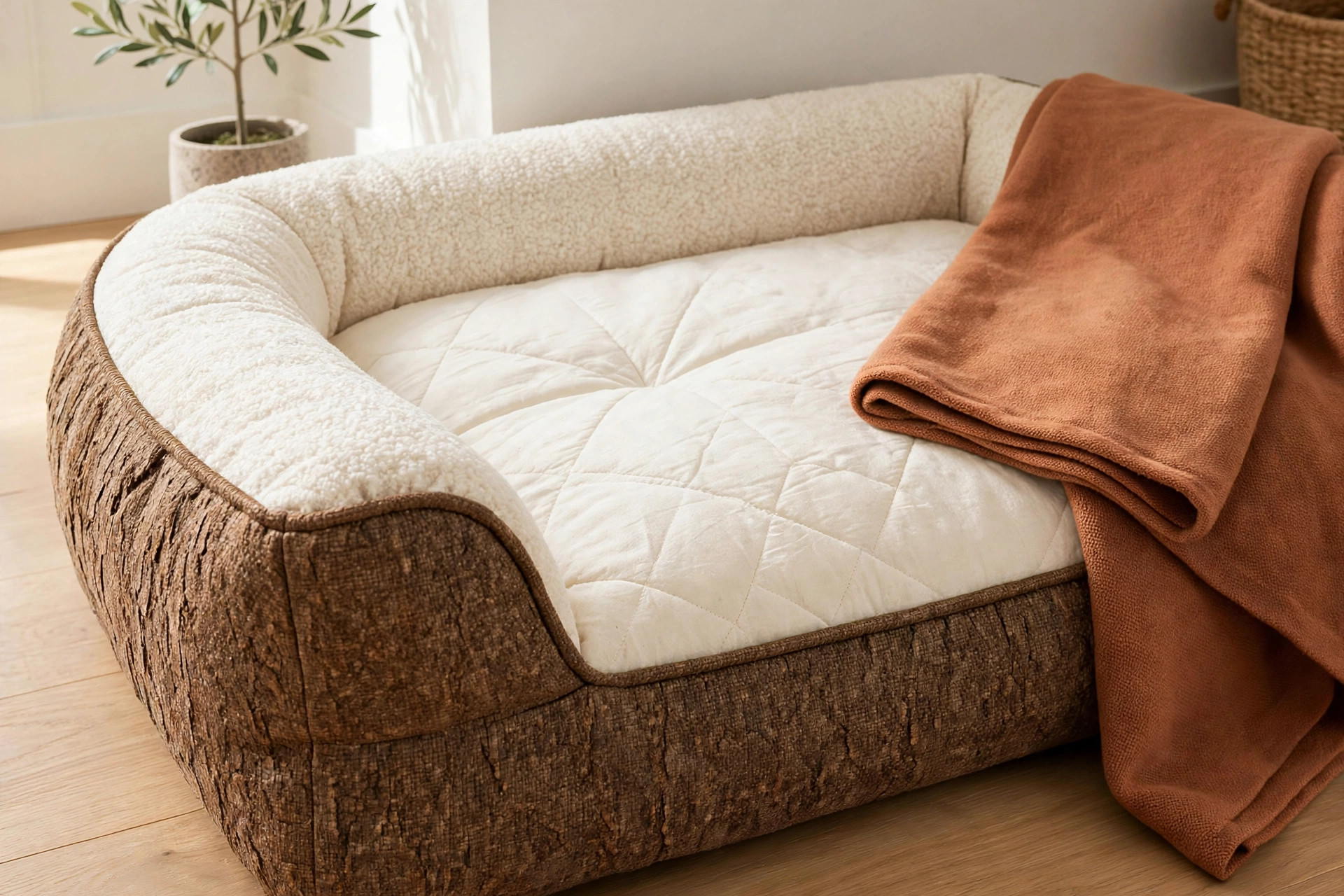
Measure your dog from nose to tail base while she’s lying on her side, then add 15–20 cm. Bed size charts assume a curled sleeper; most dogs sprawl once they feel safe. A bed that’s slightly too big is forgiving. A bed that’s slightly too small gets ignored.
Washability beats everything
For the first month, the single most important feature is a fully removable, machine-washable cover — ideally washable at 40°C or higher. New dogs often arrive carrying unfamiliar smells, shedding stress, and sometimes dealing with skin issues that need medicated baths. You will wash this bed more in the first three weeks than in the following year. If the cover doesn’t come off, don’t buy it.
Match the type to the dog
- Anxious or young dogs: a bolster or donut bed with raised edges. The rim gives a sense of enclosure and somewhere to rest a chin — many nervous dogs visibly relax faster in these.
- Senior dogs: a flat orthopedic or memory-foam mat. Older dogs often have stiff joints; firm, supportive foam beats plush stuffing that bottoms out.
- Power chewers: a raised cot-style bed. Less to destroy, easy to hose down, and it keeps them off cold floors. You can upgrade to plush later once the chewing phase passes.
- Hot climates or heavy coats: elevated mesh or a cooling mat insert. Dogs from warm regions often run hot for weeks while their stress hormones settle.
Skip anything with a dozen small parts, electronic features, or a price tag that would upset you if it got chewed on night two. Fancy can wait until month three.
Where the bed goes
Placement matters as much as the bed itself. The rules are simple:
- A corner, not the middle. Walls on two sides mean the dog only has to watch one direction. Open floor in the center of a room feels exposed to a nervous dog.
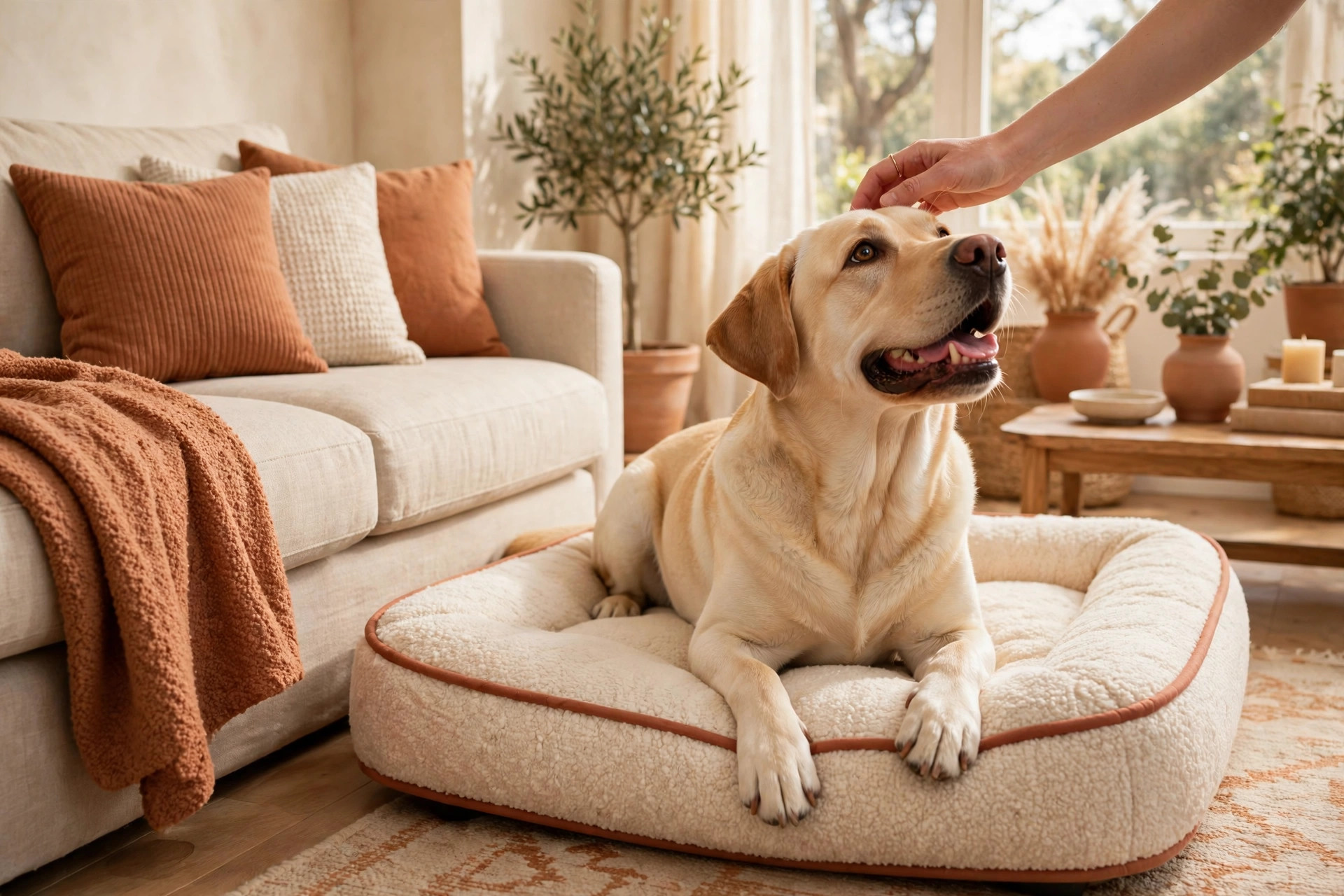
- Near you, not isolated. The laundry room or a spare bedroom feels like exile. Put the bed in the room where you spend your evenings — the living room corner, beside your desk — so the dog can decompress in your orbit.
- Away from traffic lanes. Not next to the front door, not in the hallway everyone walks through, not beside the washing machine. Startling a sleeping dog repeatedly teaches them the bed isn’t safe.
- Off the draft, off the heat. Away from direct air-conditioning blasts and radiators. A spot with a few hours of mild sun is ideal — dogs self-regulate beautifully when given the choice.
If you’re crate training, the crate goes right next to the bed (or the bed goes inside the crate) — not in different rooms. The dog should experience them as one safe zone, not two competing ones.
The first-night ritual
The first night sets the tone. Here’s the routine experienced dog owners swear by:
- Bring a scent bridge. Bring the blanket or toy the dog slept with before, if you can. If that’s not possible, sleep with a plain T-shirt for two nights before the dog arrives and put it on the bed. Familiar scent is the fastest shortcut to “this place is okay.”
- Keep the first evening boring. No welcome party, no parade of neighbors. A short walk, dinner in the same spot the bed is, then quiet time. Let the dog investigate the bed on her own terms.
- Reward bed visits. Every time the dog steps onto the bed voluntarily in the first days, drop a small treat between her paws. You’re building an association: bed equals good things, no strings attached.
- Don’t move it. For the first two weeks, the bed stays exactly where you put it. Dogs navigate a new home by landmarks. Moving the one safe spot resets their mental map.
- Stay nearby the first nights. If the dog whines, sitting on the floor next to the bed for a while beats bringing her into your bed “just this once.” Comfort without creating a habit you’ll need to untrain later.
Mistakes that slow down settling
Buying the “forever bed” on day one. You don’t know yet whether your dog is a sprawler, a burrower, or a floor-sleeper. Start with a good-enough washable bed; buy the dream bed in month two when you know her habits.
Too many beds, too soon. One bed in one spot. Multiple options sound generous but give an anxious dog decisions to make. Settle on one, then add a second spot later once she’s confident.
Letting everyone crowd the bed. Kids, visitors, the resident cat — the bed is the dog’s sovereign territory for the first month. Teach the household: dog on bed means do not disturb. This single rule prevents more first-week setbacks than any other.
Washing away the scent bridge too early. That scent item will smell terrible to you. Wash the bed cover, but leave the scent item unwashed for the first week or two. It’s doing more work than it looks.
FAQs: New dog bed setup
Should a new dog sleep in my bedroom?
For the first week or two, yes if you can — a bed or crate in your bedroom corner helps a nervous new dog settle much faster than sleeping alone downstairs. You can gradually move the bed to its permanent spot after the dog is eating, playing, and relaxing normally, usually around week three or four.
My new dog won’t use the bed and sleeps on the floor. Is that normal?
Completely. Many dogs have never had a soft bed and don’t trust unfamiliar textures yet. Leave the bed where it is, put treats on it, and give it time — most floor-sleepers migrate to the bed within two to three weeks once they realize it’s warm and nobody takes it away.
How often should I wash a new dog’s bed?
Weekly for the first month is a good rhythm, more often if there are accidents. Use a fragrance-free detergent — strong scents can unsettle a dog that’s just learning the smell of home. Always keep the bed’s location and the scent-bridge item consistent even as you wash the cover.
Is it okay to let my new dog on the sofa instead of a bed?
It’s your house and your rules, but decide on day one and stay consistent. Dogs find changing rules stressful. Many trainers recommend establishing the dog’s own bed first — it gives the dog a clear “yes” place — and then deciding about sofa privileges after the first month, once the dog understands household boundaries.
This article was created with AI assistance and reviewed by our editorial team before publishing.
 5 Best Cooling Dog Beds for Warm Sleepers (2026)
 How to Choose Pet Gear That Actually Works: The Honest Buyer’s Guide
 Cat Window Perches & Hammocks: 3 Styles Compared (2026)