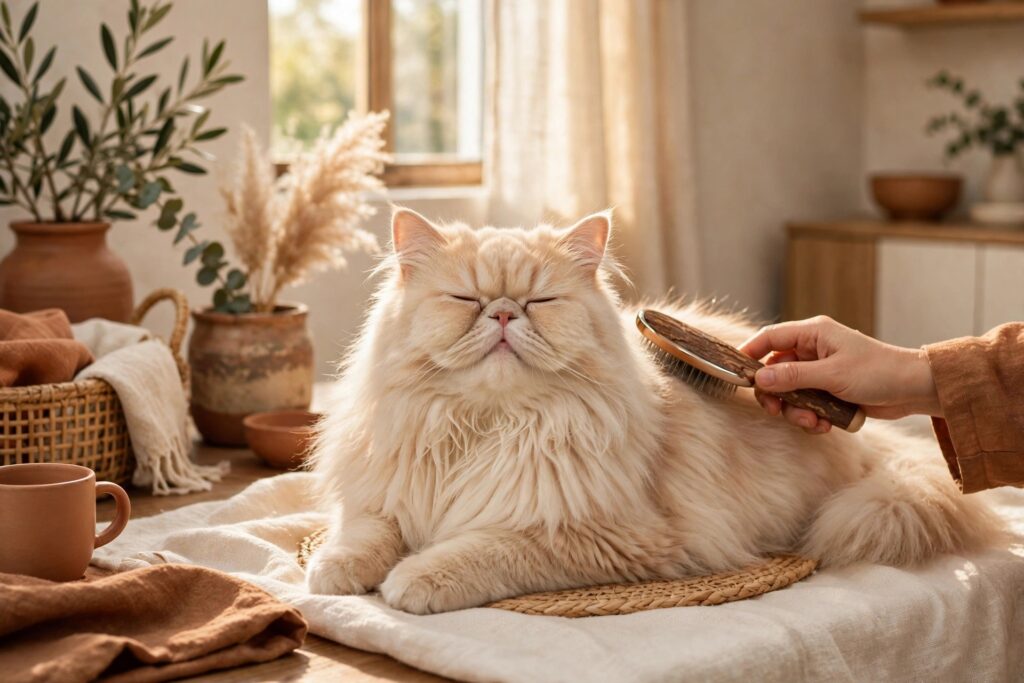
For a longhair cat, one brush won’t do it all. A slicker brush lifts loose fur and light tangles, a steel comb checks your work down to the skin, and a dematting tool handles the stubborn spots. Start with those three, add the rest only if your cat needs them.
Persians make this plain fast. That soft undercoat looks gorgeous in photos. Left alone for a week, it packs down behind the ears, under the front legs, and along the belly — exactly where your cat least wants you poking around. A short daily session beats a long battle once a month, every time.
You don’t need a drawer full of tools. You need the right two or three, used gently and often. The picks below cover the jobs that actually come up with a long coat: daily fluffing, finding hidden tangles, and working out small mats before they turn into a shaving job at the groomer.
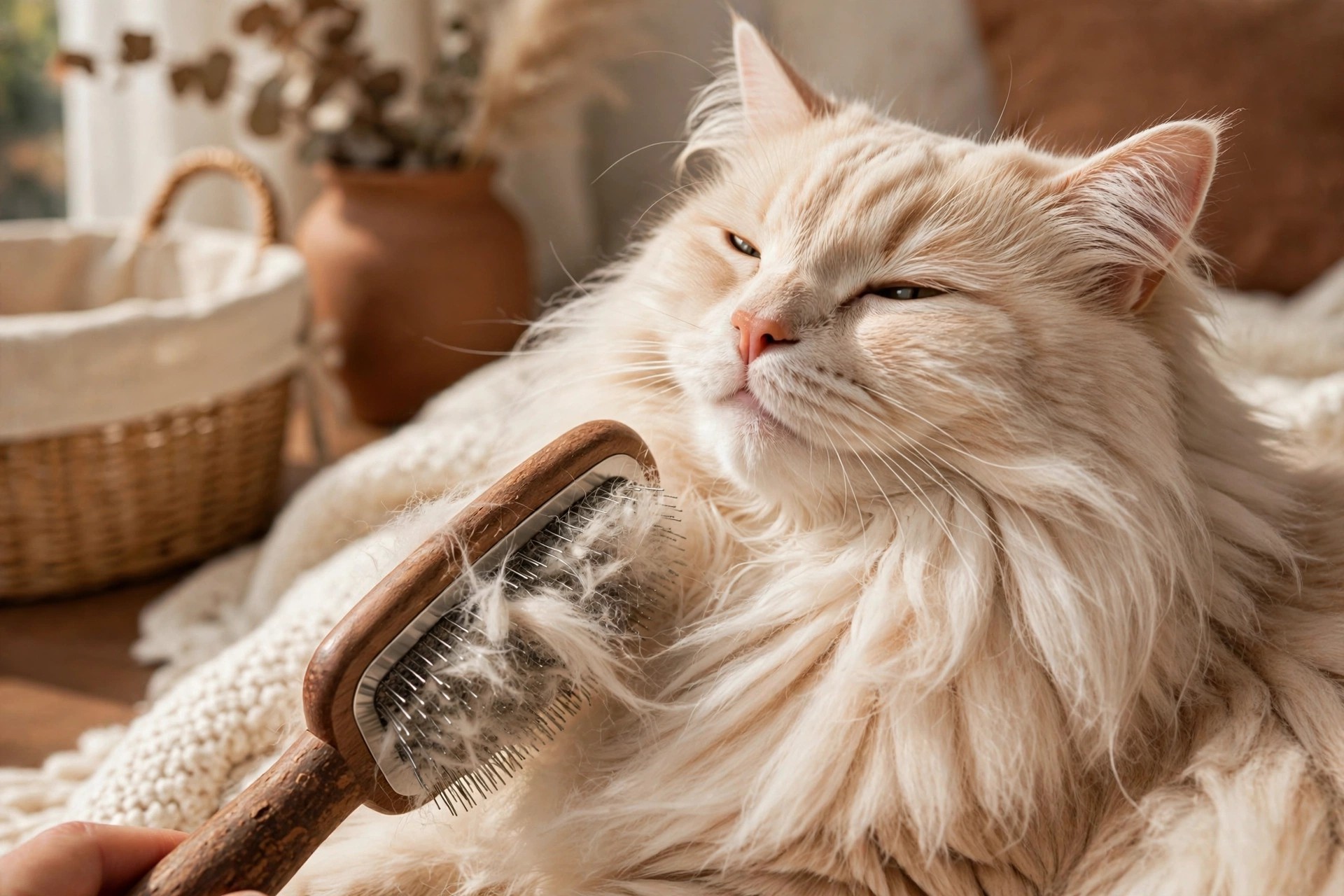
A slicker brush does the daily work for most longhair cats — light strokes, no pressing down.
What to look for
Pin tips that won’t scratch. Run the brush across the inside of your wrist before you use it on your cat. If it scrapes you, it’ll scrape her. Rounded or coated tips on a slicker, and smooth, rounded teeth on a comb, matter more than a fancy handle.
The right size for the job. A wide slicker covers a Persian’s back in a few strokes, which is great. It won’t fit behind the ears or into the armpits, though. That’s comb territory. Most owners end up happiest with one medium brush plus one comb, not one giant tool that tries to do everything.
Coat first, cat second
Fine, silky coats tangle differently from thick, cottony ones. A Persian with a cottony undercoat needs the comb check after every brushing, because the surface can look smooth while a mat hides underneath. A silkier coat sheds tangles easier and may only need the slicker plus a weekly comb-through.
Temperament counts too. Some cats love being brushed and will lean into it. Others give you about ninety seconds. If your cat is in the second group, pick tools that work fast and quit while you’re ahead. A half-finished session that ends calmly is better than a perfect session that ends with a bite.
A handle you can hold lightly. You shouldn’t need to grip hard or press down. If you find yourself pushing, the tool is wrong or the coat needs a comb first. Light, repeated strokes do the work.
How we evaluate
Each pick below was judged on the same short list. Does it reach through a long coat to the skin without scratching? Does it remove loose fur without snapping healthy hair? Can it get into small spots — ears, armpits, belly, tail base? And does it stay easy to clean, because a brush clogged with fur stops working halfway through a session.
Comfort for the cat came first in every call. A tool that clears fur fast but makes a cat flinch, flatten her ears, or leave the room lost points, no matter how tidy the result looked. Ease for the person came second: simple cleaning, a secure grip, and no fiddly parts to lose.
Price was the last factor, not the first. A cheap comb with smooth teeth beats an expensive gadget a cat hates. Where a pick costs more, the reason should be obvious — better steel, kinder tips, a mechanism that actually saves time.
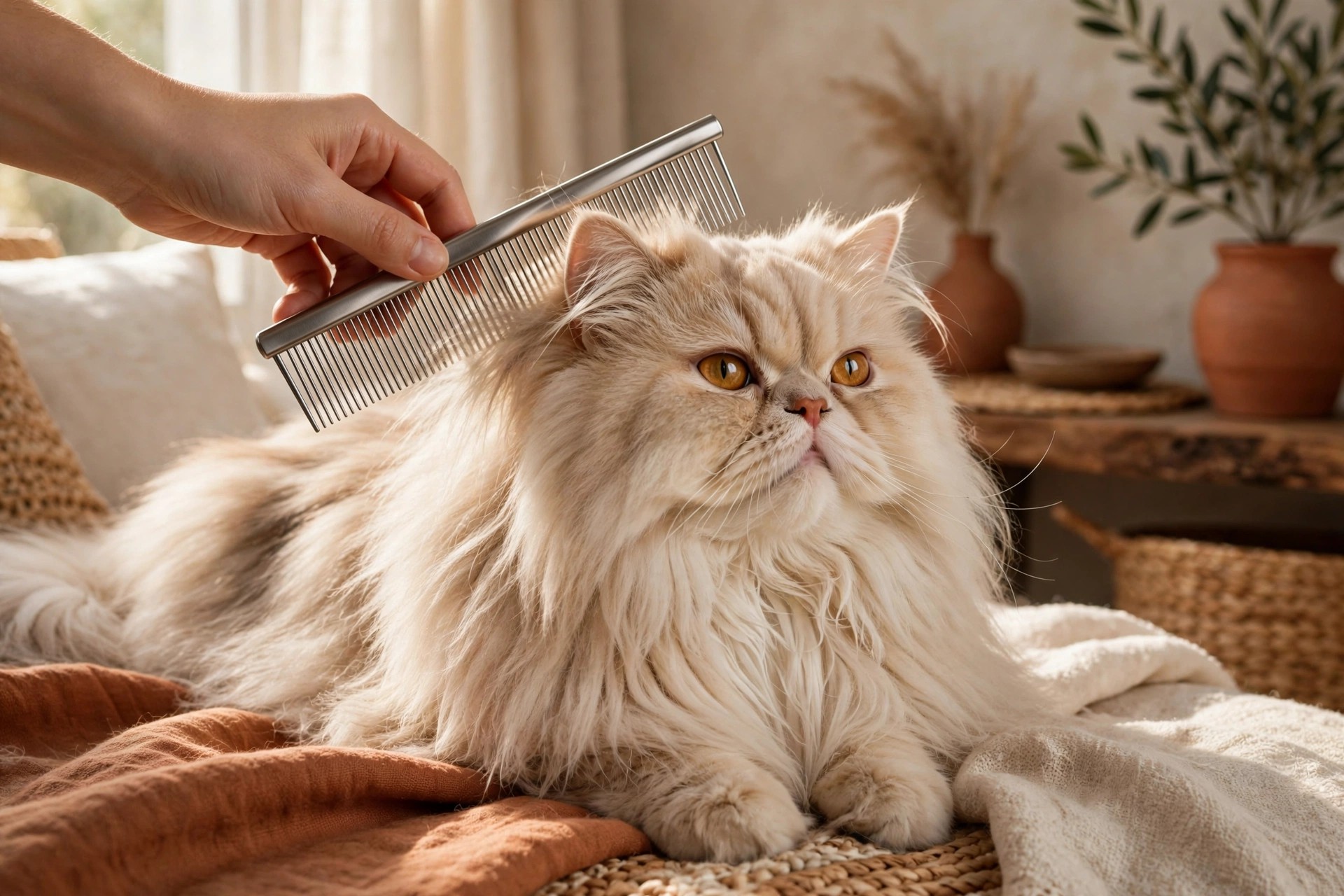
A stainless steel comb with wide and fine teeth is the honest check — if it glides through, the coat is truly tangle-free.
The 5 picks
1. Self-cleaning slicker brush — best for daily brushing
This is the starter brush for most longhair homes. Fine, angled pins lift loose undercoat and smooth the top layer, and a push-button retracts the pins so the collected fur drops off in one sheet. No digging fur out with your fingers.
Use it in short strokes, in the direction the coat grows. Work in sections. Back, sides, then the trickier spots last, while your cat is still in a good mood about the whole thing.
Pros:
- Fast for everyday loose-fur removal
- Retracting pins make cleaning effortless
- Works well on backs, sides, and tails
Cons:
- Too big for behind the ears and armpits
- Easy to press too hard — let the pins do it
- Won’t cut through a real mat
2. Stainless steel comb, dual-tooth — best for finding tangles
If you buy only one tool, buy this one. One end has widely spaced teeth for the first pass, the other has finer teeth for the detail work. Steel teeth glide better than plastic, they don’t snap, and they show you the truth about the coat.
The routine is simple. Brush first, then comb. Where the comb slides through, you’re done. Where it catches, stop — don’t yank. Hold the base of the tangle with your fingers so the skin isn’t pulled, and tease it apart from the ends inward.
Pros:
- Finds hidden tangles a brush skims over
- Fits every tight spot on the body
- Lasts for years; easy to wash
Cons:
- Slower than a brush for big areas
- No handle comfort on the cheapest versions
- Teaches you how much work the coat really needs
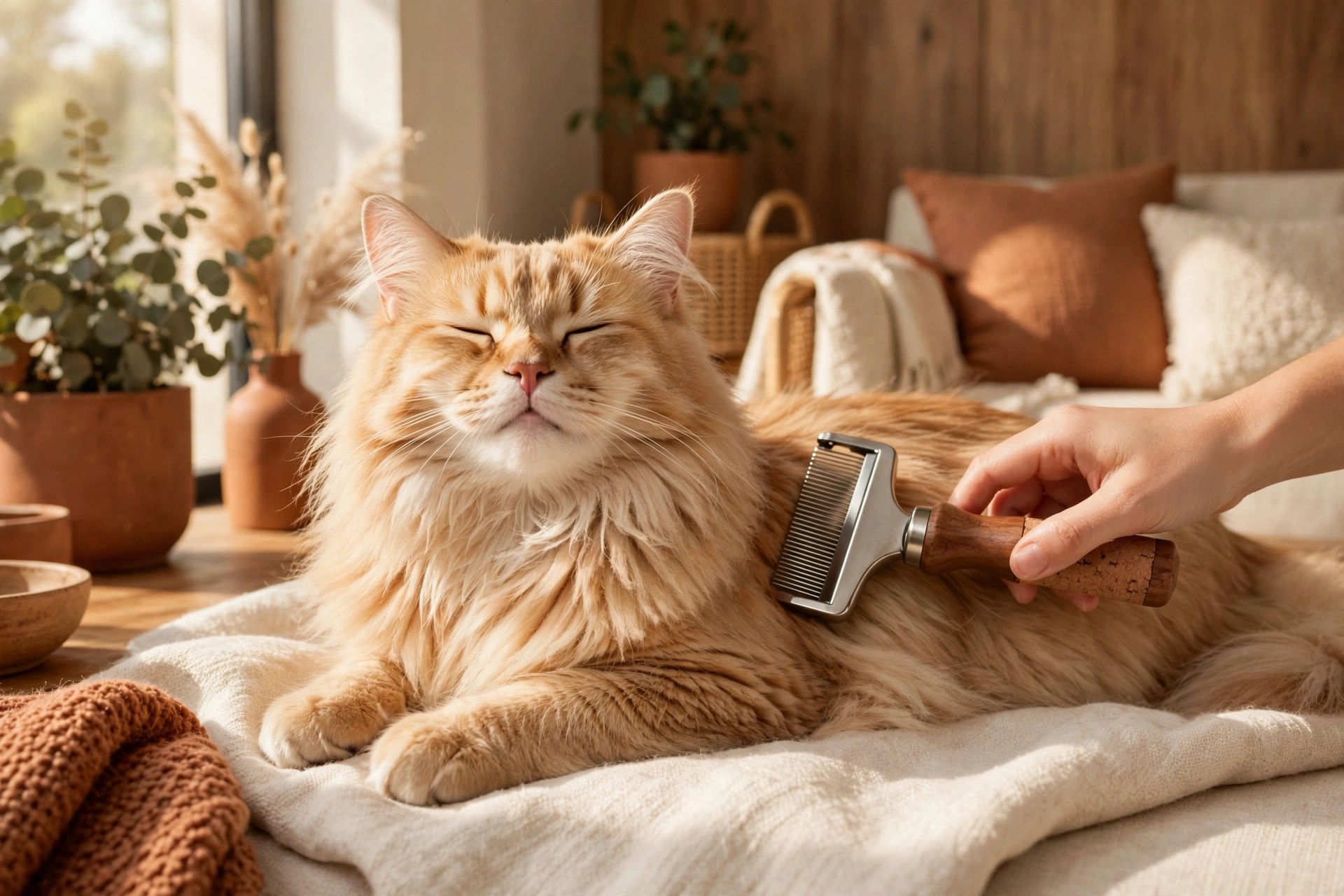
A dematting tool is for small, started mats only — slow, short strokes, and stop if the mat sits tight against the skin.
3. Dematting comb — best for small, started mats
Mats start small. A dematting comb has a row of curved, protected blades that slice vertically through a tangle as you draw it through, splitting one big knot into smaller pieces a regular comb can finish. Used early, it can save a patch of coat you’d otherwise have to clip.
Timing is everything here. A pea-sized tangle behind an ear? Good candidate. A hard, felted mat tight to the skin? That’s not a home job. Pulling at it hurts, and blades near skin leave no room for error. Clip it out carefully or let a groomer do it.
Pros:
- Saves coat that a brush can’t rescue
- Good for ear, armpit, and belly tangles
- Works in minutes on early mats
Cons:
- Not safe on tight, felted mats
- Needs a slow hand and good light
- Useless as a daily brush — it’s a rescue tool
4. Deshedding tool — best for heavy shedding weeks
A deshedding tool has a fine metal edge that reaches through the topcoat and pulls out loose undercoat in surprising amounts. During a heavy shed, it shortens the season of fur on every sweater you own.
Use a light touch, and use it sparingly. A few strokes once a week during shedding season is plenty for most cats. Daily use, or pressing down, can thin a coat that wasn’t loose to begin with and irritate skin. Think of it as a seasonal helper, not your main brush.
Pros:
- Removes a lot of loose undercoat quickly
- Helpful during spring and autumn sheds
- Fur ejector buttons keep cleanup simple
Cons:
- Easy to overuse — weekly is enough for most cats
- Not for mats, and not for daily use
- Some cats dislike the feel; test gently first
5. Soft pin and bristle brush — best for finishing and nervous cats
The gentlest pick on this list. One side carries flexible pins that smooth the coat, the other carries soft bristles that spread natural oils and give that finished, glossy look Persians are famous for. It won’t tackle tangles. That’s not its job.
Its real value is trust. Kittens, rescues settling in, and cats who bolt at the sight of a slicker often accept this brush. Start here, keep sessions short and pleasant, and many cats graduate to the slicker and comb later.
Pros:
- Kindest option for brush-shy cats
- Lovely finishing pass after combing
- Good first brush for kittens
Cons:
- Can’t remove mats or much loose undercoat
- You’ll still need a steel comb alongside it
- Bristles wear faster than steel tools
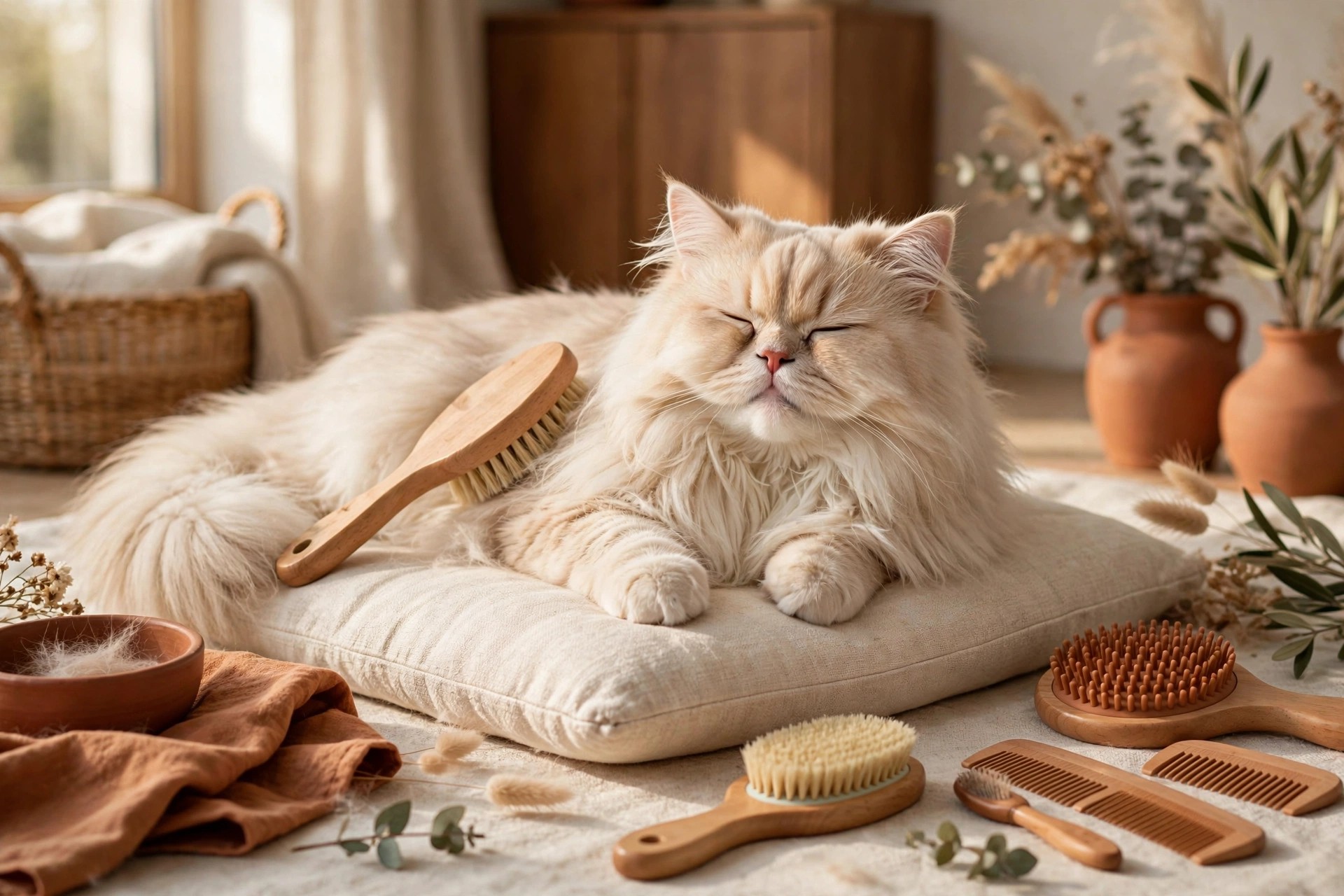
Short, calm sessions on a favourite cushion beat one long grooming battle — stop while your cat is still relaxed.
The verdict: what to buy first
Start with two tools: the dual-tooth steel comb and the self-cleaning slicker. Together they handle daily care for almost any longhair cat, and they cost less than most single gadgets. Add the dematting comb the first time you find a tangle that won’t tease out by hand.
Buy the deshedding tool only if shedding season truly buries your home, and buy the soft brush if your cat needs persuading that grooming can feel nice. Skip anything motorised or scented. A long coat needs patience and the right teeth spacing, not features.
One last habit matters more than any purchase: comb to the skin. If you remember nothing else, remember that. Surface brushing makes a cat look groomed while mats quietly form underneath, and that’s the trap nearly every longhair owner falls into once.
FAQ
How often should I brush a Persian cat?
A short session most days works best — even five minutes. The comb check matters more than marathon brushing. If daily isn’t realistic, aim for a thorough brush and comb-through at least three times a week, paying extra attention behind the ears and under the front legs.
Can I use a dog brush on my cat?
Sometimes, but check the pins first. Many dog slickers have harsher pins made for thicker skin and coarser coats. If it scratches your wrist, skip it. Cat-sized tools also fit small areas — ears, armpits, belly — far better than a big dog brush.
What should I do about a mat that’s tight against the skin?
Don’t pull it, and don’t slide scissors under it. Cat skin is thin and cuts easily, often before you realise the blade touched it. Work a little pet-safe detangling spray in with your fingers and tease gently; if the mat won’t loosen, a groomer or vet clinic can clip it safely.
Why does my cat look brushed but still get mats?
Because brushing the surface isn’t the same as combing to the skin. Loose undercoat packs down at the base, especially in cottony coats, and forms felt where you can’t see it. Finish every session with the steel comb. If it glides through everywhere, the job is really done.
When should a kitten start getting brushed?
Early, with the softest brush you have and very short sessions. Let the kitten sniff the tool, do a few gentle strokes, then stop and play or offer a treat. You’re building a habit for life, not grooming a show cat — keeping it pleasant matters more than keeping it perfect.
This article was created with AI assistance and reviewed by our editorial team before publishing.
 5 Best Dog Grooming Clippers for Thick Coats (2026)
 How to Choose Pet Gear That Actually Works: The Honest Buyer’s Guide
 5 Best Dog Nail Grinders for Home Grooming (2026)