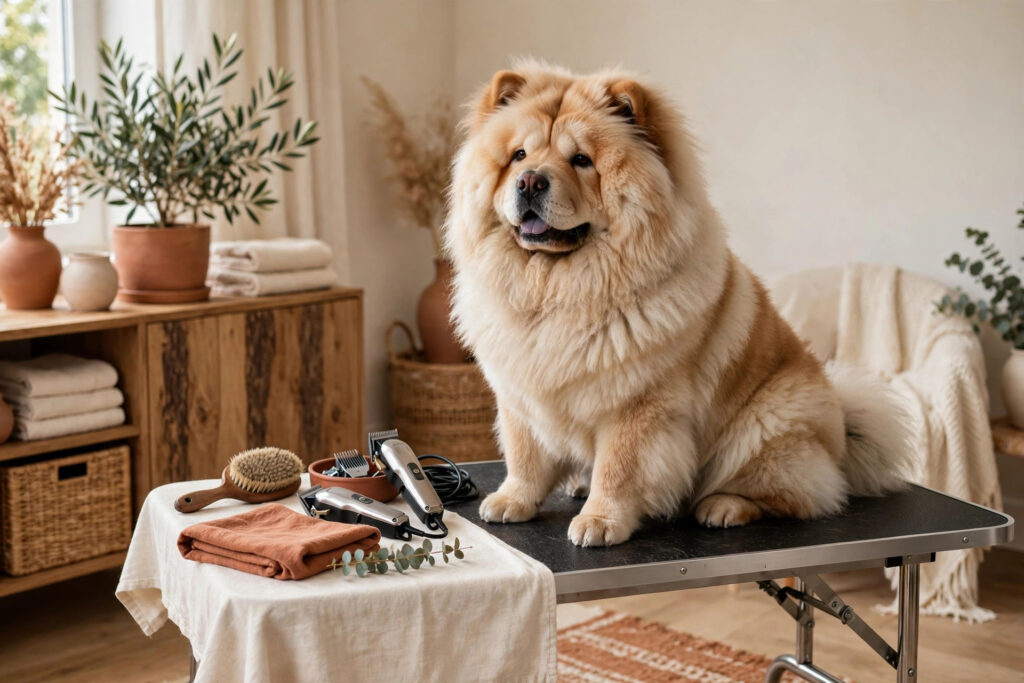
A thick double coat defeats weak clippers fast. The best dog grooming clippers for thick coats are the ones with a strong motor that doesn’t bog down in dense fur, a blade that stays cool, and comb attachments long enough to leave a tidy, even finish. For a Chow Chow or any heavy-coated dog, pick power and blade quality over a long list of speeds you won’t use.
What to look for in clippers for a thick coat
Start with the coat, not the box.
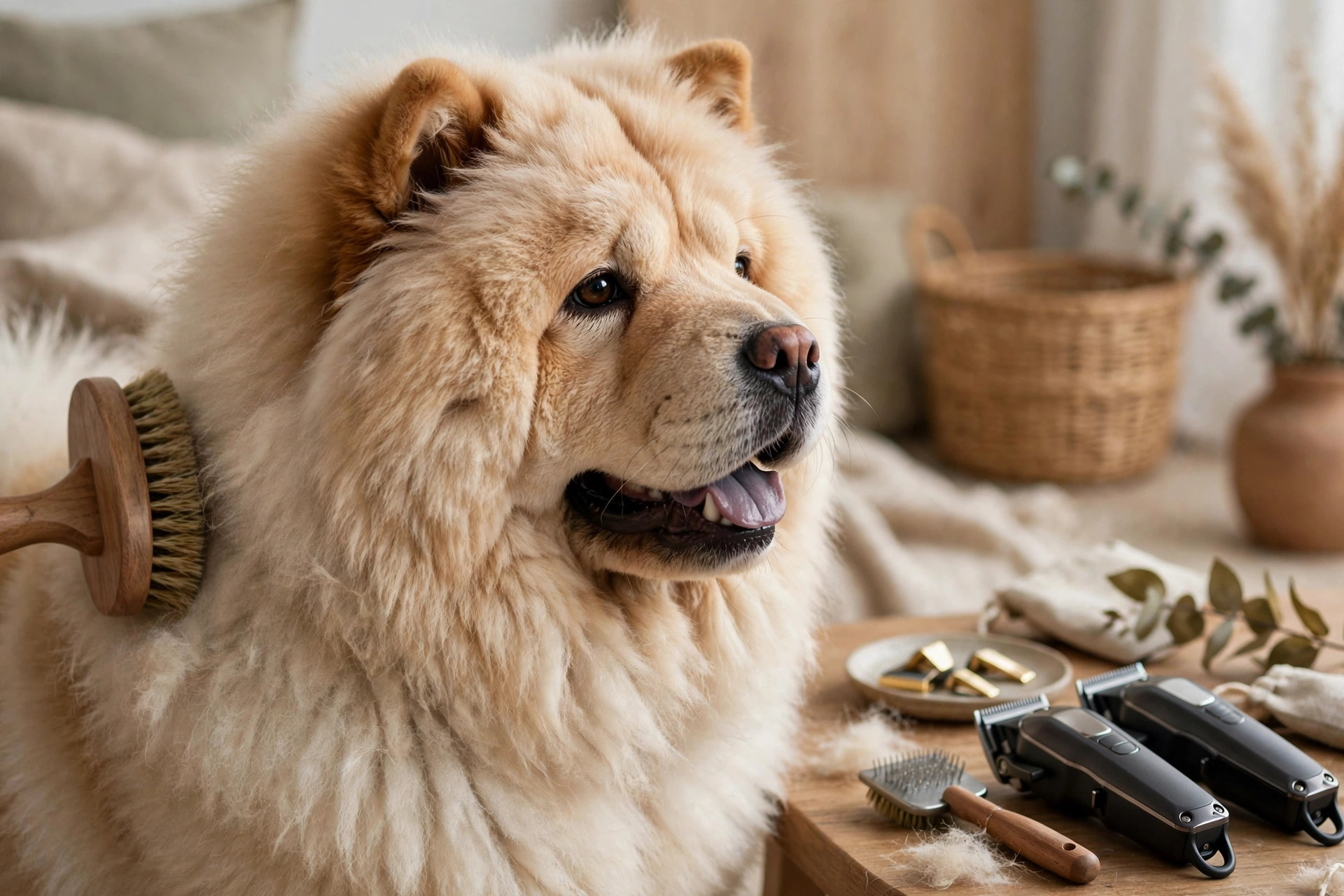
A Chow Chow carries two layers: a soft, woolly undercoat packed tight against the skin, and a coarser outer coat standing off it. A clipper has to push through both at once. If the motor fades halfway across a shoulder, you’ll get patchy lines, repeated passes, and a dog who’s had quite enough long before you’ve finished.
Motor strength is the headline. Look for a clipper described by its maker as suitable for thick or double coats, and check whether it uses a rotary motor rather than a small vibrating one. You don’t need a number to memorise. You need the maker’s own thick-coat claim, in writing, on the model you’re buying.
Blade material matters too. Steel and ceramic-edged blades are the usual choices. Ceramic tends to run cooler to the touch during a long session, steel tends to be the sturdier all-rounder — either way, a detachable blade you can swap and clean beats a fixed blade you can’t.
- Motor: rated by the maker for thick or double coats, no fading under load
- Blade: detachable, replaceable, and easy to brush clean mid-session
- Guides: comb attachments in several lengths, so you can leave coat rather than shave it
- Heat: a blade you can check with a fingertip and swap out when it warms up
- Noise: a steady low hum suits nervous dogs better than a high, buzzy whine
- Power: corded for non-stop sessions, cordless if you need to move around the dog
How we evaluate these clippers
No grooming salon trials here, and no stopwatch theatre. This list is built on checks you can repeat yourself on any product page or box: whether the maker rates the model for thick coats, what blade system it uses, which guide combs come in the kit, how the blade comes off for cleaning, and whether replacement blades are easy to buy later.
Each pick below names a specific model, chosen because it passes the checks above: a motor the maker rates for thick coats, a detachable blade system, and honest cord or run-time specs. Specs change. Kits change too. So read the listing you actually buy, and treat the first session as a trial run on one small patch — if the clipper snags, heats up, or leaves tramlines, it’s not the right tool for your dog’s coat, whatever the marketing promised.
The 5 picks
1. Andis AGC2 UltraEdge Super 2-Speed — the heavy-duty corded workhorse
Best for: full grooms on Chow Chows, Samoyeds and other dense double coats. Skip if: you only ever tidy paws and faces.
The model to look at is the Andis AGC2 UltraEdge Super 2-Speed. Its super 2-speed rotary motor runs at 3,400 and 4,400 strokes per minute, the blade detaches for quick swaps and cleaning, and it works with the whole A5-style blade ecosystem — Andis UltraEdge and CeramicEdge blades, plus Oster A5 blades. A 14-foot heavy-duty cord and a #10 blade in the box complete the workhorse brief.
This is the style to start with. A corded, detachable-blade clipper built for all-day grooming doesn’t care about battery levels, and it holds its power from the first pass to the last. The cord gets in the way sometimes. That’s the honest trade. In exchange, you get a tool that doesn’t quit in the middle of a hind leg.
Pros: steady power, swappable blades, built to last. Cons: the cord, the weight, and a price that only makes sense if you groom often.
2. Wahl KM Cordless — the two-speed cordless, power with freedom
Best for: dogs who move around, and owners who groom outdoors or away from a socket. Skip if: your sessions run long and you hate charging anything.
The model to look at is the Wahl KM Cordless. A brushless motor gives two speeds — 3,000 and 3,700 strokes per minute — with constant speed control that adds torque when the coat fights back. The lithium-ion battery is rated for up to 2 hours of cordless run time from a 60-minute charge, it also runs while plugged in, and it takes standard A5 snap-on blades, starting with the #10 Ultimate Competition blade it ships with.
A good cordless model gives you two useful gears: lower for faces and sensitive spots, higher for pushing through the thick stuff. Check the maker’s stated run time, then be sceptical in a healthy way — thick coats drain batteries faster than fine ones. A model that also works while plugged in solves that problem neatly.
Pros: no cord to tangle, two speeds cover detail and bulk. Cons: run time shrinks on dense fur, and a flat battery ends the session.
3. Wahl Bravura Lithium — the quiet low-vibration pick for clipper-shy dogs
Best for: nervous dogs, first grooms, and detail work around ears and paws. Skip if: your main job is stripping out a full winter coat.
The model to look at is the Wahl Bravura Lithium. It runs at up to 5,500 strokes per minute yet is built to be exceptionally quiet with virtually no vibration, and its 5-in-1 blade adjusts between #9, #10, #15, #30 and #40 with a lever, so detail work needs no blade swaps. The lithium battery gives up to 90 minutes of cordless run time, recharges in about 60 minutes, and the clipper works while plugged in too.
Some dogs don’t fear the blade. They fear the buzz against their skin. A low-vibration style trades a bit of raw push for a calmer session, and a calm dog holds still — which does more for a neat finish than extra power ever will. Use it for faces, feet and finishing, and bring in a heavier clipper for the body if the coat fights back.
Pros: calmer sessions, great control on details. Cons: slower through the densest patches, and easy to overwork if you ask it to do the whole dog.
4. Oster A6 Cool Comfort — heavy-duty coverage for big dogs and broad coats
Best for: large, heavily coated dogs where every pass covers serious ground. Skip if: your dog is small, or you do a lot of fiddly detail work.
The model to look at is the Oster A6 Cool Comfort. Its heavy-duty motor has three speeds — 3,100, 3,600 and 4,400 strokes per minute — and its detachable CryogenX #10 blade is A5-compatible, so a wide-format A5 blade can be fitted when you want each pass to cover more of a broad back. The body is a compact 12.9 oz with a 12-foot cord, which keeps long sessions on a big dog manageable.
Width is a feature. A wider blade covers a big ribcage or a broad back in fewer passes, and fewer passes means less heat, less time, and a dog who’s still cooperating at the end. The downside shows up around legs and ears, where a wide blade feels clumsy. Many owners pair this style with a smaller trimmer for those spots.
Pros: fast coverage, fewer passes, less heat build-up. Cons: awkward on details, and the blades can cost more to replace.
5. Wahl Lithium Ion Pro Series Kit — the home-grooming kit, everything in one case
Best for: owners who want clippers, combs, scissors and a brush in a single tidy kit. Skip if: you already own good combs and want to spend the whole budget on the clipper itself.
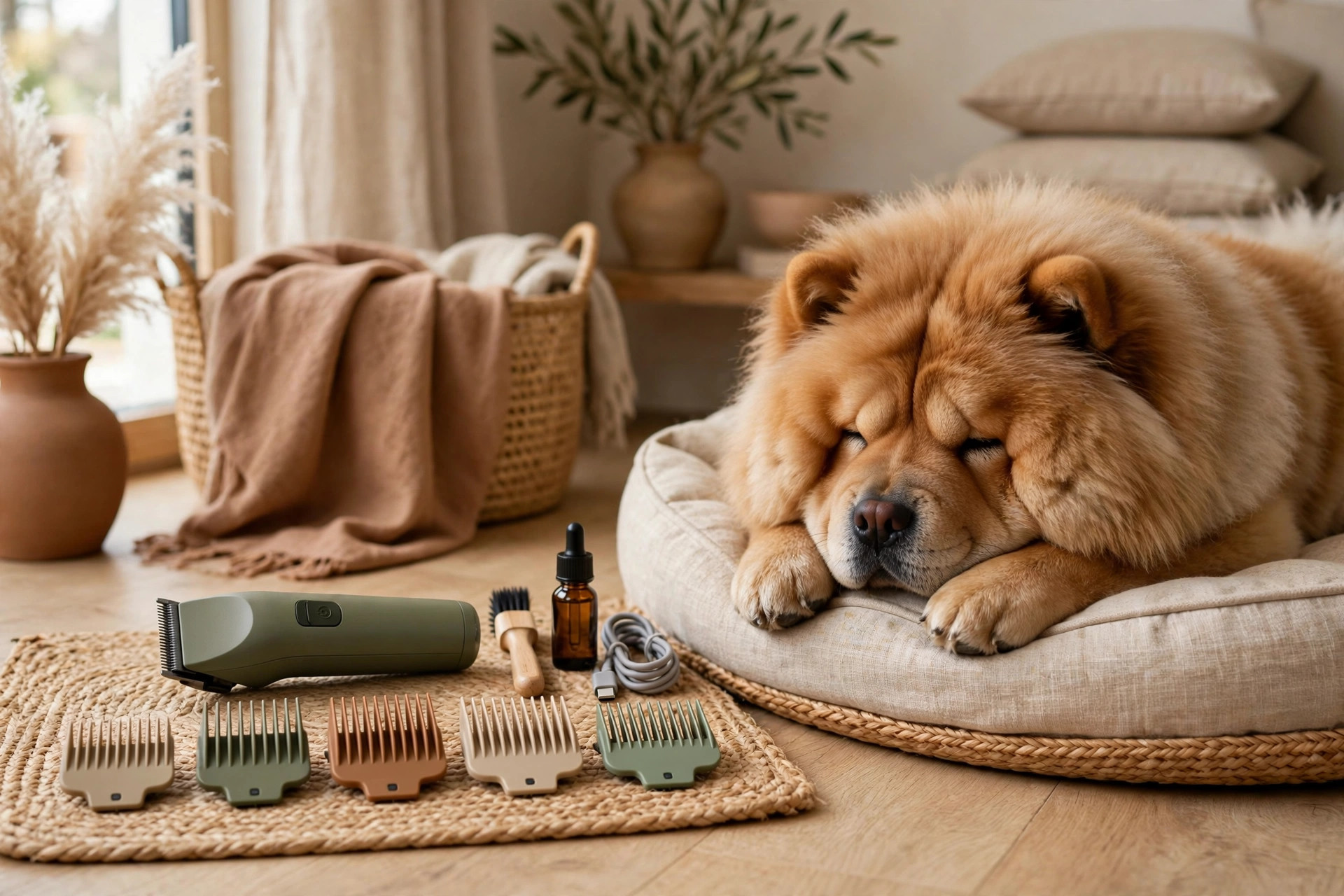
The model to look at is the Wahl Lithium Ion Pro Series kit (model 9766). The cordless clipper runs for up to 120 minutes per charge, with a 15-minute quick charge when you need to finish a job, and the case carries four colour-coded guide combs (1/8 to 1/2 inch), scissors, a cleaning brush and blade oil — the full day-one list. Self-sharpening stainless blades and an adjustable taper handle the tidy-up work most home groomers actually do.
Kits suit beginners because nothing’s missing on day one. You get the clipper, a spread of guide combs, and usually a cleaning brush and oil. Read the kit list closely, though. The clipper still has to be rated for thick coats — a generous pile of accessories can’t rescue a motor that fades in dense fur.
Pros: complete from day one, tidy storage, simple buying decision. Cons: accessory quality varies, and the clipper itself may be a step down from a standalone model at the same price.
Quick comparison
| Pick | Power source | Best job | Watch out for |
|---|---|---|---|
| Andis AGC2 UltraEdge | Corded | Full thick-coat grooms | Cord and weight |
| Wahl KM Cordless | Battery, some corded use | Moving dogs, outdoor grooms | Run time on dense fur |
| Wahl Bravura Lithium | Usually battery | Nervous dogs, detail work | Slower in the thickest coat |
| Oster A6 Cool Comfort | Corded | Big dogs, broad backs | Clumsy around ears and legs |
| Wahl Lithium Ion Pro kit | Usually battery | Beginners, all-in-one buying | Motor strength varies by kit |
Clipping a thick coat without wrecking it
Here’s the part people skip, then regret.
Brush the coat out completely before a blade goes near it. Mats sit close to the skin, and a clipper that hits one will either snag painfully or shave a bald patch you didn’t plan. Bath and dry first if you can — clean, dry fur cuts more evenly than dirty fur, and grit dulls blades.
Work in short sessions. Check the blade against your wrist every few minutes; if it’s warm, swap it or pause. Never force a clipper through a dense patch. Let the blade do the cutting at its own pace, and go with the direction of hair growth for an even finish, or against it only if you want a shorter result and you know the coat well.
One more thing, and it’s about the coat itself. Double coats insulate in both directions, and shaving one right down can change how it grows back and how the dog handles heat. If you’re clipping for comfort, leave length with a longer guide comb rather than taking the coat to the skin, and ask a vet or an experienced groomer if you’re unsure what’s right for your dog’s breed and health.
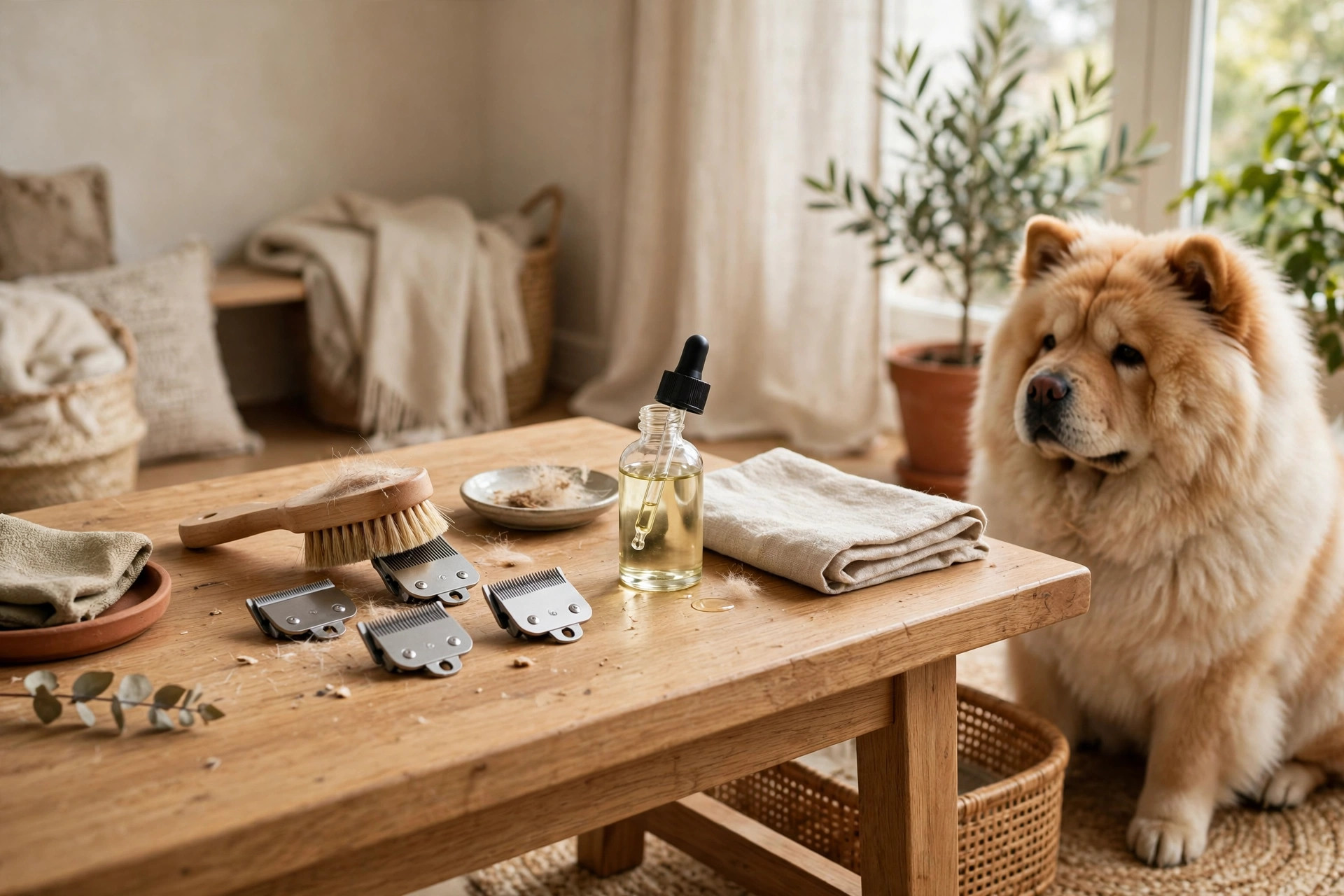
Blade care that actually gets done
Brush loose fur out of the blade after every session. Add a drop of blade oil where the maker tells you to. Store the clipper dry, with the blade guard on if you have one.
That’s it. No elaborate ritual. A clean, oiled blade cuts cooler and lasts longer, and a dull blade is the hidden cause behind half the snagging people blame on the motor. If a blade stays dull after cleaning and oil, replace it — pushing a tired blade through a Chow’s coat helps nobody.
Questions people ask
Can I use human hair clippers on a thick-coated dog?
They’re built for a different job. Human clippers are designed for finer, single-layer hair, and their motors and blades often struggle in a dense double coat. A dog clipper rated for thick coats is the safer buy.
How often should a Chow Chow be clipped?
It depends on the length you keep and how fast your dog’s coat grows. Many owners tidy the coat every few weeks and do a fuller groom less often, brushing in between so mats never get a head start. Your groomer can help you settle a rhythm for your dog.
Why does my clipper keep snagging?
Usually one of three things: tangles that weren’t brushed out, a dull or dirty blade, or pushing too fast through a dense patch. Brush first, clean and oil the blade, and slow the pass down before you blame the motor.
Corded or cordless for a thick coat?
Corded gives you steady power for long, full grooms. Cordless gives you freedom and works well for shorter sessions or detail work. If you choose cordless, a model that also runs while plugged in covers both jobs.
This article was created with AI assistance and reviewed by our editorial team before publishing.
 5 Best Cat Grooming Brushes for Longhair Cats (2026)
 How to Choose Pet Gear That Actually Works: The Honest Buyer’s Guide
 5 Best Dog Nail Grinders for Home Grooming (2026)