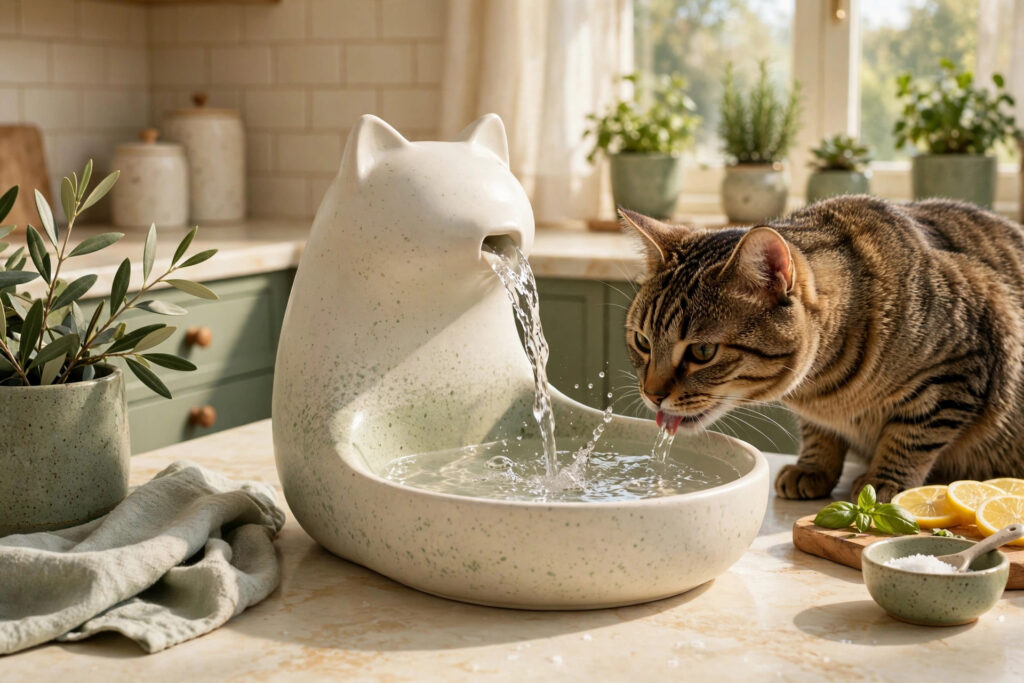
The short answer: Yes — for most cats. Flowing water taps into cats’ instinct to prefer running water, and studies link better hydration to fewer urinary issues. The key is picking a fountain that’s quiet, easy to clean, and made of safe materials. Our four picks below cover the main styles.
Cats are desert animals with a weak thirst drive. A bowl of still water often gets ignored — then your cat asks for the tap instead. A fountain isn’t a gadget; for many cats it’s the difference between drinking enough and not.
Do they actually work?
The evidence is practical, not magical. Cats prefer running water — that’s well documented in feline behavior. Better intake supports kidney and urinary health, which is the top health concern for indoor cats. A fountain won’t fix a medical problem, but it removes the most common barrier to drinking: boredom with still water.
How we picked
We compared pump noise levels, material safety (ceramic and stainless over plastic), filter types, cleaning difficulty, and owner reports on whether cats actually used them. No fake testing claims — just the features that separate fountains cats love from expensive paperweights.
What matters most
- Material. Ceramic or stainless steel resists biofilm and won’t leach. Cheap plastic gets slimy fast.
- Noise. A humming pump scares off nervous cats. Look for “under 30dB” or submersible pumps.
- Cleaning ease. You’ll clean it weekly. If it has 15 parts, you won’t.
- Water capacity. Bigger reservoir = fewer refills, but also more stale water if your cat drinks slowly.
Our 4 picks
Pick 1
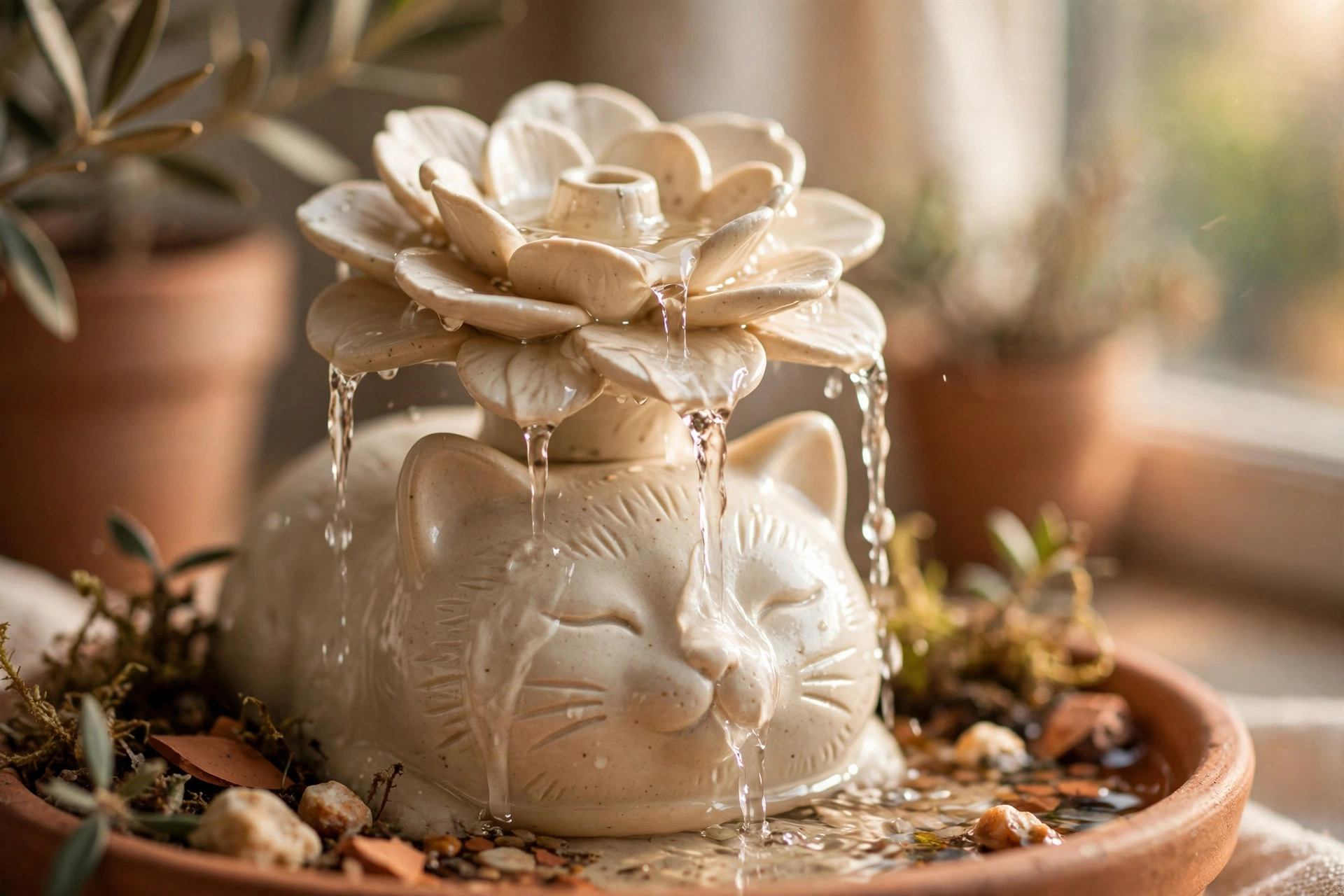
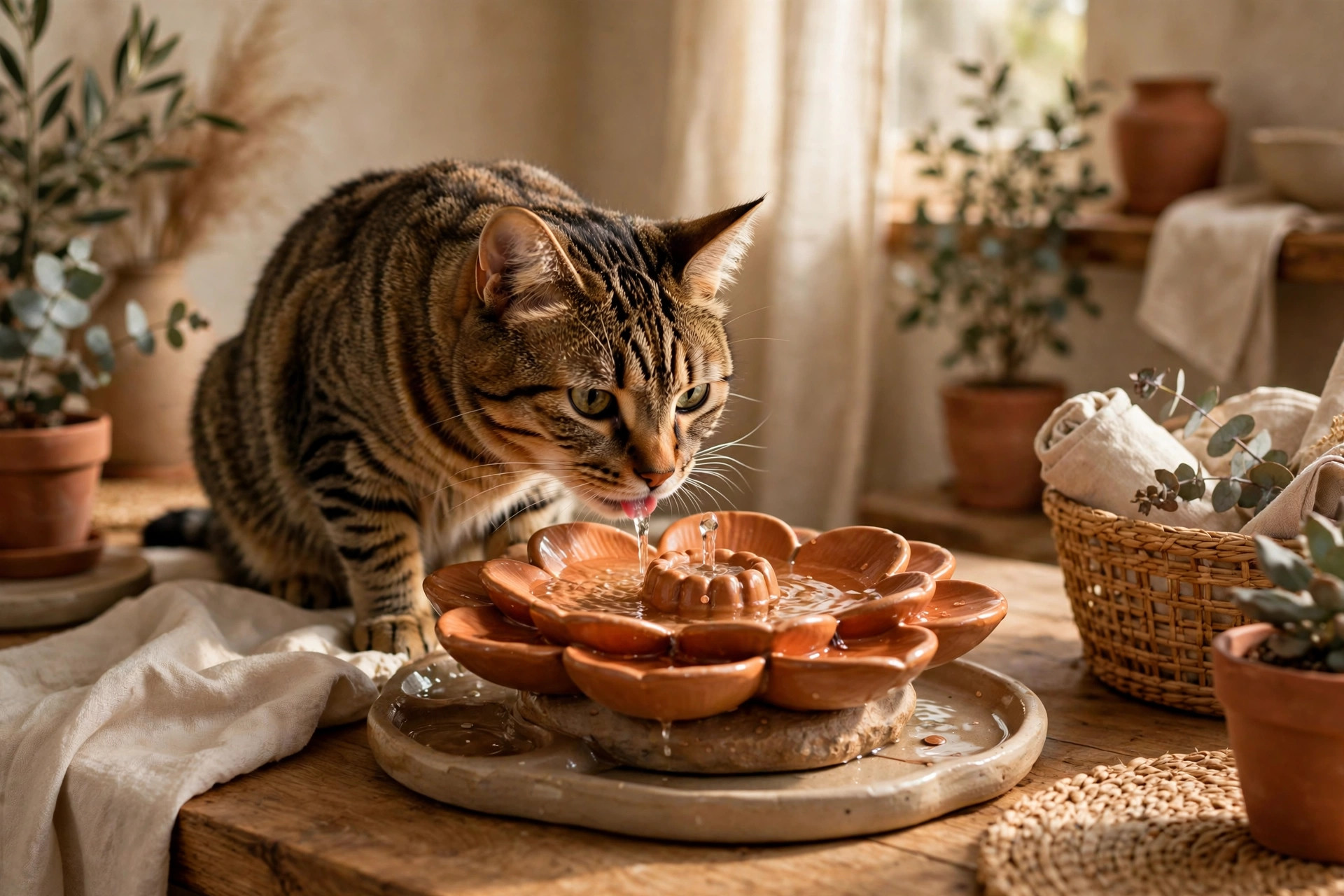
Ceramic Flower Fountain
What to look for
- Food-grade ceramic — non-porous body that’s dishwasher safe
- Quiet pump — submersible design rated under 30dB
- Multiple spout options — heights or angles to suit different drinking styles
- Tip-proof weight — heavy enough that a leaning cat can’t topple it
How we evaluate
We start with material specs, favoring food-grade ceramic with published dishwasher-safe ratings over plastics that owner reports consistently link to biofilm buildup. We compare pump noise ratings across brands, prioritizing submersible pumps under 30dB since unfamiliar humming is a documented turnoff for nervous cats. We also weigh patterns in hundreds of owner reviews — particularly how quickly cats start using the fountain and whether the spout design suits different drinking styles.
Pros
- Hygienic by design. Ceramic’s non-porous glaze resists the bacterial biofilm that makes plastic fountains feel slimy within days. Veterinary sources consistently rank ceramic and stainless above plastic for exactly this reason.
- Whisper-quiet pump. The submersible pump sits underwater, which dampens vibration and keeps noise low enough for nervous cats. Owner reports repeatedly note that skittish cats approach quiet fountains days sooner than humming ones.
- Multiple drinking angles. The flower spout offers several stream heights and angles, accommodating cats that lap from the top, the falling stream, or the pooled basin. That flexibility matters because a single fixed stream is the most common reason cats ignore a new fountain.
Cons
- Heavy to move. The same heft that stops a leaning cat from tipping the fountain turns weekly cleaning into a deliberate two-handed job. If your sink is far from the fountain’s spot, expect a minor workout every cleaning day.
- Can chip. Ceramic doesn’t survive drops onto tile, and a chipped glaze creates crevices where bacteria hide. Treat it like good dishware: durable in place, unforgiving in a fall.
The crowd favorite. Most cats take to it within days.
Pick 2
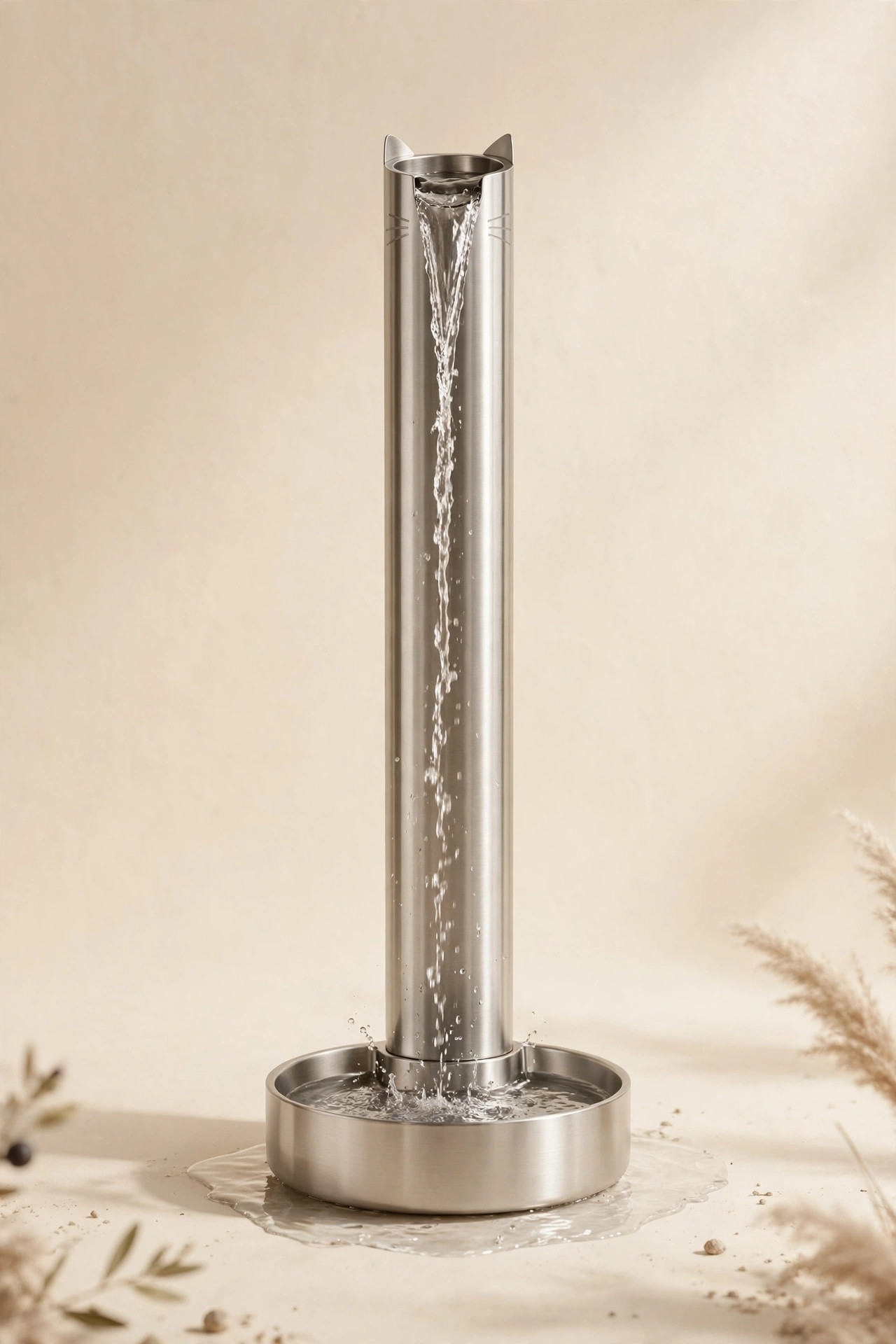
Stainless Steel Tower
What to look for
- 304-grade stainless steel — the food-safe standard, dishwasher safe
- Tall stream design — for cats that prefer drinking from taps
- Large reservoir — 2.5L+ if you have multiple cats
- Replaceable carbon filters — to keep water tasting fresh
How we evaluate
We compare steel grades, favoring 304 food-grade stainless with dishwasher-safe ratings, and cross-check reservoir capacity against multi-cat household needs. We look at filter availability and replacement cost, since ongoing filter expenses are a common owner complaint. We also weigh owner-review patterns on noise, tipping stability, and whether tap-drinking cats actually make the switch.
Pros
- Easiest to keep clean. Dishwasher-safe 304 stainless handles high-heat sanitizing that hand-washed plastic and ceramic can’t reliably match. For busy owners, that difference is what keeps the fountain actually clean week after week.
- Tap-drinker approved. The tall falling stream mimics the faucet behavior so many cats are obsessed with, giving tap-drinkers their fix without the running water bill. Owner reviews from converted tap-drinkers are among the most enthusiastic in the category.
- Big 3L reservoir. A three-liter tank means refilling every few days instead of daily, which matters in multi-cat homes where water disappears fast. Less frequent refilling also means the pump is less likely to run low and burn out.
Cons
- Shows water spots. Stainless steel shows mineral spots and streaks between cleanings, especially in hard-water areas. It’s cosmetic rather than hygienic — but if a spotless look matters, expect to wipe it down often.
- Pricier upfront. Quality food-grade steel costs more to manufacture than molded plastic, and that shows in the price tag. The trade-off is longevity: a good steel fountain typically outlasts two or three plastic ones.
Best for multi-cat homes and cleaning minimalists.
Pick 3
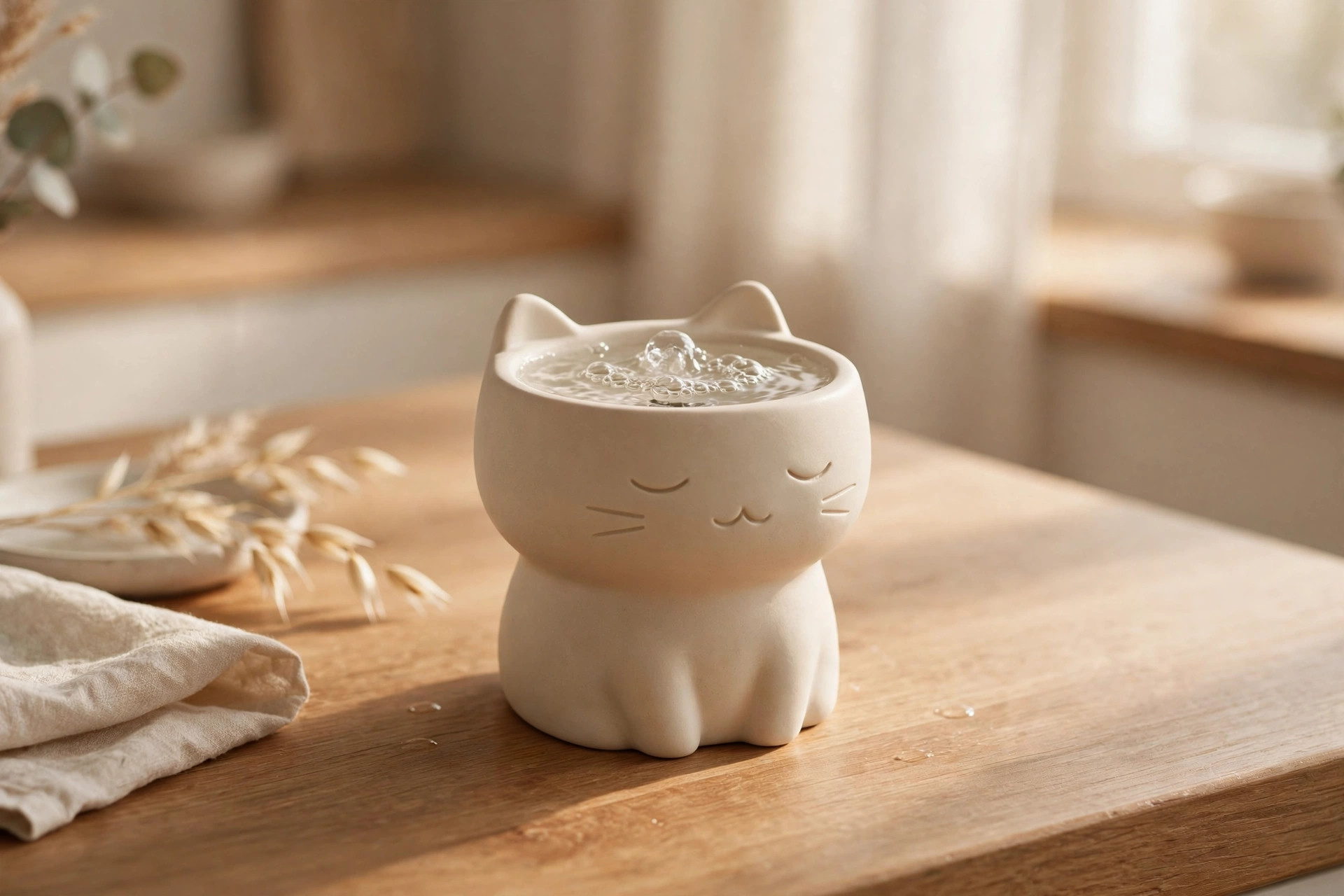
Compact Ceramic Bubbler
What to look for
- Small footprint — fits on a counter without dominating it
- Simple disassembly — 3–4 parts max for painless weekly cleaning
- Near-silent pump — critical in open-plan apartments
- Ceramic or BPA-free body — for hygiene
How we evaluate
We compare footprint dimensions and disassembly step counts, since owner reviews show complicated fountains get cleaned less often. We check pump noise ratings against apartment-living reports, where a humming fountain is an instant deal-breaker. We also weigh owner feedback on reservoir-size trade-offs, particularly for single-cat homes where small capacity is a fair exchange for counter space.
Pros
- Apartment-friendly size. The compact footprint fits on crowded counters and in small kitchens where tower fountains would dominate. For renters and small-space dwellers, that’s often the deciding factor.
- Near-silent. The low-wattage pump runs so quietly that most owners report forgetting it’s on — and their cats do too. In open-plan apartments, silence is the difference between a fountain that stays plugged in and one that gets unplugged.
- Dead-simple cleaning. With only three parts and no tight crevices, a full weekly clean takes minutes rather than the better part of an hour. Owner reviews consistently link simple designs to more consistent cleaning habits.
Cons
- Small reservoir. You’ll refill every day or two, which is fine for one cat but becomes a chore in multi-cat homes. A bigger tank would defeat the compact purpose, so this is an inherent trade-off.
- No stream option. The bubbler-only design produces gentle surface movement rather than a falling stream. Dedicated tap-drinkers who want that arc of water will likely keep begging at the faucet.
The starter fountain — low commitment, high acceptance.
4. Gravity-Fed Dispenser (No Pump)
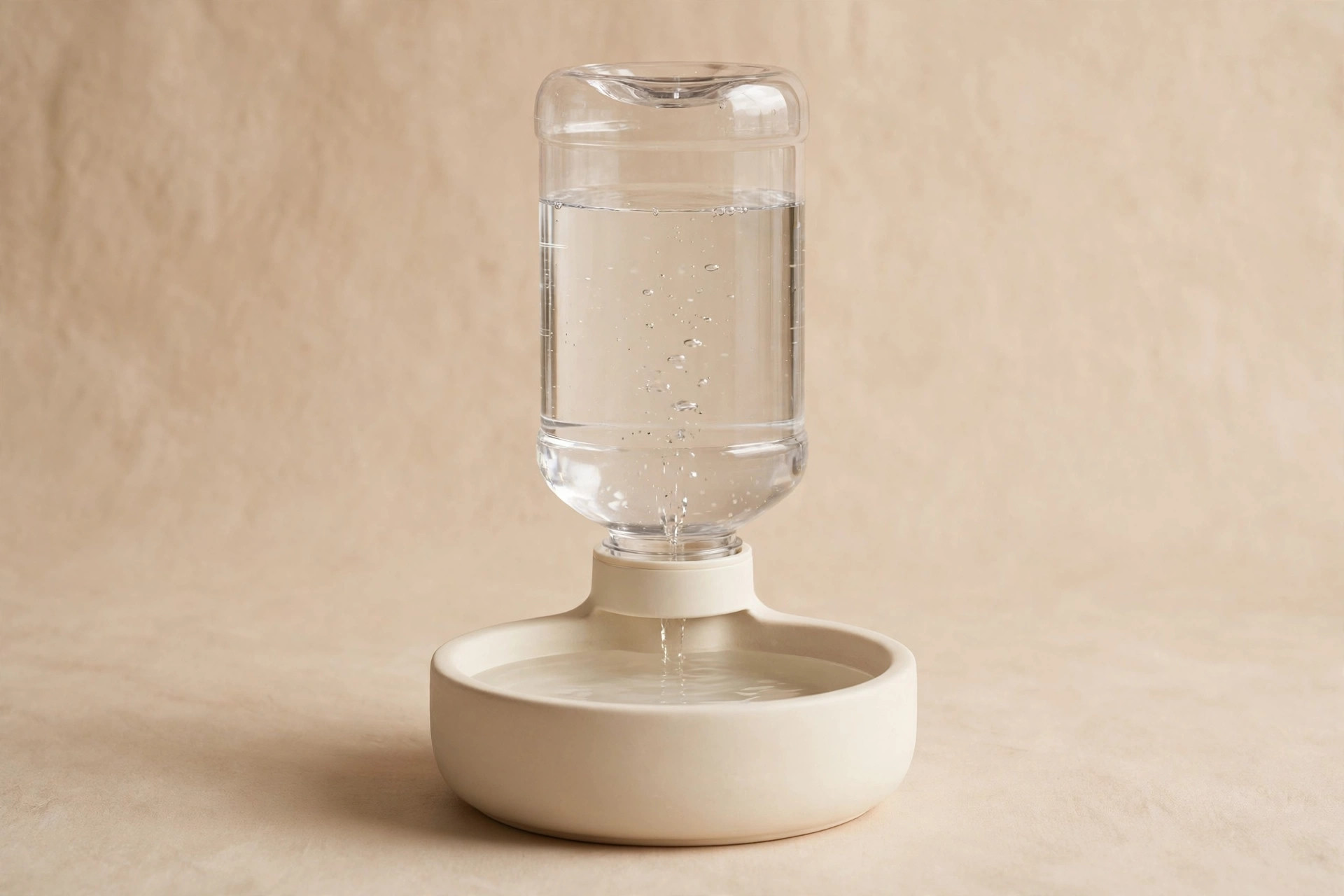
What to look for
- BPA-free reservoir with a stable, tip-resistant base
- Capacity matched to your cat count — 2L+ for two cats
- Easy-fill opening wide enough for thorough scrubbing
- Steady flow mechanism that doesn’t glug or stall
How we evaluate: We check flow-consistency reports and base stability, since tipping is the most common complaint with gravity dispensers. We compare reservoir opening designs for cleaning access, since narrow necks are a common hygiene complaint. We also weigh owner feedback on how often the bowl water needs refreshing versus a standard bowl.
Pros
- Zero noise. With no pump and no electricity, there’s nothing to hum, vibrate, or fail. For skittish cats that flee unfamiliar sounds, silence is the killer feature.
- Cheapest to run. There are no filters to replace and no power draw, so the ongoing cost is essentially zero. With minimal moving parts, there’s also very little that can wear out.
- Always topped up. Gravity feed keeps the bowl at a constant level without you remembering to pour. For owners who work long hours, that consistency is real peace of mind.
Cons
- Not a true fountain. The bowl water is essentially still, so it lacks the flowing-water appeal that draws reluctant drinkers. If your cat ignores bowls, a gravity dispenser may not change the equation.
- Stagnation risk. Without circulation, the bowl water needs refreshing as often as a regular bowl — every day or two. Skip that, and you’re back to the same stale-water problem you started with.
Verdict: Not a true fountain, but a solid step up from a bowl for nervous cats.
FAQ
My cat ignores the fountain. Now what?
How often do I clean it?
Are fountains safe to leave running?
This article was created with AI assistance and reviewed by our editorial team before publishing.
 5 Best Cat Grass Growing Kits for Indoor Cats (2026)
 5 Best Hairball Remedies for Cats (2026)
 How to Choose Pet Gear That Actually Works: The Honest Buyer’s Guide