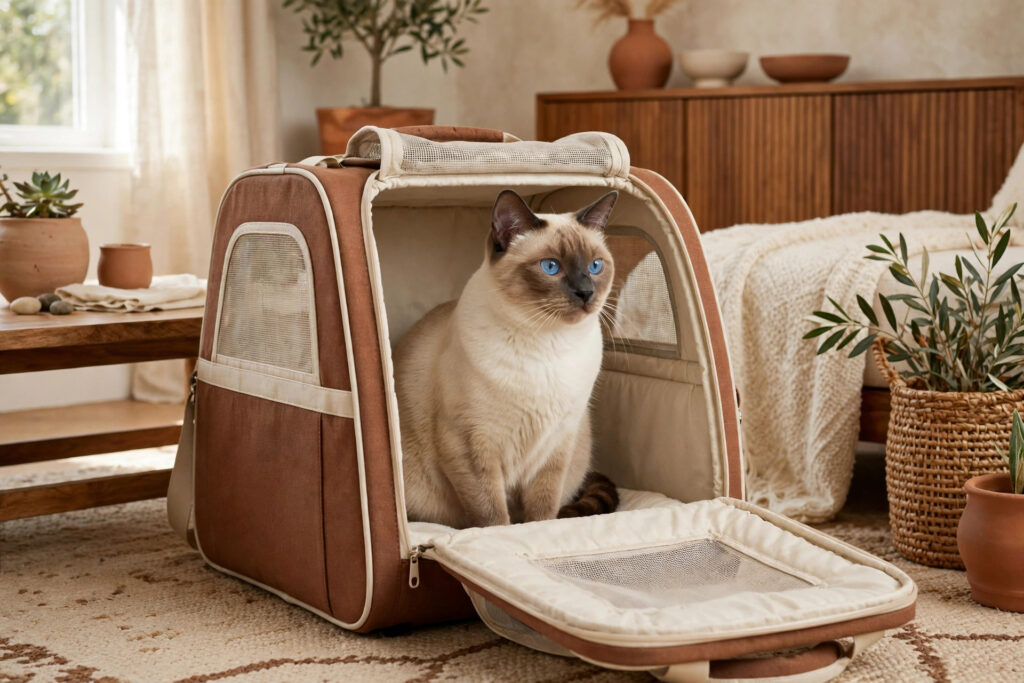
Short answer: the best airline-approved cat carrier for most cats is a soft-sided model that fits under the seat in front of you, opens from the top and the side, and gives your cat room to turn around without collapsing on her. Hard crates suit cargo travel and nervous chewers. Backpack carriers work for calm cats on short hops. Match the carrier to your airline’s under-seat dimensions first, your cat’s temperament second.
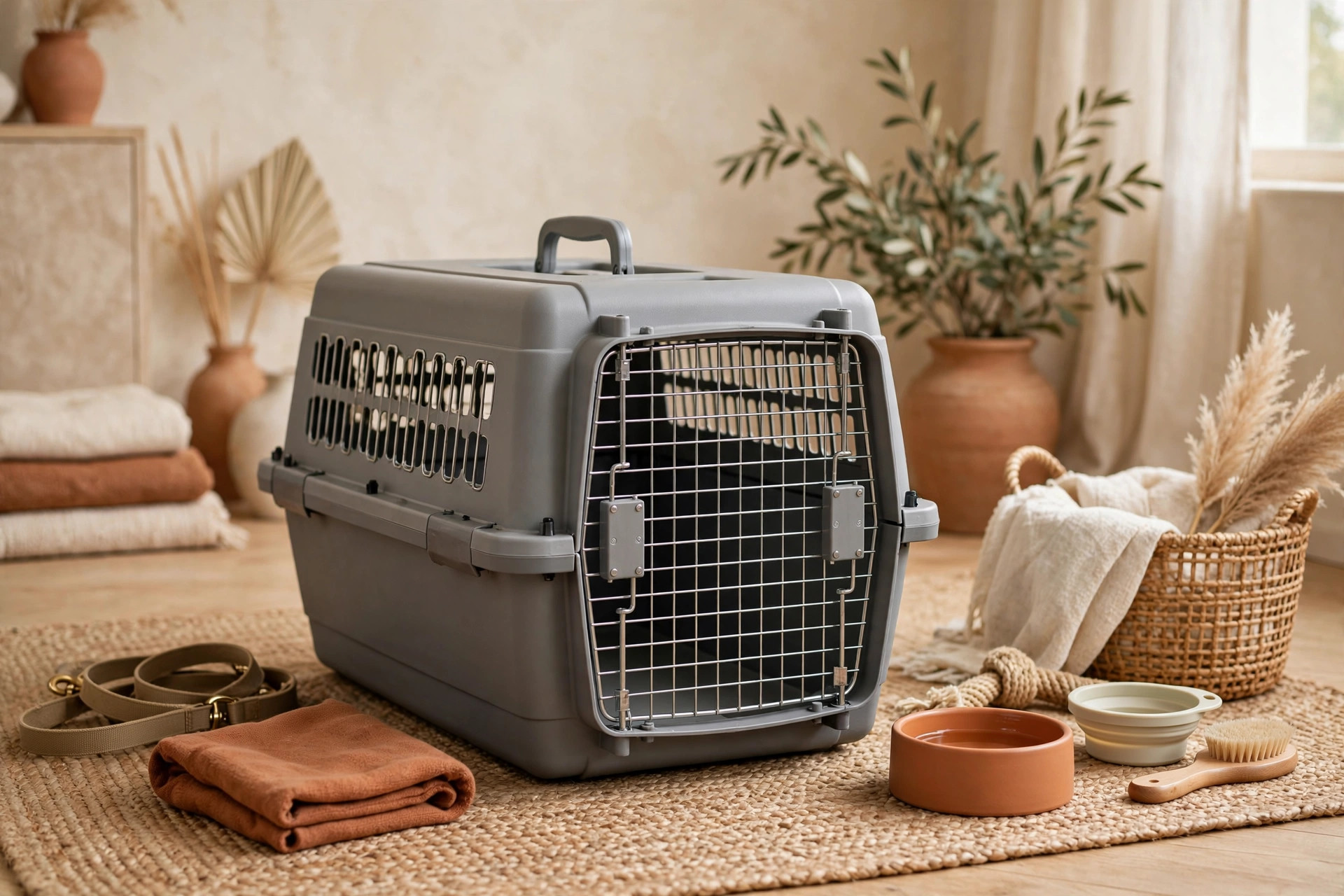
Our top picks at a glance
Best overall: the structured soft-sided carrier
For cabin travel, a soft-sided carrier with a stiff base and wire or fiberglass frame is the one most owners should buy. It squeezes a centimetre or two under a low seat, which rigid crates simply can’t do. Look for two entry points. Top loading matters more than you’d think — lowering a reluctant cat in from above beats posting her through a front door while she braces all four legs.
Mesh on at least three sides keeps air moving, and a dark mesh panel gives a shy cat some privacy. The pad inside should come out and go in the wash, because travel days and accidents tend to find each other.
Best for cargo or anxious chewers: the hard-shell crate
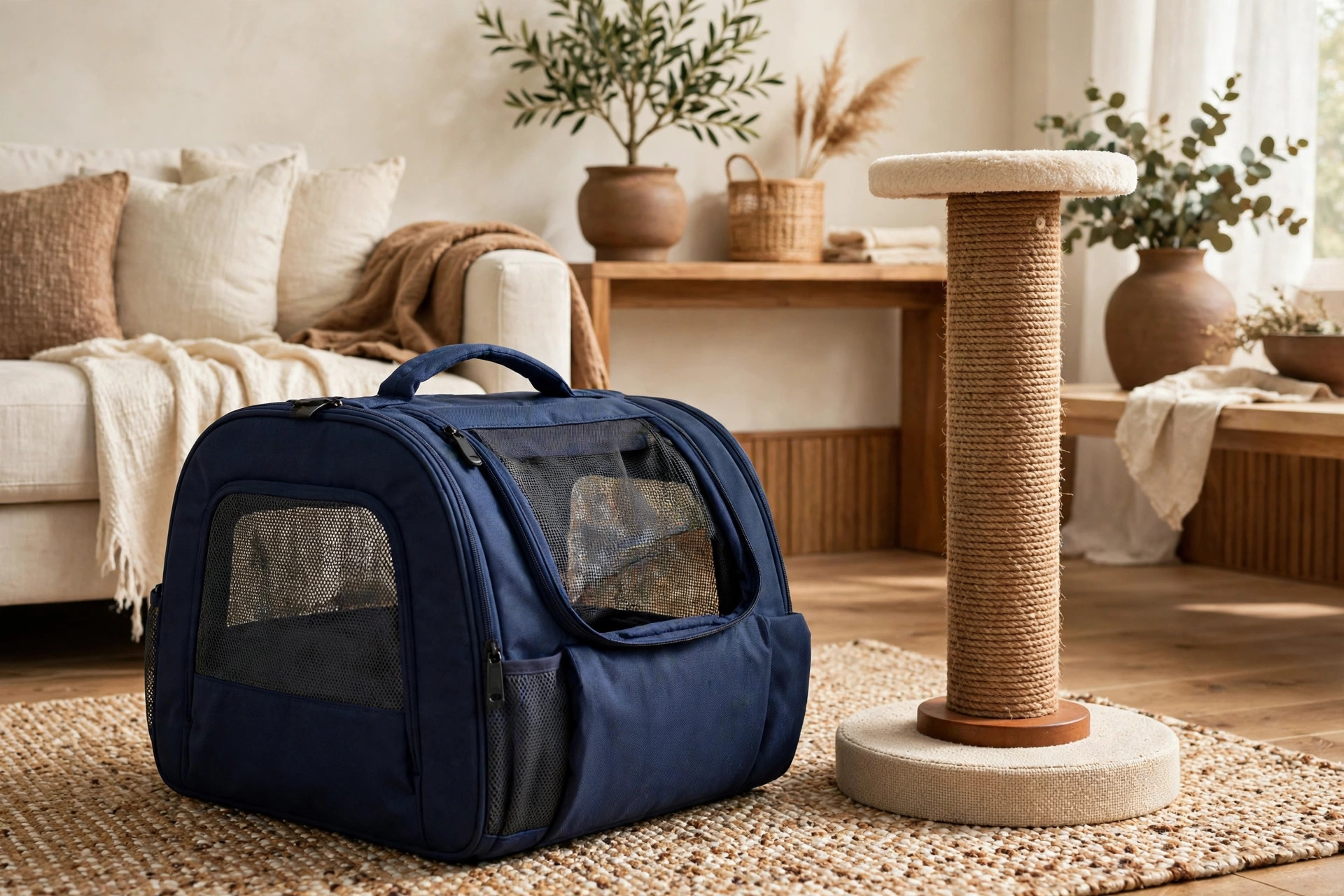
If your cat flies cargo, or chews zips for sport, a hard crate is the honest choice. Airline cargo rules published by IATA require rigid containers with a secure metal door for animals travelling in the hold, and that same build shrugs off determined teeth in the cabin too.
The trade-off is bulk. A rigid crate either fits under the seat or it doesn’t — there’s no gentle squeeze. Measure your airline’s space before you fall for one. Two-piece crates that bolt together feel sturdier than snap-latch models, and they come apart for storage at home.
Best for short trips: the backpack carrier
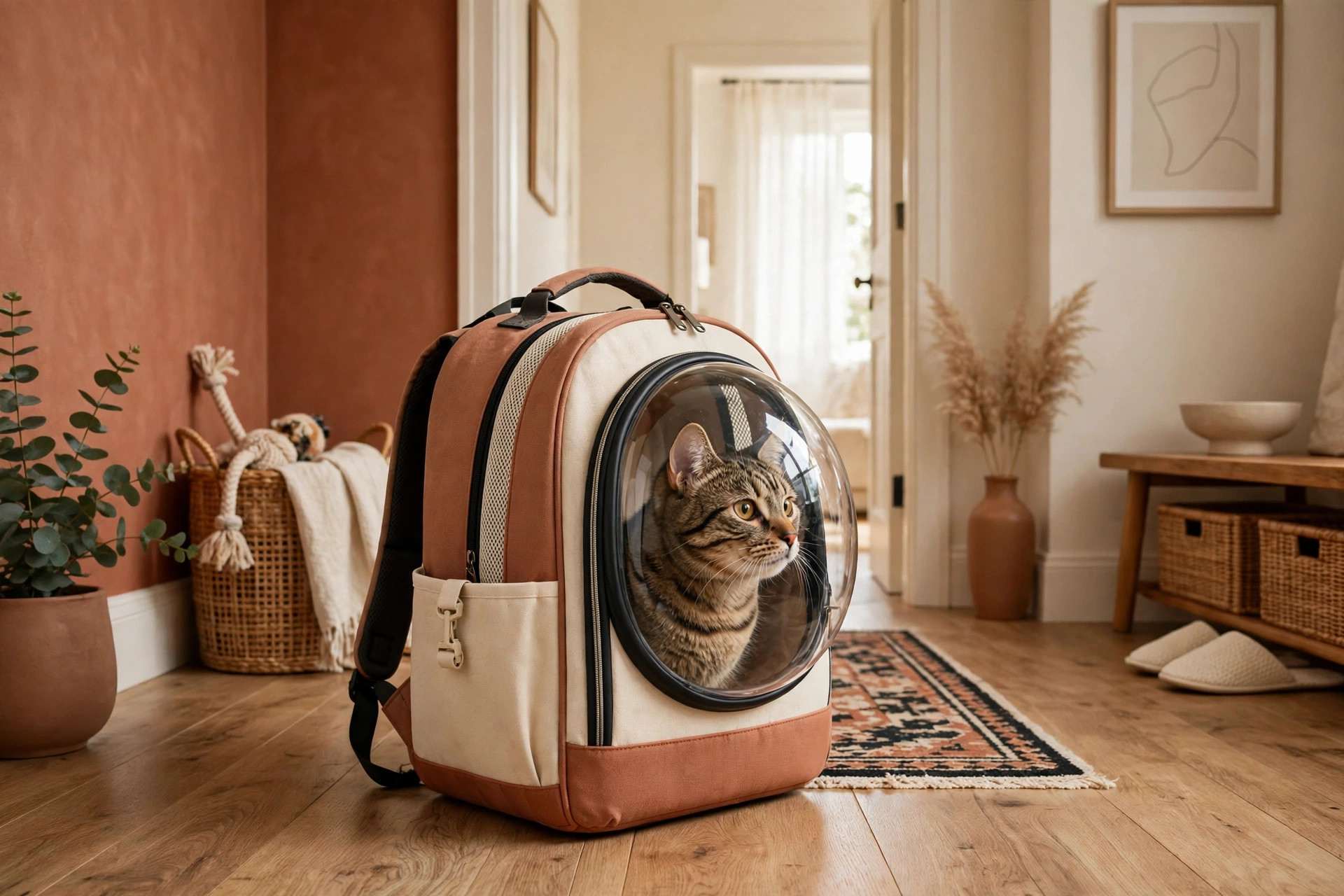
A backpack carrier keeps both hands free for tickets, coffee, and the bag that’s always sliding off your shoulder. Cats who like watching the world seem to settle in them. Cats who don’t? They’ll tell you, loudly, the whole way.
Keep backpacks for shorter journeys. Floor space is smaller than in a rectangular carrier, so a big cat can’t stretch out properly. A flat, firm base matters — a sagging floor makes cats feel like they’re standing on a hammock, and they hate it.
What to look for
Size: the airline’s tape measure wins
Every airline publishes its own maximum carrier dimensions, and they differ. Many large US airlines cap cabin carriers at roughly 18 × 11 × 11 inches, but some low-cost carriers allow noticeably less. Check your airline’s pet policy page the week you book, not the week you fly — policies change, and the carrier you bought last year may not fit this year’s seat.
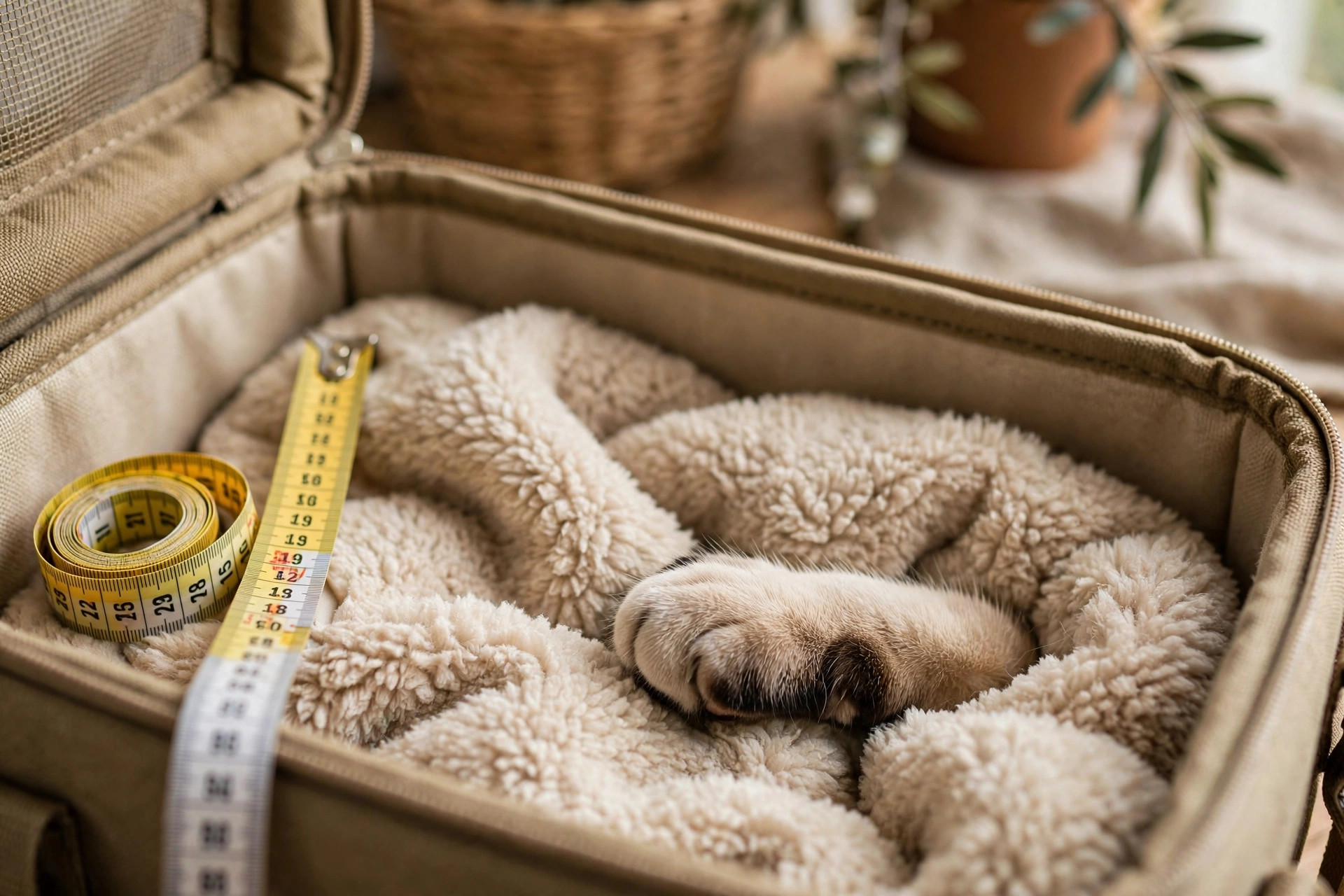
For the cat herself: she should be able to stand, turn a full circle, and lie down stretched. Weigh her too. Most cabin carriers suit cats up to about 8 kg, carrier included, since many airlines cap the combined weight there — again, your airline’s page is the source that counts.
Ventilation, security, and the escape test
- Ventilation on at least two sides — three is better for summer travel.
- Locking zips or a clip ring — a determined cat can work a plain zip open from inside. Really. It happens.
- An interior tether — clip it to a harness (never a collar) before you open the carrier at security.
- A seat-belt loop or strap — doubles the carrier for car rides to the airport.
Comfort details that actually matter
A washable fleece pad. A pocket for paperwork. A shoulder strap with padding, because terminals are longer than you remember. Fancy extras like built-in fans or feeding funnels? Skip them. Spend the money on fit and build instead.
How we evaluate
We don’t claim to have flown every carrier with every cat. This guide is research-based: we compare manufacturer specifications against published airline dimension limits, study verified owner reports for recurring failure points — broken zips, sagging bases, torn mesh — and weigh build details you can check yourself in a shop. Where owners consistently report the same flaw, we say so. Where a carrier’s specs beat its price, we say that too.
Side by side
| Type | Best for | Fits under seat? | Watch out for |
|---|---|---|---|
| Soft-sided | Most cabin trips | Yes — flexes slightly | Zip quality, sagging base |
| Hard-shell crate | Cargo, chewers | Only if dimensions match exactly | No flex; measure twice |
| Backpack | Short trips, calm cats | Usually | Small floor space for big cats |
Pros and cons of cabin carriers
What’s good: your cat stays with you, within sight and reach. Cabin travel avoids the cargo hold entirely, and a familiar carrier lined with a worn t-shirt smells like home, which calms most cats more than any gadget.
What’s not: space is tight by design, fees apply on most airlines, and only a limited number of pets are accepted per flight — book the pet slot when you book your ticket, not at check-in.
Verdict
Buy the structured soft-sided carrier if you’re buying one carrier for cabin flights. Choose the hard crate for cargo or a cat who treats zips as a hobby. Pick the backpack only if your journeys are short and your cat is the unbothered type. Whichever you choose, do one practice run at home — carrier out, treats in, no trip — at least a week before you fly.
Questions, answered
How do I know if a carrier is airline approved?
There’s no single official stamp for cabin carriers. “Airline approved” on a label means the maker designed it to common airline dimensions. Your airline’s published size limits are the real test — compare them with the carrier’s measurements before you buy.
Can my cat travel in the cabin on every flight?
No. Airlines limit pet numbers per flight and some routes — especially long international ones — don’t accept cabin pets at all. Reserve your cat’s spot with the airline as soon as your own ticket is booked.
Should I sedate my cat for the flight?
That’s a question for your vet, not a product page. Many vets advise against sedation at altitude. A carrier your cat already knows, plus a familiar-smelling blanket, does more good than most owners expect.
What size carrier does a large cat need?
Measure your cat from nose to tail base and floor to ear tip, then add a few centimetres each way. If she exceeds standard cabin dimensions, talk to your airline about cargo options with a rigid crate instead of forcing a fit.
This article was created with AI assistance and reviewed by our editorial team before publishing.
 How to Choose Pet Gear That Actually Works: The Honest Buyer’s Guide
 Best Travel Carriers for Rabbits and Guinea Pigs
 Dog Backpacks for Hiking: Fit, Comfort, Capacity