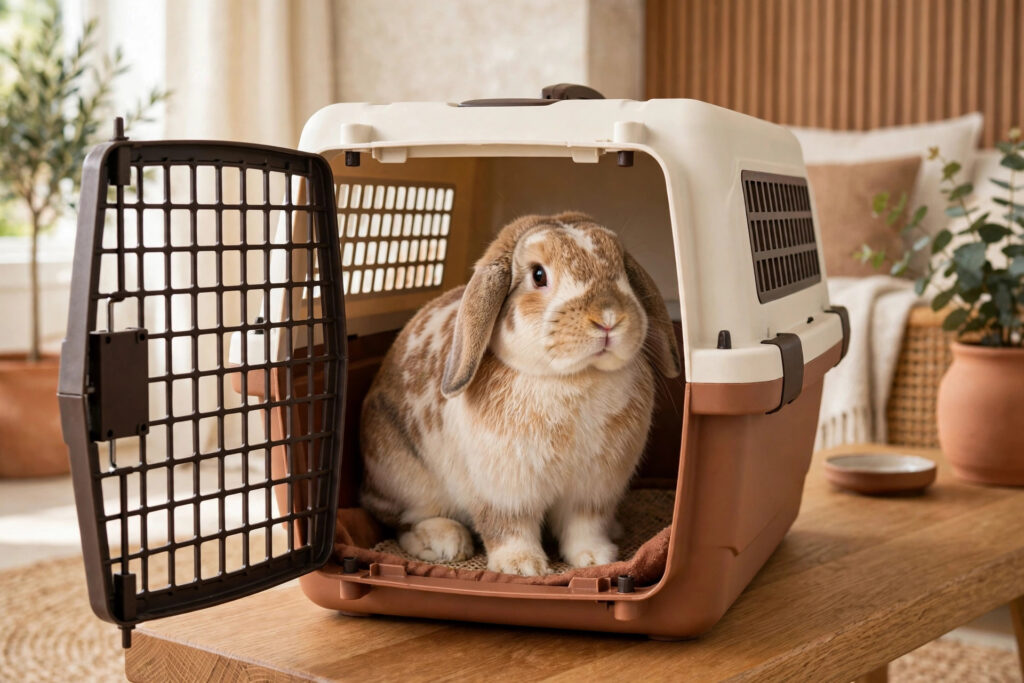
The best travel carrier for a rabbit or guinea pig is sturdy, well ventilated, and easy to clean, with a floor your pet can grip and enough room to turn around. The picks below compare hard-sided, top-loading, and soft carriers — plus the liners and hay holders that make short trips calmer.
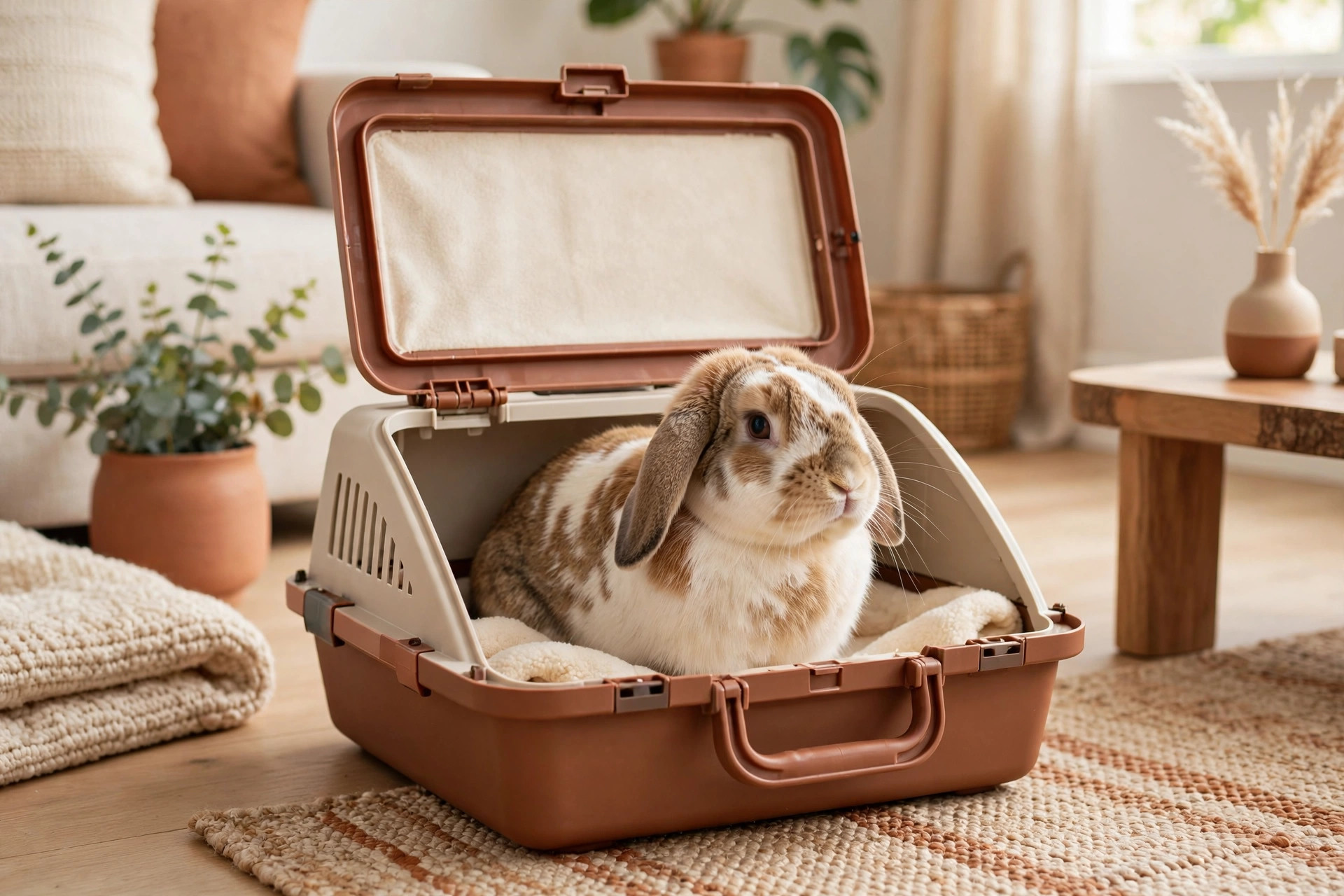
A Holland Lop rabbit settles into an open top-loading carrier at home before a trip.
Small pets feel travel differently than cats and dogs do. Rabbits and guinea pigs are prey animals, so a carrier that swings, slides, or leaves them exposed adds stress fast. The right box feels like a burrow: a shaded corner, a steady floor, hay to nibble. The wrong one? A slide with a door.
What to look for in a small-pet travel carrier
Start with how your pet will actually spend the ride: sitting low, gripping the floor, and probably chewing on whatever’s in reach. Four things shape that ride — air, teeth-proofing, grip, and space. Here’s how to judge each one before you spend anything.
Ventilation that survives chewing
Air holes sound simple until a rabbit starts working on them. Look for ventilation on the upper half of the carrier — slots or mesh set high enough that bedding and hay don’t block them. Skip wide, soft mesh panels at floor level if your rabbit is a known chewer. A determined bunny can open a hole in fabric mesh faster than you’d expect.
A floor with grip
Smooth plastic is the hidden problem in a lot of carriers. Every turn in the car sends your pet sliding, and prey animals read sliding as danger. A textured floor helps, but a fleece liner or a rubber-backed mat on top helps more. Whatever you add, it should lie flat and stay flat, not bunch up underfoot.
Room to turn around
Size by movement, not by body length alone. Your pet should turn around in one smooth motion, lie stretched out, and — for rabbits — sit up without ears pressed to the roof. Bigger isn’t always better, though. A huge box lets a pet slide from corner to corner at every stop sign. Snug and steady beats roomy and rattly.
How we evaluate these carriers
No test lab, no stopwatch tricks. Each pick below is judged against maker descriptions, retailer listings, and the praise and complaints that repeat across owner reviews, using the six checks that matter most for prey animals in transit.
- Ventilation: airflow placed where bedding can’t block it, and on more than one side.
- Chew resistance: materials and seams that stand up to rabbit teeth and guinea pig nibbling.
- Easy cleaning: smooth surfaces, removable liners, and parts that wash without a fight.
- Top vs front loading: how a pet goes in and comes out — lifted from above, or walked through a door.
- Floor grip: a textured base or a liner that keeps feet planted through turns.
- Space to turn around: room to turn, stretch out, and settle without feeling exposed or cramped.
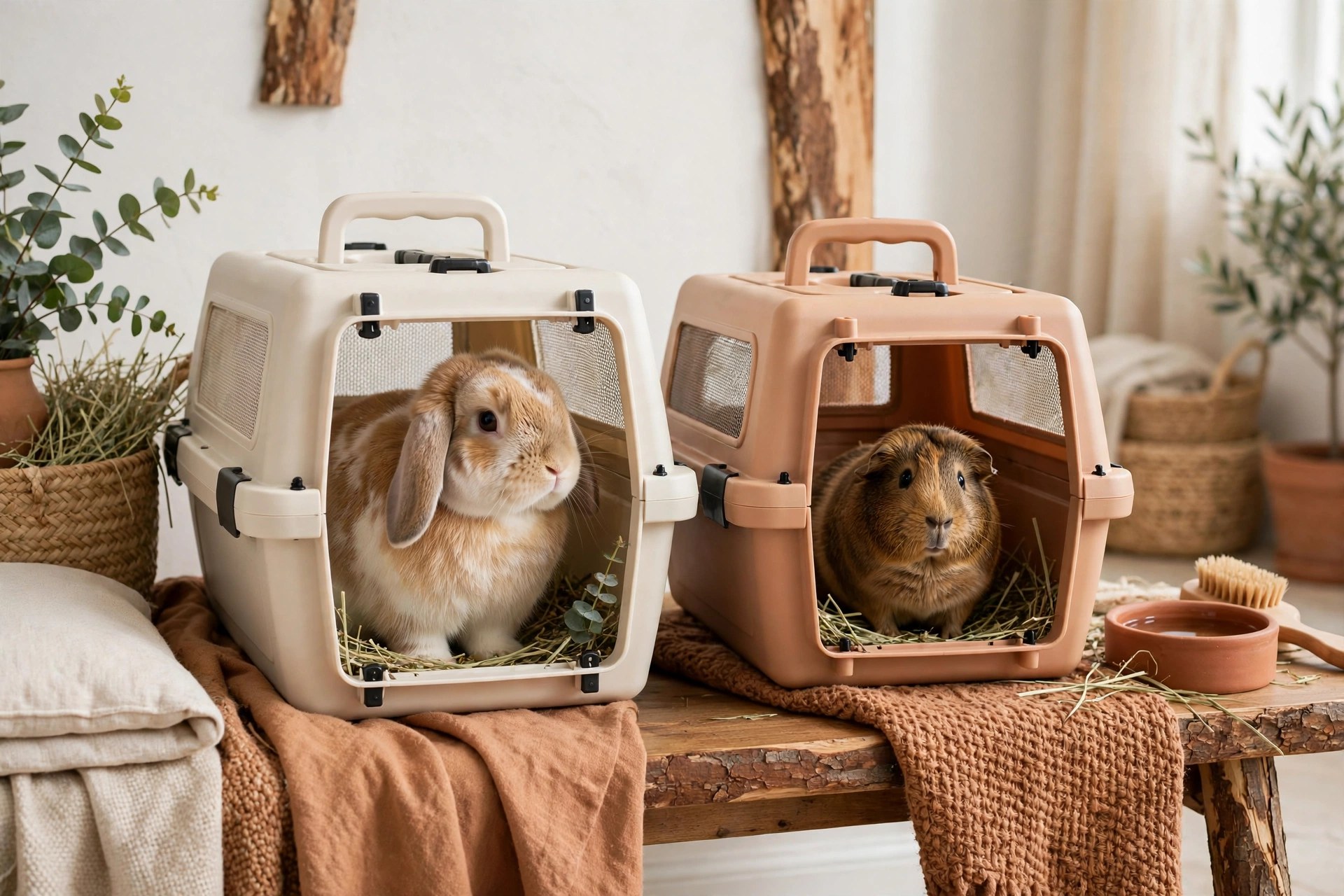
Two carriers, two species — a Holland Lop and a guinea pig, each lined with hay and settled before the trip starts.
The best travel carriers for rabbits and guinea pigs
Six setups cover most small pets and most trips. Each one names who it suits and who should pass, because a carrier that’s perfect for a calm guinea pig can be a chew toy for a lively rabbit.
1. Hard-sided plastic carrier — best all-rounder
The classic hard-sided carrier, sold for small pets by brands such as Petmate and Ferplast, is the default for a reason. Rigid walls shrug off bumps in the car, the plastic wipes clean in minutes, and many models open from the top as well as the front. Add a fleece liner for grip and it handles almost any trip.
Best for: first-time buyers, vet trips, and rabbits who chew. Skip if: you want something that folds flat for storage — rigid plastic takes up its full space, empty or not.
2. Top-loading carrier — best for nervous pets
A top loader has a wide door in the roof, so you lower your pet in from above instead of coaxing them through a front door. At the vet, that same opening lets a nervous rabbit be lifted out gently, instead of reached for and dragged. Look for a top door that latches securely at both ends, and test the latch with the carrier empty.
Best for: nervous pets, vet exams, and owners tired of the front-door standoff. Skip if: your pet walks into a carrier happily on their own — a simple front door is quicker, and a top door adds a latch you have to check every trip.
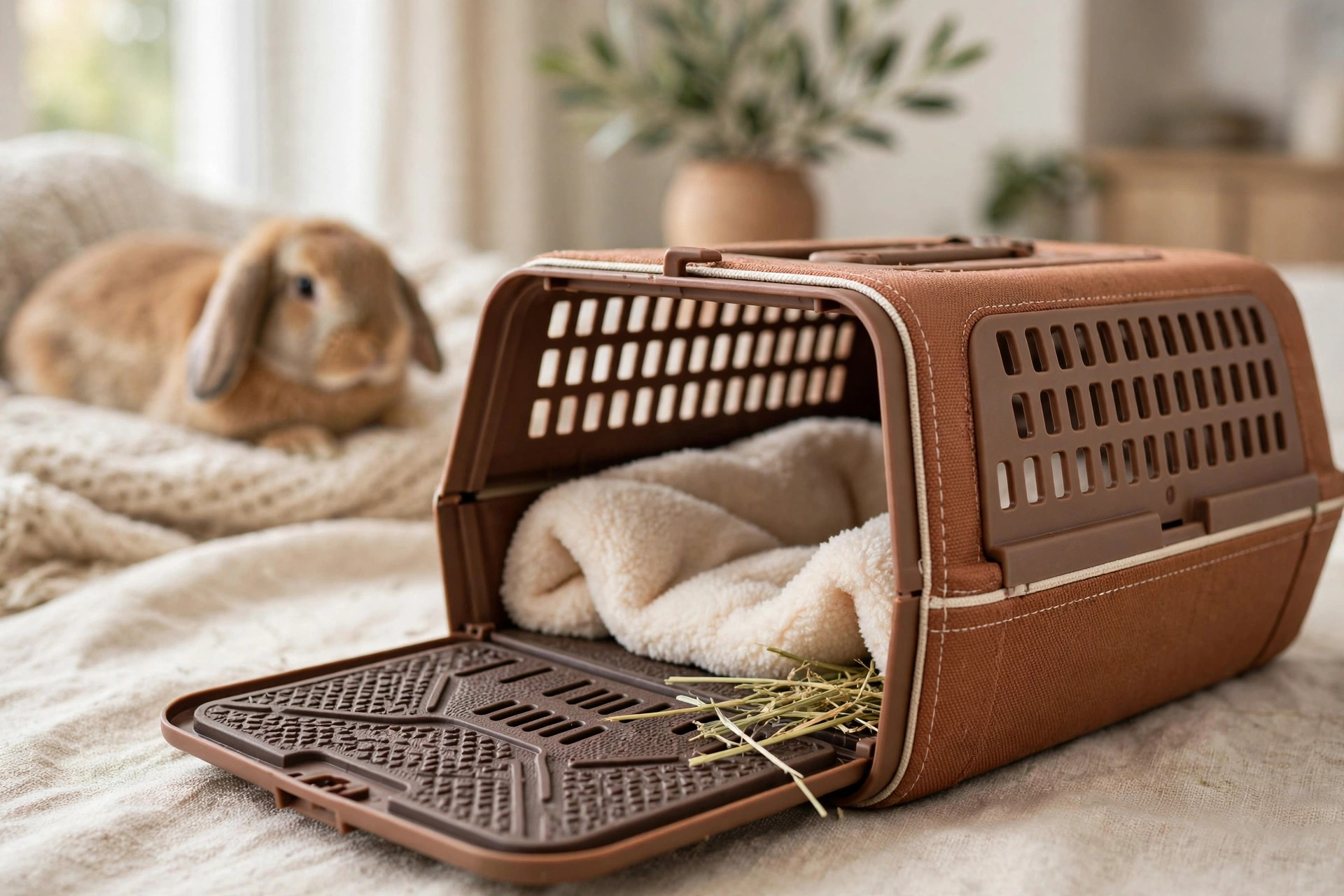
Details that matter: high ventilation slots, a washable fleece liner, and a grippy floor mat.
3. Soft-sided fabric carrier — best for short, calm rides
Soft carriers, like the small-pet designs from brands such as Kaytee, weigh little and feel cozy, with mesh windows and a padded floor. For a calm guinea pig on a short car ride, that’s plenty. The trade-off is teeth. Fabric and mesh are chewable, and the walls give way if anything heavy ends up stacked on top in the car.
Best for: calm guinea pigs, short rides, and owners who want a light carry. Skip if: your rabbit chews fabric, or the trip runs long — a chewer can worry a hole in a mesh panel before the ride is over.
4. Carrier with a hay holder — best for longer trips
Rabbits and guinea pigs graze through the day, and hay gives a nervous traveler something normal to do. Some carriers include a hay rack or holder clipped to the door. Others have a flat door grid where you can attach one. If your trips run long — a specialist vet across town, a house move — hay access turns a stressful box into a snack bar with walls.
Best for: longer drives and pets who settle when they can nibble. Skip if: your trips are short — a handful of hay tucked in the corner does the same job, with nothing extra to wash.
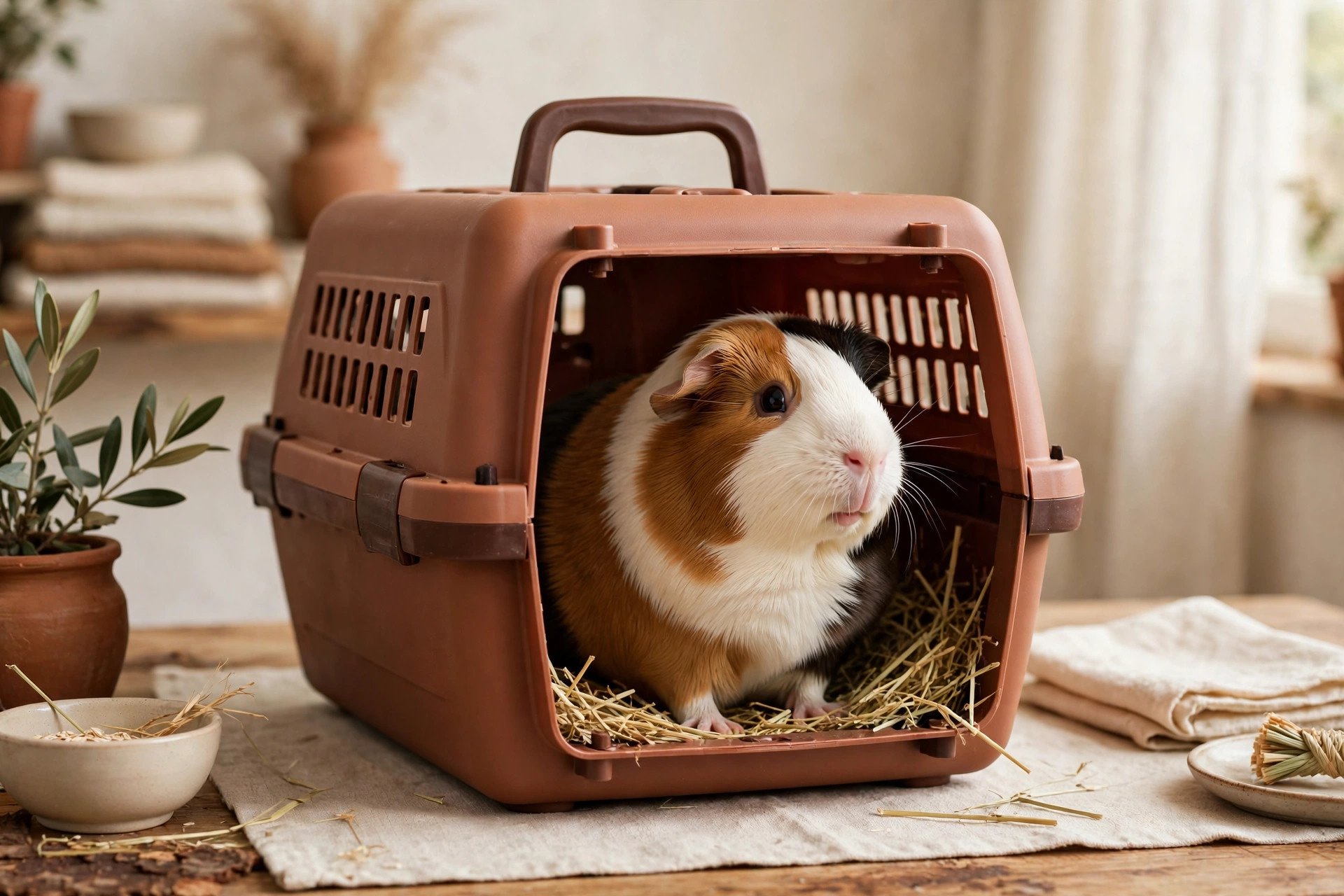
A guinea pig rides in a compact hard-sided carrier, with hay tucked in the corner.
5. Liner-and-pad setup — best upgrade for any carrier
This pick isn’t a carrier. It’s what goes inside one, and it fixes the two biggest complaints about hard carriers: sliding and mess. A fleece liner gives feet something to grip and smells like home. An absorbent pad underneath catches accidents before they soak through. Keep two sets, and post-vet cleanup becomes a swap, not a scrub.
Best for: every hard carrier, nervous pets, and anyone dreading cleanup. Skip if: your pet unravels and eats fleece — fabric chewers do better with a plain rubber-backed mat and extra hay instead.
6. Extra-room carrier — best for bonded guinea pig pairs
Guinea pigs are social animals, and bonded pairs usually travel calmer together than alone. An extra-room carrier gives two pigs space to huddle side by side and still turn around, without the sliding problem of a truly huge box. Steady footing matters even more at this size, so a liner isn’t optional here.
Best for: bonded guinea pig pairs and larger rabbits who need stretch room. Skip if: you have one small guinea pig traveling solo — the extra space just means extra sliding. A snug carrier with a hay holder serves a single pig better.
Pros and cons of the main carrier styles
Carrier style is a set of trade-offs, not a ladder from worst to best.
Pros
- Hard sides protect against bumps, stacking, and curious dogs in waiting rooms.
- Top doors end the reach-and-drag battle at the vet.
- Hay access gives prey animals a normal, calming job to do.
- Removable liners turn cleanup into a laundry load, not a project.
Cons
- Fabric carriers are chewable — a real risk with most rabbits.
- Smooth plastic floors scare pets who slide in every turn.
- Soft walls cave in if luggage ends up on top in the car.
- Pair-sized carriers get heavy and awkward to carry on foot.
Verdict: which setup should you buy?
Start simple. For most rabbits and most guinea pigs, a hard-sided carrier with a top door, a fleece liner, and a handful of hay covers nearly every trip you’ll take. Add a hay holder if your drives run long. Go soft-sided only for a calm pet and a short ride, and size up only when a bonded guinea pig pair travels together.
Then practice at home first. Carrier out on the floor, hay inside, door open, no trip attached. Give it a few days. A pet who’s napped in the box at home rides calmer on the day it matters.
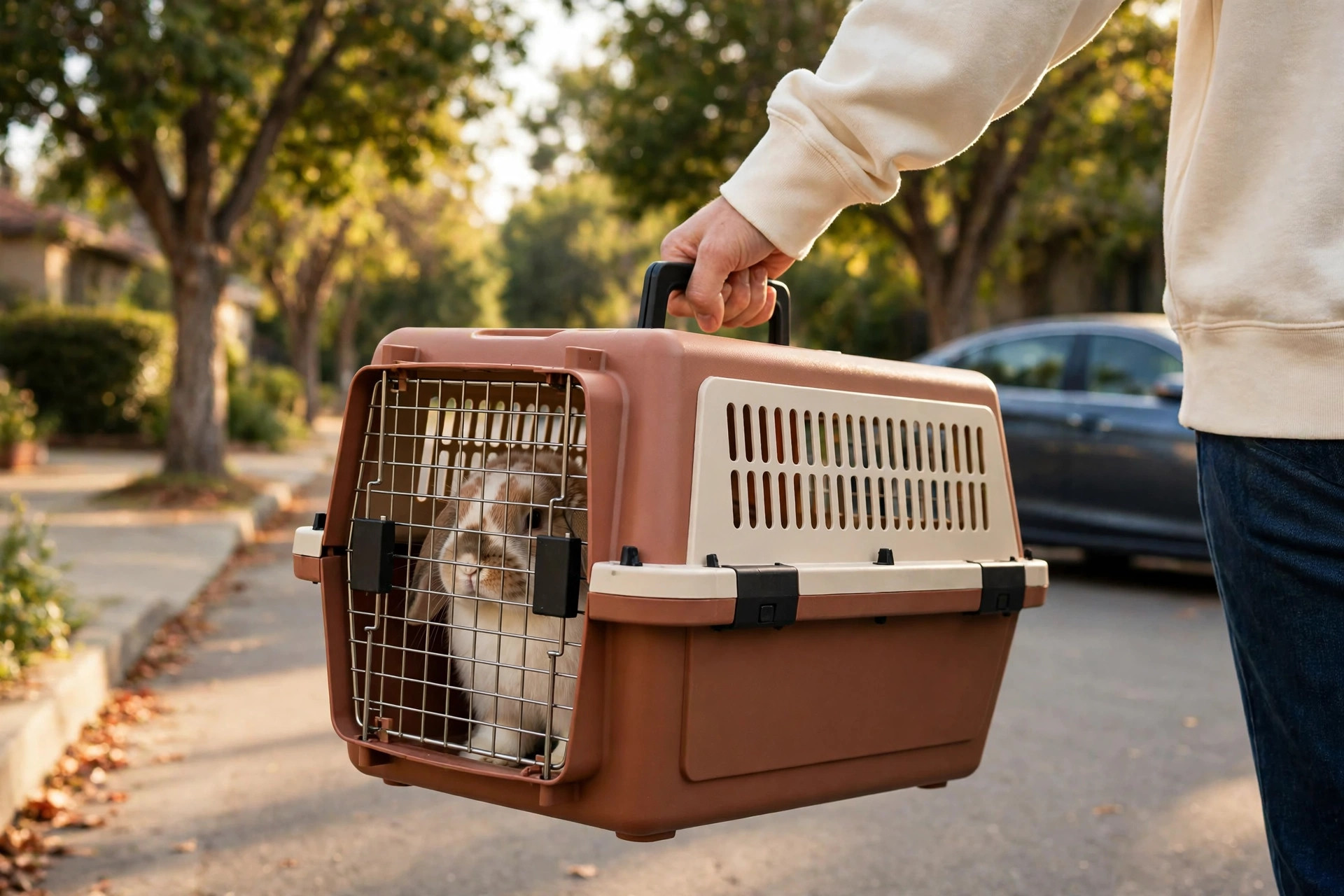
An owner carries a small-pet carrier out to the car, headed for a vet visit.
Frequently asked questions
Can rabbits and guinea pigs travel in the same carrier?
No — keep them in separate carriers, even if they live near each other at home. Rabbits are stronger, startle with powerful kicks, and can carry germs that make guinea pigs sick. Two carriers side by side in the car give both pets company without the risk, and each pet gets a box sized to them.
How long can a rabbit or guinea pig stay in a carrier?
Think in trips, not in hours of storage. A vet run or a drive across town is the normal job. For longer travel, plan stops to offer water and check the hay, keep the car cool and quiet, and never leave a small pet alone in a parked car — they overheat fast.
Is top-loading or front-loading better?
It depends on your pet. Top-loading suits nervous pets, because you lower them in and lift them out without reaching through a doorway, which can feel like a grab. Front-loading suits pets who hop in on their own when the carrier sits out at home. Many hard carriers offer both, which is the flexible pick.
How do I keep my small pet calm during the trip?
Make the carrier boring before it’s urgent. Leave it out at home with hay and a familiar fleece inside, let your pet wander in and out, then try short drives. On trip day, cover part of the carrier with a light blanket to cut visual stress, drive smoothly, and keep noise low.
The stand-and-turn fit check works for every carrier, whatever the species. Our buyer’s guide to choosing pet gear that actually works collects the measurements and red flags we use across all gear categories.
This article was created with AI assistance and reviewed by our editorial team before publishing.
 5 Best Airline-Approved Cat Carriers (2026)
 How to Choose Pet Gear That Actually Works: The Honest Buyer’s Guide
 Dog Backpacks for Hiking: Fit, Comfort, Capacity