The short answer: The best dog hiking backpack fits snugly without rubbing, carries weight balanced on both sides, and holds enough water and food for your trail length. Never load more than 10–15% of your dog’s body weight — and build up to it gradually.
A good pack turns your dog into a genuine trail partner instead of extra baggage. A bad one causes chafing, overheating, or a dog that refuses to move by mile two.
Here’s how we picked: we compared fit systems, weight distribution, ventilation, and capacity across the most-recommended hiking packs, cross-checking long-distance hiker reviews and veterinary guidance on safe carrying weight. No sponsored picks.
Our picks
Pick 1
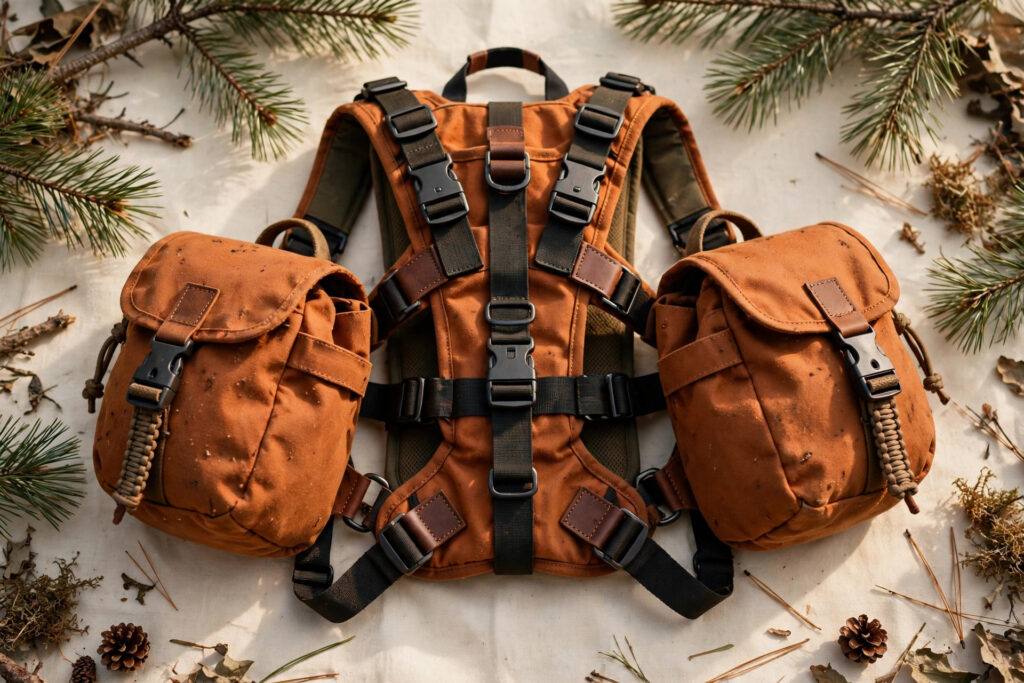
Best overall: Full-featured hiking pack with saddlebags
What to look for
- Multiple adjustment points. Chest, belly, and neck straps — at least two, ideally three. One-strap packs migrate sideways on the trail.
- Balanced saddlebags. Weight must sit evenly on both sides. Check that bags are symmetrical and sit over the ribcage, not the soft belly.
- Top grab handle. Essential for lifting your dog over blowdowns, streams, and steep scrambles.
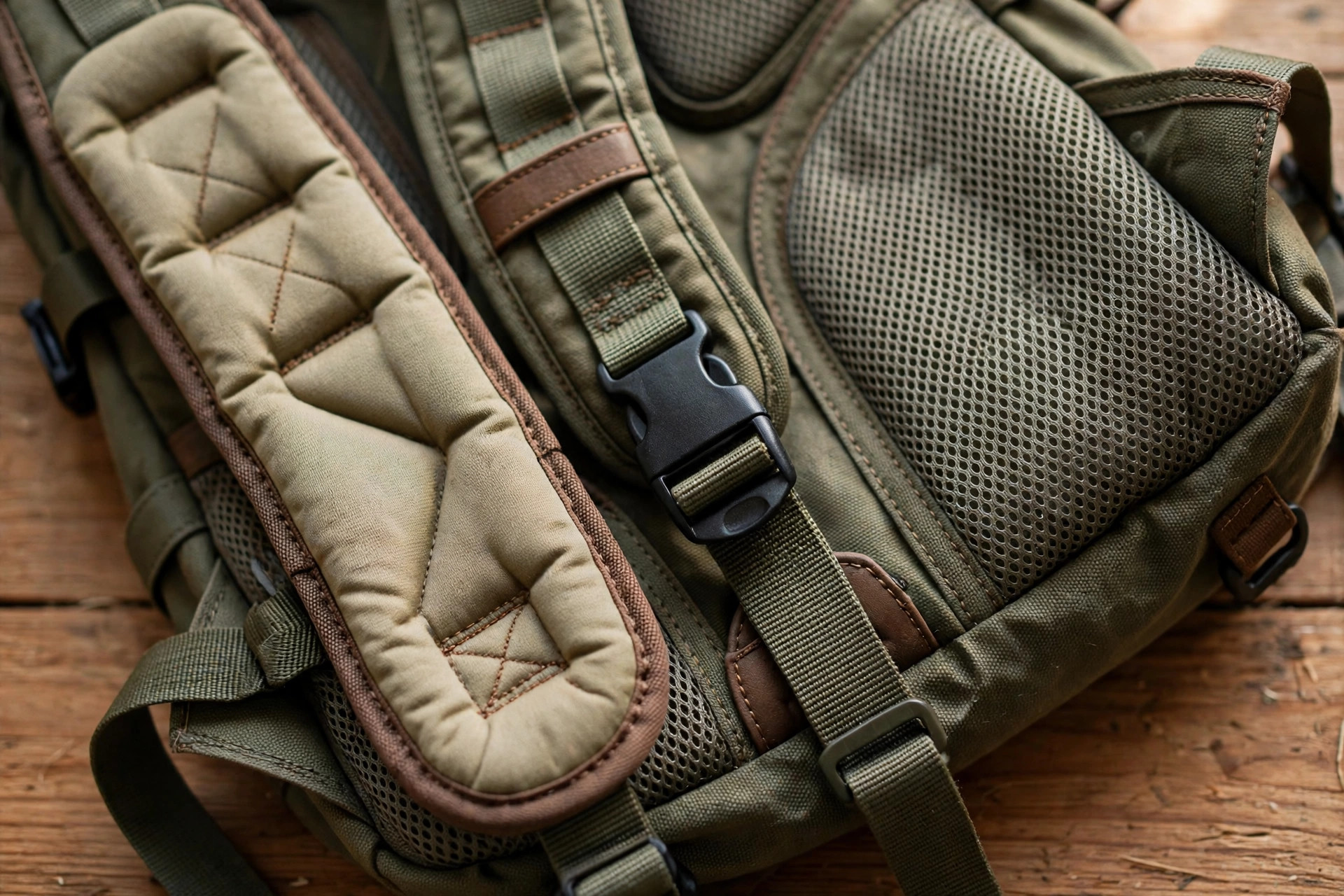
- Ventilation. Mesh panels or a raised chassis that doesn’t trap heat against the body — critical on warm days.
How we evaluate
When comparing strap systems and fit range on full-featured packs, look for at least two — ideally three — adjustment points. We assessed saddlebag symmetry and capacity, since uneven weight causes the pack to migrate sideways on the trail. We also cross-checked heat-management design and handle sturdiness against thru-hiker reviews, the toughest real-world testing a dog pack gets.
Pros
- Truly custom fit. Multiple adjustment points dial in a snug, no-shift fit on deep-chested and barrel-chested breeds alike. A pack that stays put is a pack the dog forgets they’re wearing — which is the entire goal.
- Carries real loads. Balanced saddlebags with water-bladder compatibility handle multi-hour hikes without constant readjustment. Your dog can genuinely share the carrying, not just wear a decorative vest.
- Trail-ready details. The top handle, leash attachment, and reflective trim show this was designed by people who actually hike with dogs. Each feature solves a problem you’ll hit by mile three.
Cons
- Overkill for casual walks. All those straps and buckles are fiddly if you just need something for the neighborhood. Complexity has a cost in daily convenience.
- Premium price. Full-featured packs cost 2–3× a basic one. Worth it for regular hikers, hard to justify otherwise — be honest about how often you’ll actually hit the trail.
The do-everything pack for regular hikers. Worth the investment if you hike monthly or more.
Pick 2
Best for day hikes: Lightweight minimal pack
What to look for
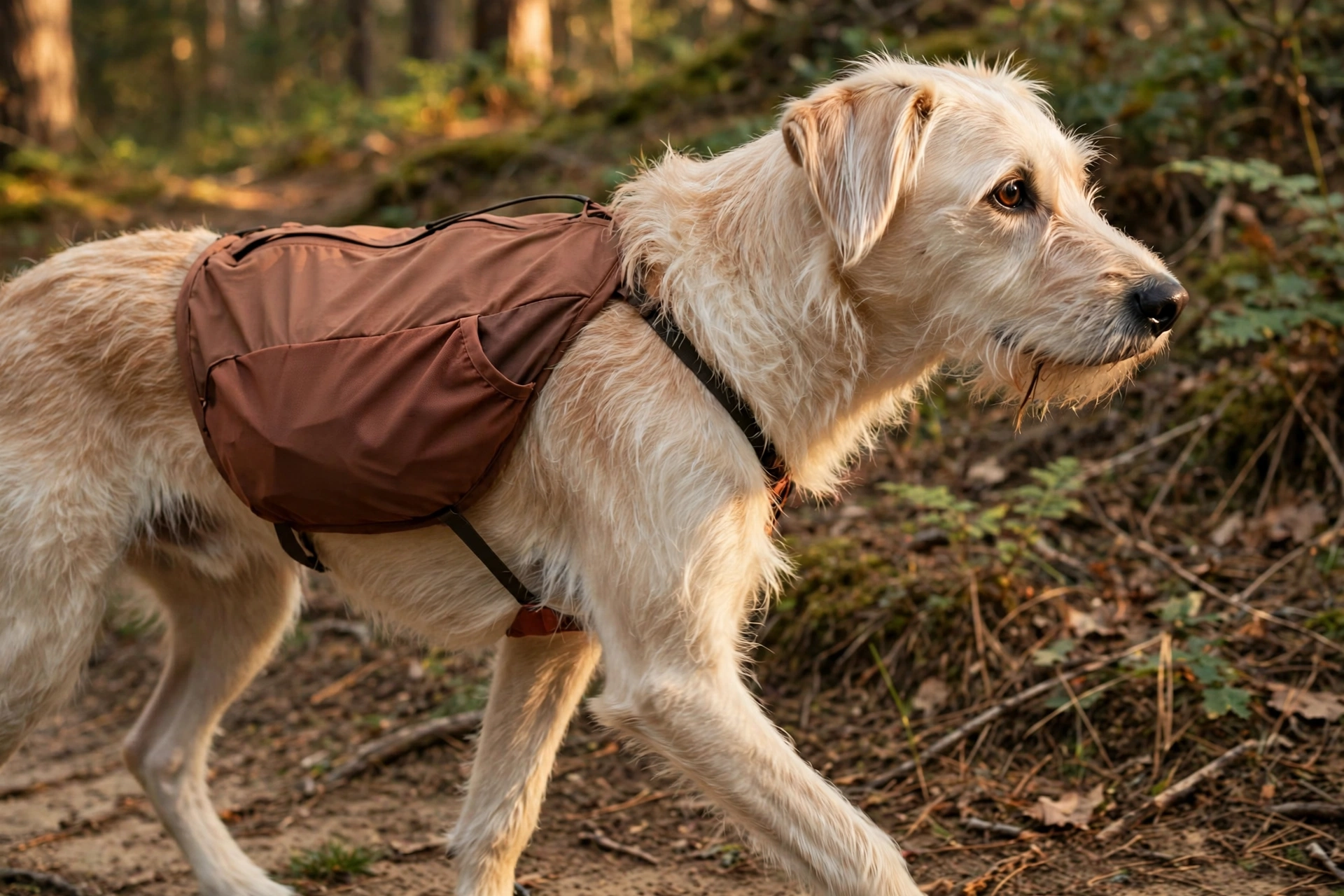
- Slim profile. Should hug the body without excess fabric flapping. Less material also means less heat buildup.
- Quick on/off. Simple buckle systems you can operate with one hand — you’ll appreciate this at every water break.
- Enough capacity for essentials. Water, collapsible bowl, treats, and a waste bag. If it can’t hold that, it’s decoration.
- Lightweight materials. Ripstop nylon over heavy canvas — every gram counts when the dog is the engine.
How we evaluate
Compare published pack weights — on a minimal design, every ounce of the pack itself eats into the dog’s carrying budget. Look for buckles you can operate one-handed, since you’ll operate them at every water break with a leash in the other hand. Compare real capacity against claimed liters using standard day-hike kit lists: water, collapsible bowl, treats, and a waste bag.
Pros
- Doesn’t overheat. Minimal coverage and light fabrics keep dogs cooler than full-coverage packs on warm days. Heat is the limiting factor on summer hikes, so this matters more than it sounds.
- Beginner-friendly. Simple enough for dogs new to packs — less fussing means faster acceptance. Most dogs adapt within one or two outings versus a week of wrestling with straps.
- Packable. Rolls small enough to stuff in your own daypack when the dog decides they’re done carrying. That bailout option is worth more than it costs.
Cons
- Limited capacity. Fine for 2–3 hour hikes; insufficient for full-day epics needing extra water and food. Know your typical hike length before choosing minimal.
- Fewer fit adjustments. Simplicity costs customizability — odd body shapes may not get a perfect fit. Deep-chested breeds especially should try before committing.
Perfect starter pack. Less capacity, but most day hikes don’t need more.
3. Best for small dogs: Compact low-profile pack
What to look for
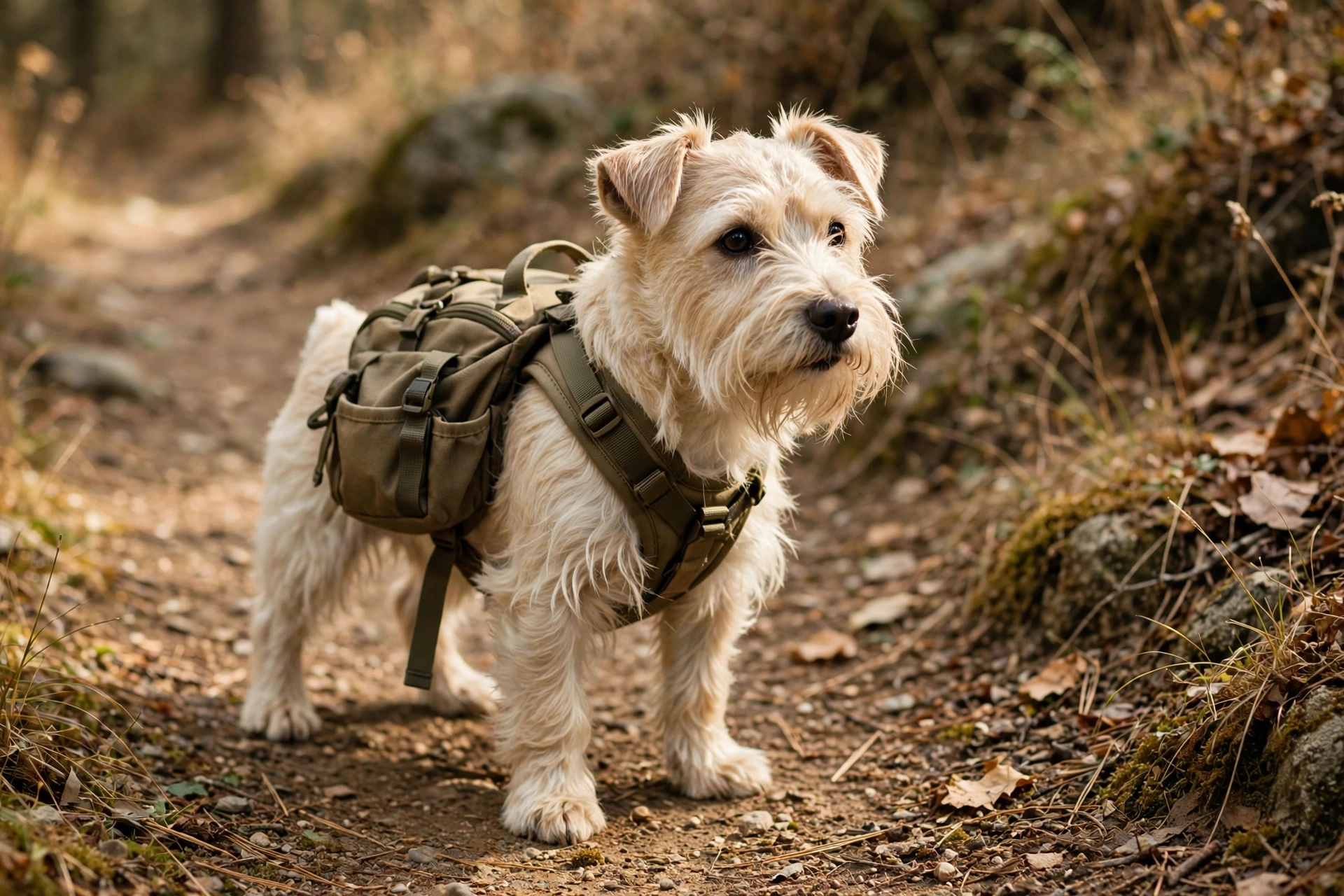
- True scaled proportions. Not a shrunken large pack — strap placement and bag size should suit narrow chests and short backs.
- Minimal weight. On a 10-pound dog, every ounce matters more. Look for sub-8oz empty weights.
- Secure narrow-chest fit. Small dogs slip out of generic packs. Chest straps must cinch small enough.
- Low-profile bags. Oversized saddlebags drag on the ground on short-legged dogs — bags should clear the elbows.
How we evaluate: We compared published sizing charts to see whether “small” sizes were genuinely re-proportioned versus merely scaled down — strap placement and bag size should suit narrow chests and short backs. Published pack weights matter even more on a 10-pound dog, where every ounce counts. We also read owner reviews specifically from toy and small-terrier owners, the people who know exactly where generic packs fail.
Pros
- Actually fits small dogs. Purpose-built proportions mean no gaping straps or dragging bags — the most common failure of “one size” packs. A pack that drags on the ground is worse than no pack.
- Featherweight. Designed around the reality that a small dog’s 10% weight limit might be one pound total. The pack itself must nearly disappear from that budget.
- Secure on narrow frames. Chest systems that genuinely cinch down instead of bottoming out. Small dogs slip out of generic packs with alarming ease; this solves that.
Cons
- Tiny capacity. Physics is physics — a pack for a 12-pound dog holds water and little else. Plan for the dog to carry hydration while you carry everything else.
- Fewer options. The small-dog pack market is thin; you may have exactly one good choice. Try it before a big trip — returns are harder when the category has no alternatives.
Verdict: Small dogs can hike too — they just need gear actually designed for them.
The 10% rule
Keep total pack weight under 10–15% of your dog’s body weight, and work up to it over several weeks. Start with an empty pack on short walks. Add weight gradually. Watch for slowing down, panting harder than usual, or trying to rub the pack off — all signs to lighten the load or call it a day.
FAQ
What age can a dog start wearing a pack?
Can my dog carry their own water?
Do dogs overheat faster with packs?
This article was created with AI assistance and reviewed by our editorial team before publishing.
 5 Best Airline-Approved Cat Carriers (2026)
 How to Choose Pet Gear That Actually Works: The Honest Buyer’s Guide
 Best Travel Carriers for Rabbits and Guinea Pigs