
The best hairball remedies for cats don’t try to stop grooming. They help swallowed fur move through the gut instead of clumping in the stomach. For most cats, that means a malt paste for bad weeks, extra fiber for daily support, and regular brushing to catch loose hair before your cat swallows it.
What to look for
Start with how often hairballs actually happen. Once in a while during shedding season? That’s a different problem from a cat who retches every week. A remedy for an occasional hairball is usually too weak for a weekly one.
Look at the mechanism, not the marketing. Most products work in one of three ways. Lubricants coat swallowed hair so it slides through. Fiber adds bulk that helps push hair along with normal digestion. Brushing removes the hair before it ever gets licked off. A good plan often mixes two of those, because no single approach catches everything.
Check the ingredient list like you’d check a food label. You want a short list you can recognise. Watch for heavy added sugars and oils your cat has reacted to before. If your cat has diabetes, kidney disease, or a sensitive stomach, check with your vet before adding a daily paste or a new food.
Match the format to the cat, too. Honestly? The perfect product your cat refuses is worthless. Some cats lick paste off a finger. Others act personally offended. Treats suit cats who ignore pastes. Food suits cats who ignore treats. Brushing suits cats who hate anything new in the bowl.
And know when a remedy isn’t the answer. Repeated vomiting, retching that produces nothing, loss of appetite, hiding, or lethargy can point to a blockage or another illness. That needs a vet, promptly. Hairballs that keep coming back very often aren’t something to just manage at home forever either. Frequent hairballs can signal skin trouble, allergies, pain, or a gut problem underneath.
How we evaluate
This guide compares remedy types, not single miracle products. Each type is judged on the same plain criteria, so you can compare a paste against a food without guessing.
First, does the method make sense? A remedy should have a clear reason it would help hair move through, get removed, or get swallowed less often.
Second, is it practical day after day? Cost matters, but so does effort. A cheap option you forget won’t help. A pricey option your cat loves might. Mess and ease of giving count, too.
Third, what are the downsides? Fiber can loosen stools if you add too much too fast. Pastes add calories. A new food needs a slow swap or it can cause its own upset.
The 5 picks
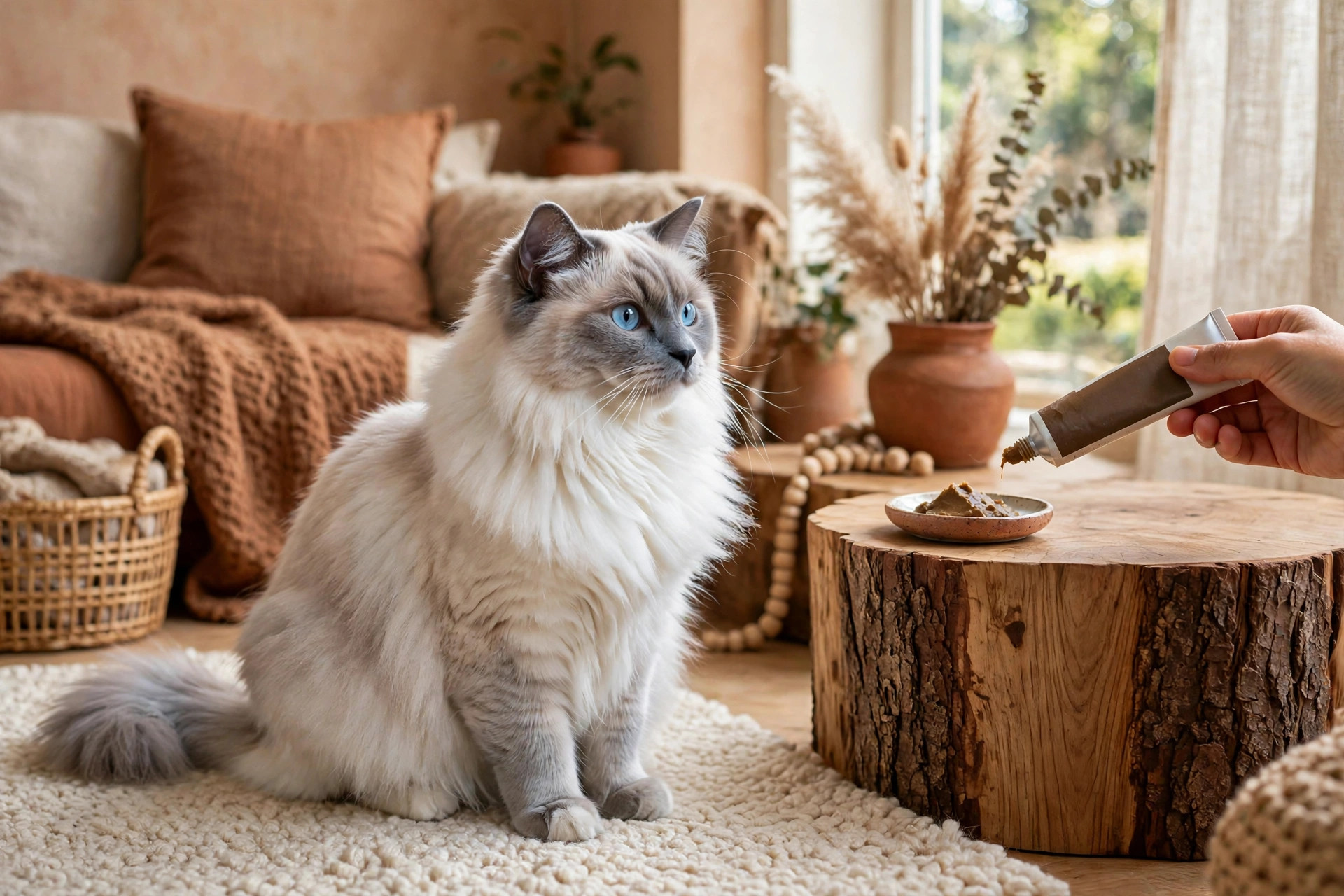
1. Malt hairball paste — best for cats who already cough up hairballs weekly
Who it’s for: Cats with a real, repeating problem, especially longhair cats in heavy shedding periods. It coats swallowed hair, so that hair is more likely to pass in the litter box instead of coming back up on your rug.
Who should skip it: Cats who need strict calorie control, cats with diabetes unless your vet approves the product, and cats who refuse anything smeared or hidden.
How to use it: Follow the tube’s dosing guide. Dab a small ribbon on a paw, offer it from a finger, or mix it into wet food. Start during a bad shedding week rather than giving it every day all year, unless your vet suggests otherwise.
Pros:
- Fast to give once your cat likes the taste
- Easy to use only when hairballs flare
- Works well alongside brushing
Cons:
- Adds calories; some formulas are sugary
- Picky cats may shake it off and decorate your floor
- Doesn’t reduce how much fur your cat swallows
2. Hairball-control treats with fiber — best for picky cats
Who it’s for: Cats who turn treat time into a daily event and ignore everything else. A fiber treat fits a routine that already exists. No wrestling. No smearing.
Who should skip it: Cats on a prescription diet, cats who need to lose weight, and cats who get soft stools from small diet changes. Treats are still food. They count.
How to use it: Stick to the serving size on the bag, and swap them in place of regular treats rather than adding them on top. Give it a week or two before you judge. Fiber works quietly.
Pros:
- Highest acceptance of any option here
- Simple portions, no mess
- Easy for sitters or family to give
Cons:
- Gentle — may not be enough for weekly hairballs alone
- Costs more per day than food-based fiber
- Easy to overfeed
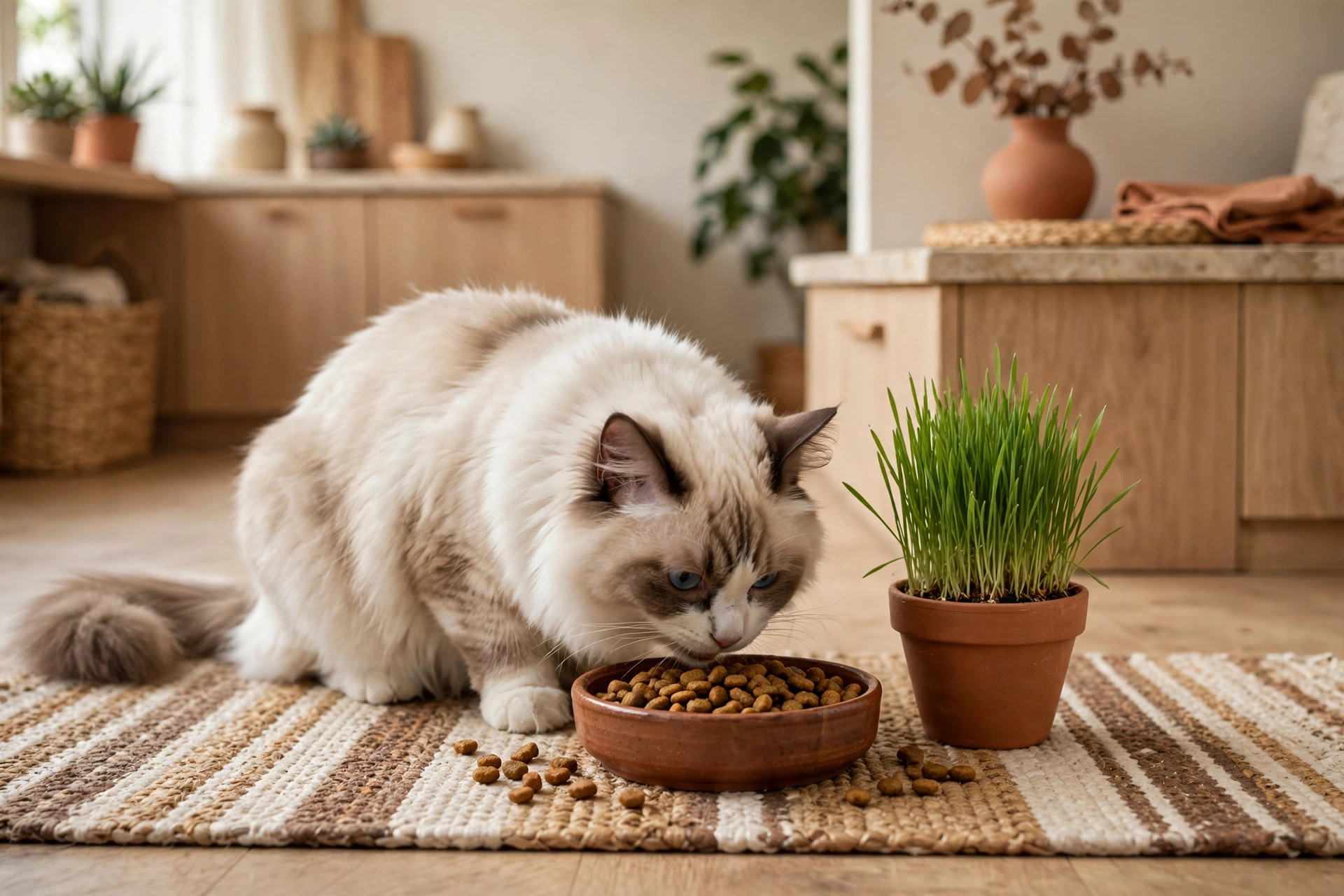
3. Hairball-control dry food — best for longhair cats as a daily baseline
Who it’s for: Longhair cats like Ragdolls who shed into their own grooming all year. If hairballs are a steady background problem, not a seasonal spike, a higher-fiber dry food gives you a baseline that works at every meal, with no extra steps.
Who should skip it: Cats who need a specific veterinary diet, cats who do better on wet food for hydration, and multi-cat homes where one cat shouldn’t eat what the other needs.
How to use it: Swap slowly. Mix a little new food into the old, then raise the share over about a week. A sudden switch is a reliable way to cause the vomiting you’re trying to reduce. Keep fresh water nearby, too.
Pros:
- No daily dosing to remember
- Steady support, not occasional help
- Simple for busy households
Cons:
- Not suitable for every cat’s health needs
- Larger or softer stools at first are common
- Less flexible than a topper you can stop quickly
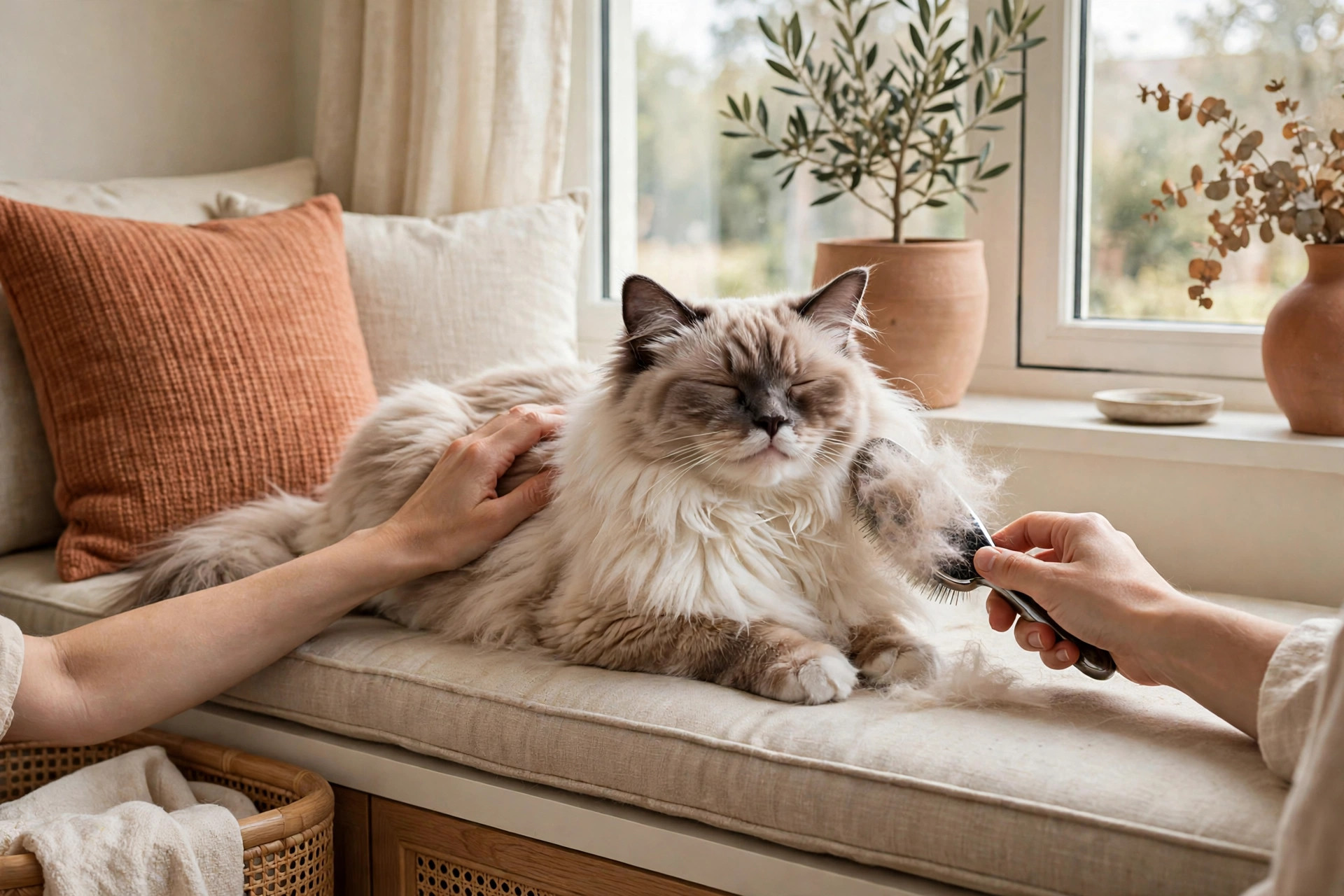
4. A daily slicker-brush routine — best drug-free option
Who it’s for: Anyone who wants to tackle the cause, not the symptom. Loose fur in the brush can’t end up in your cat’s stomach. For long, dense coats, this habit changes the maths most over time.
Who should skip it: Nobody has to skip brushing entirely. But cats with sore skin, mats close to the skin, or a strong fear of handling need a gentler plan first. Work with your vet or a patient groomer on mats. Never yank them out.
How to use it: Brush for about 5 minutes a day, or a bit longer every other day if daily sessions annoy your cat. Go with the fur, keep strokes light, and stop while your cat is still relaxed. Short and pleasant beats long and dramatic.
Pros:
- No calories, no ingredients, no recurring cost
- Helps you spot mats, flakes, or lumps early
- Many cats enjoy it as quiet attention
Cons:
- Takes your time, consistently
- Some cats need weeks of slow build-up
- Won’t clear hair already swallowed
5. Cat grass or a plain pumpkin fiber topper — best budget add-on
Who it’s for: Cats with mild, occasional hairballs, and owners who want a cheap extra layer on top of brushing. Plain pumpkin (unsweetened, not pie filling) adds gentle fiber to wet food. Cat grass gives indoor cats something green to nibble.
Who should skip it: Cats on a controlled-fiber diet, and cats who vomit every time they eat grass. If grass always comes straight back up, it isn’t helping. It’s just making laundry.
How to use it: Start small. Stir a teaspoon of plain pumpkin into wet food once a day and watch the litter box for a few days before considering more. For cat grass, grow a small pot from pet-safe seed and replace it when it gets straggly.
Pros:
- Cheap and easy to find
- Easy to stop if your cat dislikes it
- Pairs well with brushing or treats
Cons:
- Mildest effect on this list
- Too much pumpkin can loosen stools
- Grass can mean a grassy vomit on the carpet
The verdict: what to buy first
Start with the brush. Seriously. Buy a decent slicker brush first, use it daily for two weeks, and see how much fur you collect. That alone tells you how big the problem really is.
If hairballs keep coming despite brushing, add the option that matches your cat. Weekly hairballs? Reach for malt paste during shedding peaks. Picky cat who lives for treats? Go with fiber treats. Longhair cat with a constant, low-level problem? Make a higher-fiber food your baseline, and swap slowly. Pumpkin and cat grass are nice extras, but they aren’t a plan on their own for a cat struggling every week.
And keep that safety line clear. If your cat retches and produces nothing, stops eating, hides away, or seems flat and tired, skip the remedies and call your vet. If it keeps escalating, something else may be driving it.
FAQ
How often is a hairball actually normal for a cat?
An occasional hairball, especially during shedding or in a longhair cat, is common. Weekly hairballs, or hairballs that keep increasing, deserve a chat with your vet. Frequency is the signal here, not any single event. If the trend heads the wrong way, get it checked rather than just buying a stronger remedy.
Can I give my cat hairball paste every day?
Many pastes are labelled for regular use, but daily, year-round giving isn’t necessary for most cats. Paste adds calories and some products contain sugars, so follow the label, watch your cat’s weight, and check with your vet first if your cat has diabetes or another long-term condition. Using paste in heavy shedding weeks is a sensible middle ground.
Does brushing really help, or do I still need a product?
Brushing genuinely helps, because it removes loose fur before your cat licks it off. For cats with mild, occasional hairballs, a steady routine may be all you need. For weekly hairballs, brushing works best as the foundation, with a paste, treats, or a higher-fiber food added on top. A product then helps with whatever still gets swallowed.
When should I take my cat to the vet about hairballs?

Go promptly if your cat retches without producing anything, vomits repeatedly, stops eating, seems lethargic, hides, or has diarrhoea or constipation alongside the hairballs. Those signs can point to a blockage or another illness that home remedies can’t fix. Also book a visit if hairballs become very frequent. That pattern can hide skin, allergy, pain, or gut issues.
This article was created with AI assistance and reviewed by our editorial team before publishing.
 5 Best Cat Grass Growing Kits for Indoor Cats (2026)
 How to Choose Pet Gear That Actually Works: The Honest Buyer’s Guide
 6 Best Pet First Aid Kits for Dogs & Cats (2026)