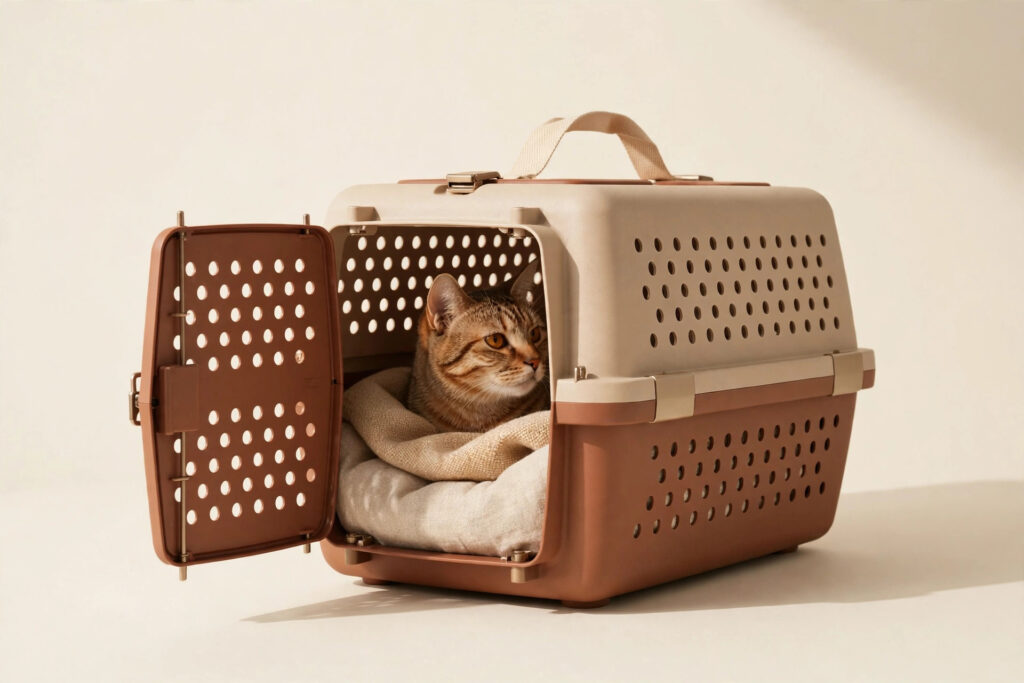
The short answer: The best cat carrier is a hard-sided one with a top opening for vet visits, or a well-ventilated soft carrier for calm travelers. Look for secure latches, easy cleaning, and enough room for your cat to stand and turn around.
Most cats hate carriers because they only see them before something unpleasant. The right carrier won’t fix that overnight — but the wrong one (flimsy zippers, no ventilation, impossible to clean) makes everything worse.
Here’s how we picked: we compared build quality, ventilation, ease of loading a reluctant cat, cleaning, and airline compatibility across the most-recommended carriers, cross-checking thousands of owner reviews and vet tech recommendations. No sponsored picks.
Our picks
Pick 1
Best for vet visits: Hard-sided carrier with top opening
What to look for
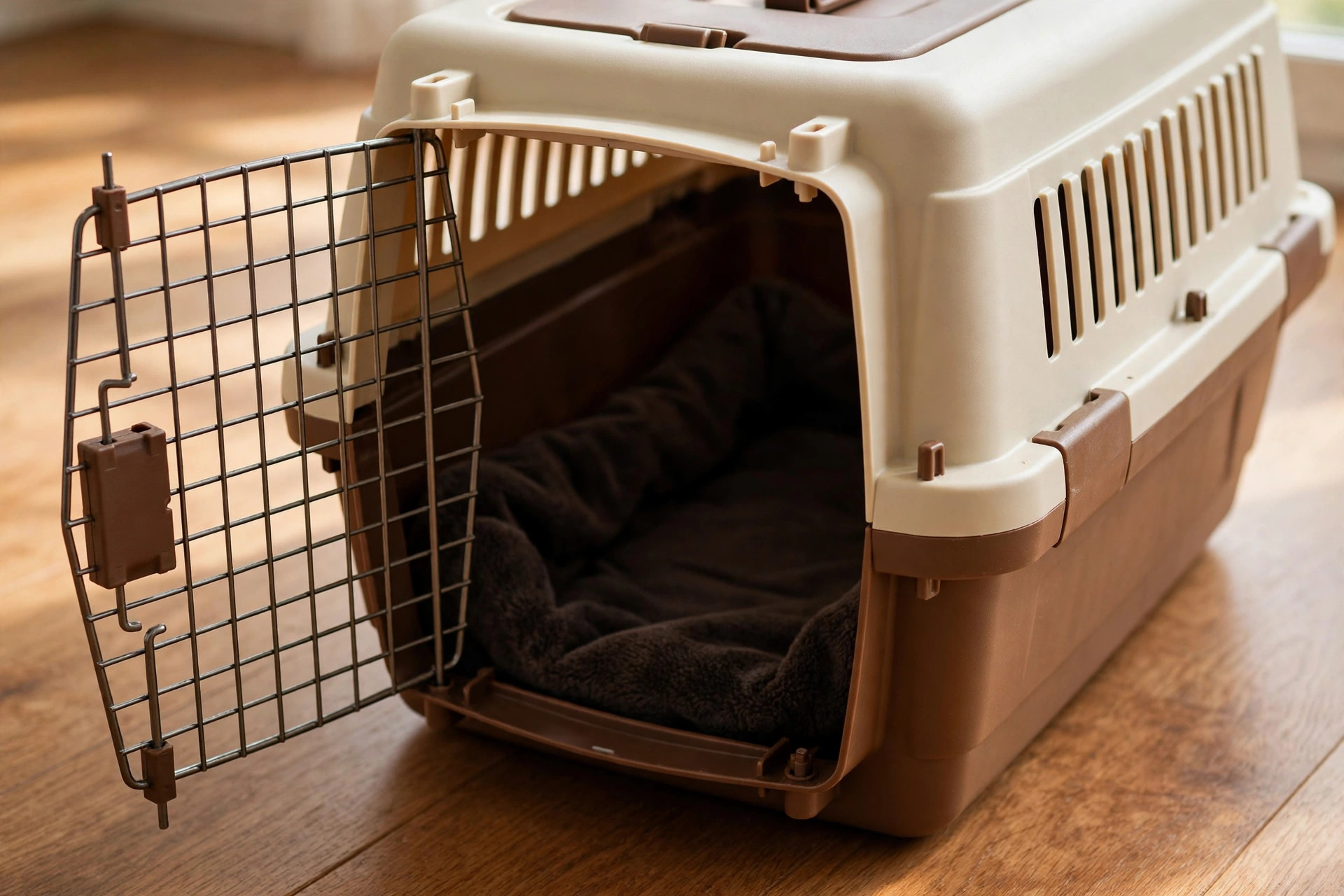
- Top opening — vet techs consistently prefer carriers that open from the top, so you can lift the cat out instead of dragging them through a small door
- Secure latches — metal latches that lock positively, because escape at the vet clinic is the nightmare scenario
- Separable halves — the top should lift off for cleaning, or for nervous cats, use just the bottom as a familiar bed
- Hard shell — rigid plastic that survives drops, stacking, and car rides without collapsing
How we evaluate
We compare latch designs across carriers, prioritizing positive-locking metal hardware since vet techs consistently flag escapes as the top carrier failure. We look at top-opening geometry and whether the halves separate fully for cleaning — two features that dominate professional recommendations. We also weigh thousands of owner reviews for durability patterns: cracked corners, stuck fasteners on competing models, and how the carrier holds up to years of vet visits.
Pros
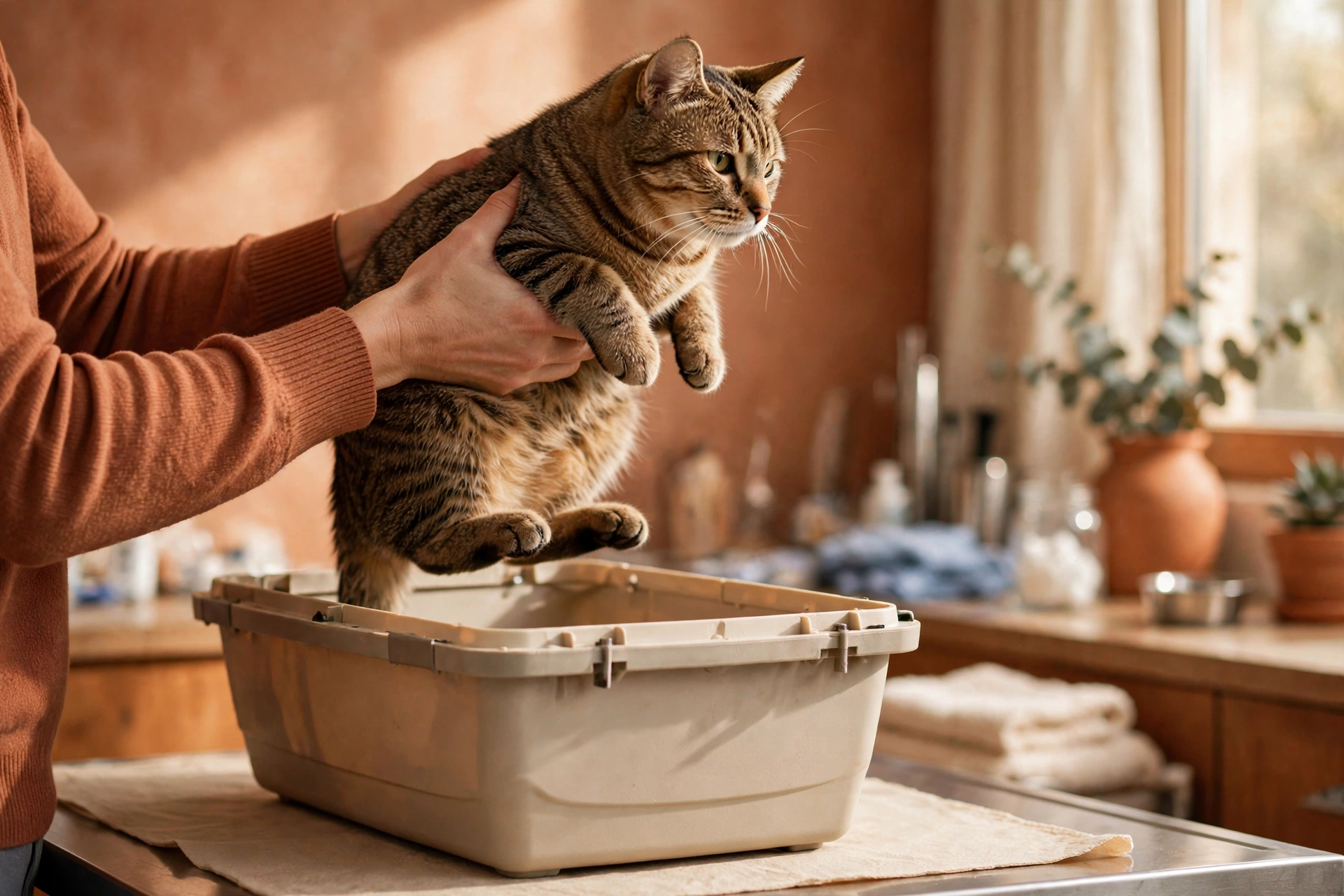
- Top loading is a game-changer. Lifting a cat straight out through the top is dramatically less stressful than dragging them through a front door. Vet techs consistently name top access as the single most important carrier feature for difficult cats.
- Nearly indestructible. Hard plastic shells survive years of vet visits, car rides, and the occasional drop down stairs. Owner reviews routinely describe these carriers lasting a decade with only cosmetic scuffs.
- Easy to sanitize. The halves separate completely — wash with mild soap after every vet trip to remove stressful clinic smells. Lingering vet-office odor is a documented trigger for carrier anxiety on the next trip.
Cons
- Bulky to store. Rigid carriers don’t collapse, so you’ll need a closet corner or garage shelf. In small apartments, plan for it to live somewhere visible — or leave it out permanently as a cat bed.
- Heavier than soft options. A hard shell plus a grown cat adds up on a long walk from the parking lot to the clinic. It’s fine for car-to-door trips but less ideal if you regularly travel on foot.
If you only buy one carrier, make it this type. The top opening alone is worth it.
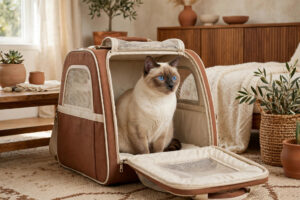
2. Best for calm travelers: Soft-sided carrier
What to look for
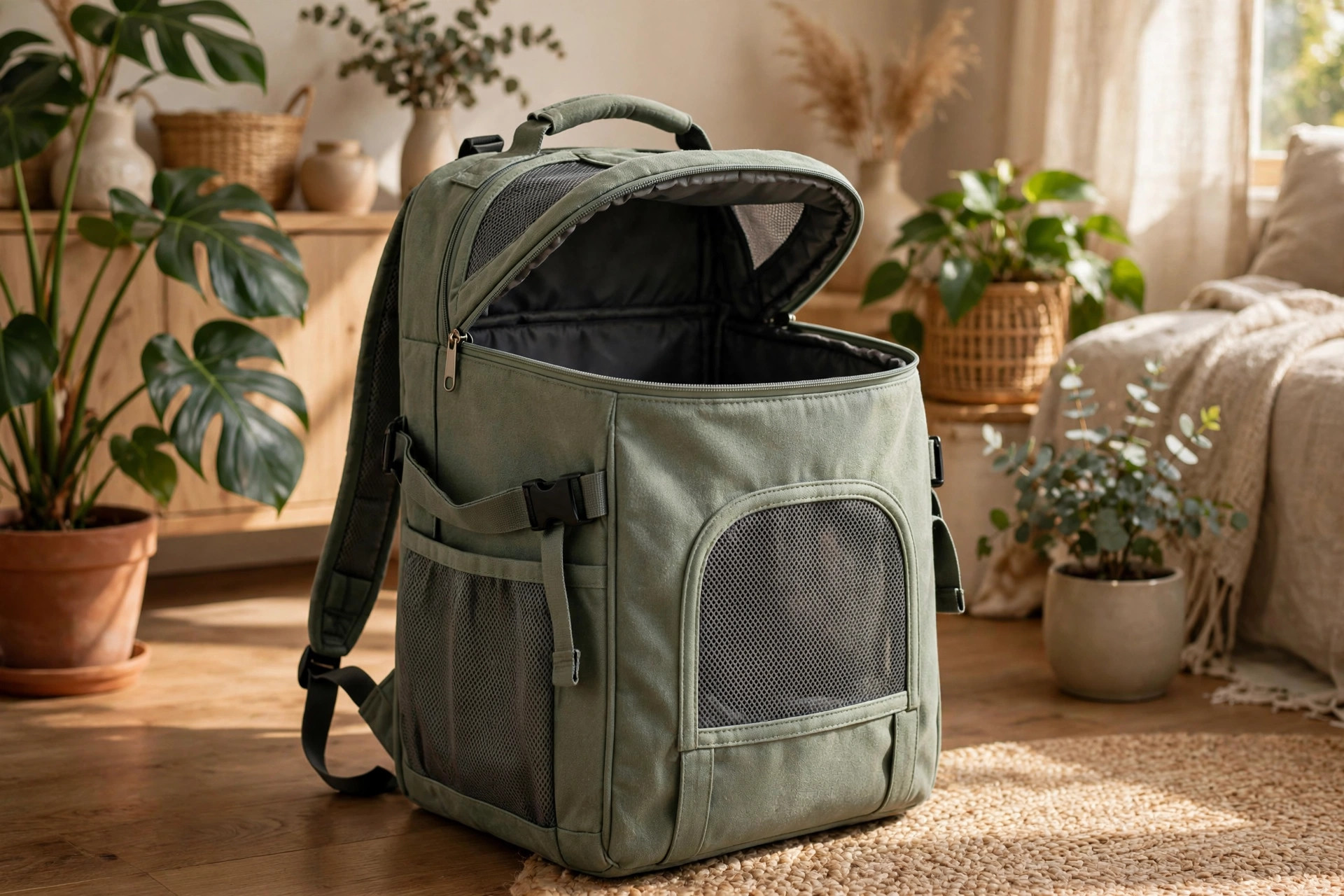
- Ventilation on 3+ sides. Mesh panels reduce panic and let your cat see out. Solid fabric walls feel like a trap.
- Locking zippers. Standard zippers can be nosed open by determined cats. Look for locking pulls or zipper guards.
- Airline-compliant dimensions. If you fly, check your airline’s under-seat measurements before buying — they vary.
- Removable base pad. You’ll want to wash it. Non-removable pads get grimy fast.
How we evaluate: We assess ventilation coverage across panels, since enclosed-feeling carriers spike stress in already-anxious cats. We check zipper security features and real-world airline fit reports against major airlines’ under-seat dimensions. We also weigh owner feedback comparing calm versus anxious cats, because soft carriers suit the first group far better than the second.
Pros
- Light and portable. Most soft carriers weigh roughly half what a comparable hard carrier does, and they collapse flat for storage. For anyone short on closet space, that fold-flat trick is a genuine quality-of-life win.
- Less intimidating. Soft walls and mesh windows feel less like a cage than a rigid box, which helps cats that already tolerate carriers stay calm. It’s a meaningful difference for routine trips with an easygoing cat.
- Travel-ready. Most quality soft carriers are sized to fit under airplane seats, making them the default choice for flying with cats. Always verify your specific airline’s under-seat dimensions before booking, since they vary.
Cons
- Not escape-proof. Determined cats can claw through mesh panels over time, and standard zippers can be nosed open without locking pulls. For known escape artists, this category is a hard no.
- Harder to sanitize. Fabric absorbs odors that hard shells simply wash away, and you can’t hose a soft carrier down. Removable, machine-washable base pads help, but the shell itself needs regular wiping.
Verdict: Great for cats who already tolerate carriers and for air travel. Skip it for escape artists.
Carrier training actually matters more
Leave the carrier out with the door open and a blanket inside. Feed treats near it, then inside it. Most cats need 1–2 weeks of this before the carrier stops being scary. No carrier design overcomes zero preparation.
FAQ
Should I get a bigger carrier “just in case”?
Are backpack carriers good?
How do I clean a carrier after a vet visit?
This article was created with AI assistance and reviewed by our editorial team before publishing.
 5 Best Airline-Approved Cat Carriers (2026)
 How to Choose Pet Gear That Actually Works: The Honest Buyer’s Guide
 Best Travel Carriers for Rabbits and Guinea Pigs