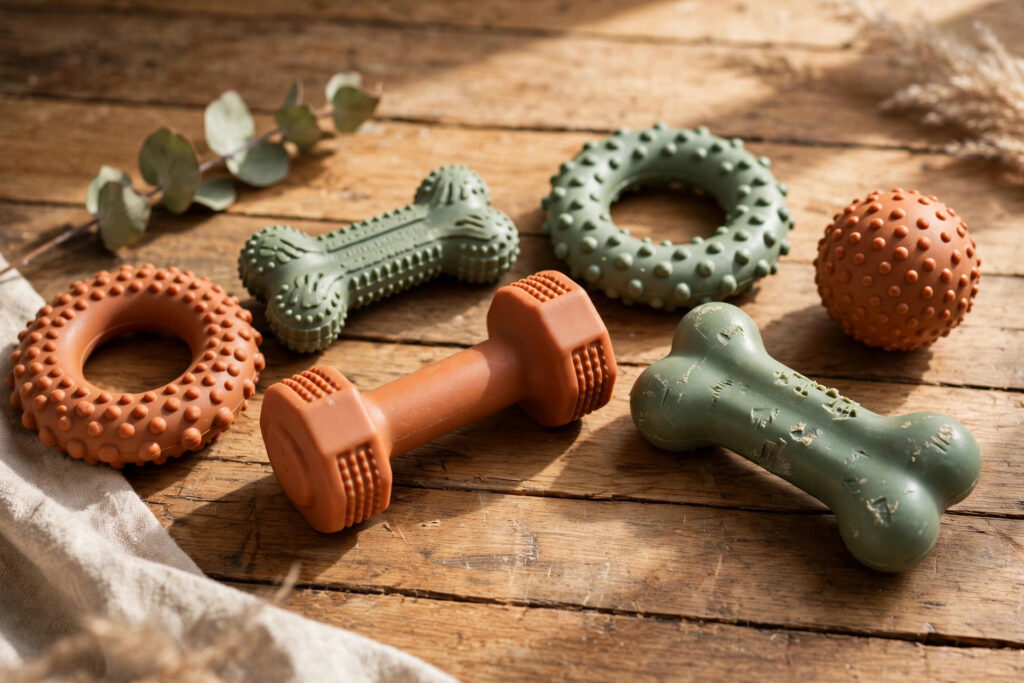
The short answer: The toughest dog toys use solid natural rubber or tightly-woven rope with no squeakers or stuffing to destroy. The nine picks below were chosen for material durability, smart design (treat-dispensing keeps dogs busy longer), and strong track records with power chewers.
Some dogs don’t play with toys — they demolish them. If you’re tired of picking up stuffing, you need toys engineered for destruction, not just cute ones.
How we picked
No lab crush-tests here. We compared material specs (rubber density, rope weave, nylon hardness), design features that extend toy life, and thousands of owner reviews from people with serious chewers. Every pick below is stuffing-free or built to survive it.
What survives a power chewer
- Solid rubber over hollow. One-piece molded rubber has no seams to split.
- No squeakers. The first thing destroyed — and a choking risk once exposed.
- Size up. A toy slightly too big lasts longer than one that fits “just right.”
- Treat-dispensing wins. A toy that dispenses kibble keeps dogs licking, not shredding.
Our 9 picks
Pick 1
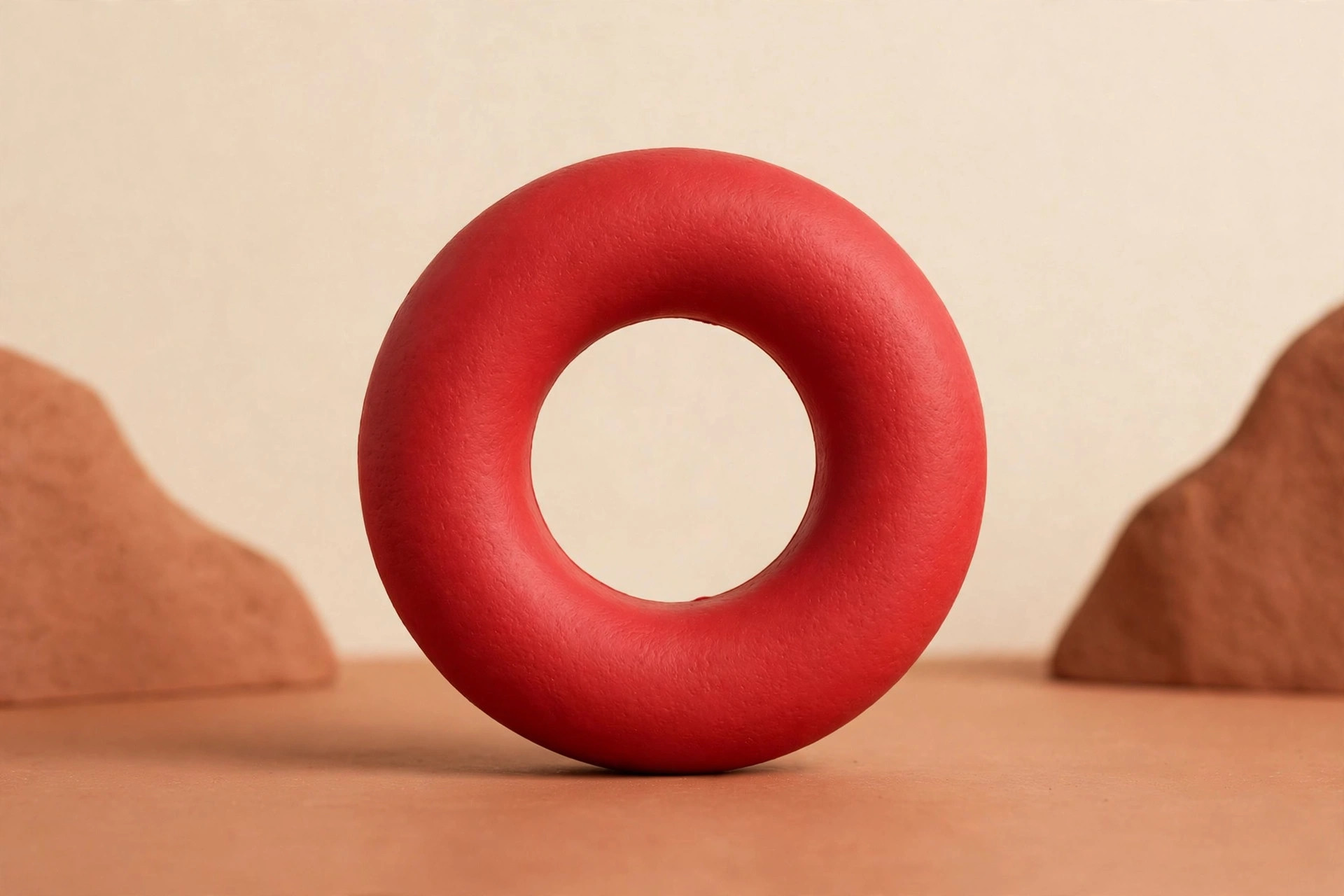
Classic One-Piece Rubber Chew
What to look for
- One-piece molded solid rubber — no seams or glued joints to split
- Hollow center that fits treats or peanut butter for extra engagement
- A size slightly larger than your dog’s mouth for aggressive chewers
- Thick walls that resist punctures and chunking
How we evaluate
We compare the rubber density and wall-thickness specs manufacturers publish, along with sizing charts, to see which designs hold up under genuinely aggressive chewers. We cross-reference that against long-term owner reports, paying special attention to reviews from people with pit bulls, terriers, and other serious power breeds. We also check vet and trainer guidance on chew-toy hardness, since a toy that is too hard for the dog’s teeth is a different kind of failure.
Pros
- The longest track record. Solid molded rubber has been surviving power chewers for decades, which is why every other tough toy on the market gets measured against it. That long history shows up in owner reviews too, where this design collects more multi-year survival stories than any other single toy.
- Doubles as enrichment. The hollow center fits treats, kibble, or a smear of peanut butter, turning a plain chew into a focused twenty-minute project. That mental work matters: trainers consistently note that a dog busy licking is a dog not shredding the couch.
- Sized for everyone. It comes in a wide range of sizes, so there is a genuine fit for everything from terriers to mastiffs. And the standard advice from experienced owners holds: for aggressive chewers, size up one step past what the chart suggests.
Cons
- Boring without a stuffing. Unfilled, it is just a lump of rubber, and plenty of dogs give it a sniff and walk away. The fix is simple but real: this toy only earns its keep when you put food in it.
- Limited play variety. Its shape does not bounce unpredictably or roll in interesting ways, so it fails as a fetch toy. Think of it as a chewing project, not an all-rounder, and pair it with something you can throw.
Start here. Nothing has a longer track record.
Pick 2
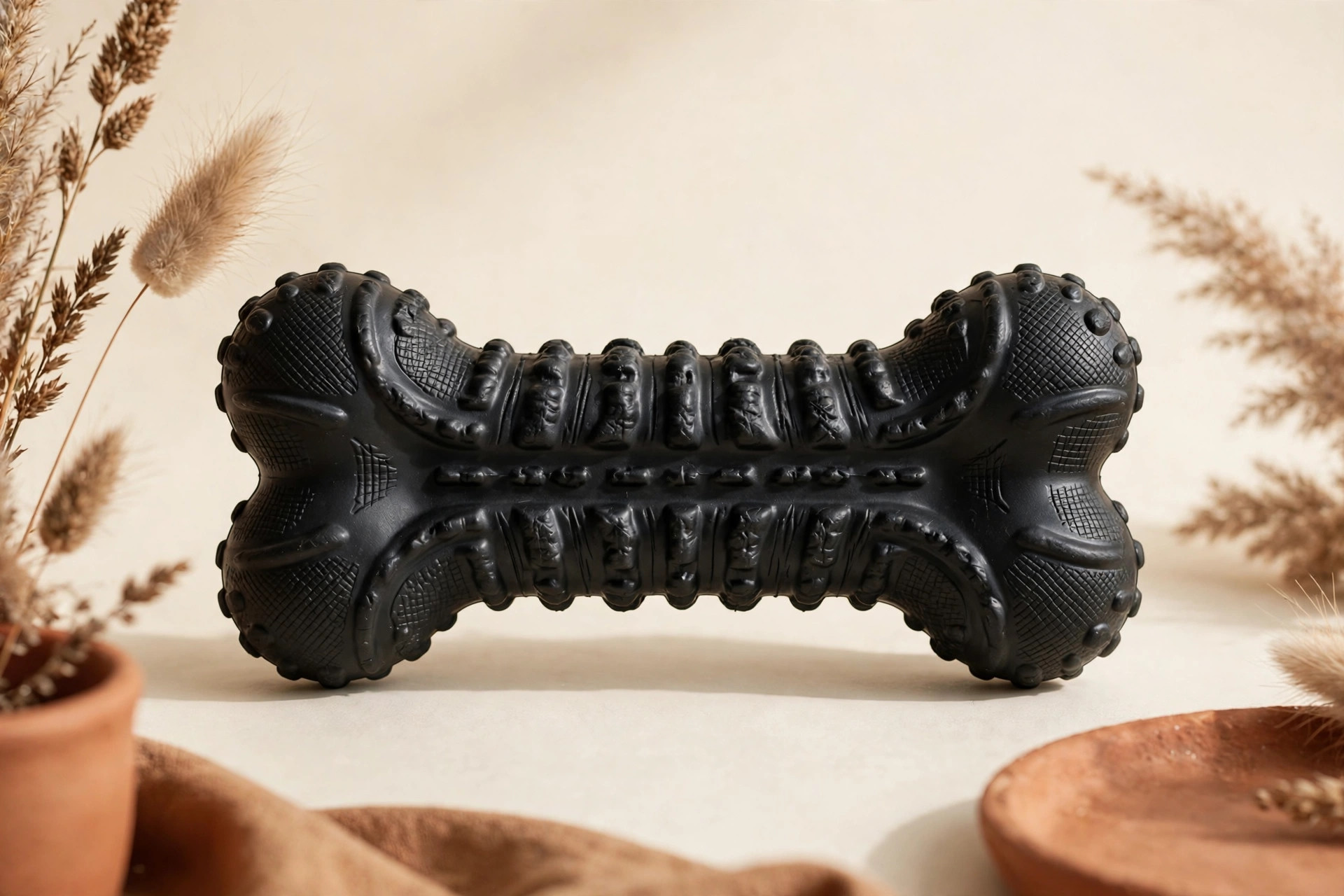
Extra-Tough Black Rubber Bone
What to look for
- A harder rubber compound (the “extreme” black grade) for dogs that destroyed the standard red version
- Textured surface or ridges that clean teeth while chewing
- Bone shape that’s easy for dogs to hold between their paws
- Sizing matched to your dog’s weight class — too small is a choking risk
How we evaluate
We compare rubber hardness and compound specs between standard and extreme grades, and check owner reports from people whose dogs killed the softer versions first. Veterinary dentists caution that harder is not always better, so we also review guidance on matching chew hardness to the dog’s jaw strength. Finally, we look at which designs keep their texture and shape after months of daily gnawing, based on long-term owner updates.
Pros
- A genuine step up in durability. The black “extreme” compound is measurably harder than the classic red formula, and owner reports back that up: dogs that chunked the red version often cannot make a dent in this one. If your dog graduated past the standard grade, this is the logical next rung.
- Dental bonus. The ridges and texture scrape the tooth surface as the dog gnaws, which helps with plaque in the same way textured dental chews do. It is no substitute for brushing, but for a dog that refuses the toothbrush, every bit of mechanical cleaning counts.
- Near-indestructible for most dogs. Among heavy chewers, this is one of the few toys that owners describe as surviving for months rather than weeks. No toy is truly indestructible, but the gap between this and ordinary rubber toys is wide.
Cons
- Too hard for some dogs. Gentle chewers and seniors with worn or fragile teeth may find the hard compound unappealing, or worse, risky for cracked teeth. Veterinary dentists generally advise matching chew hardness to the dog, not just to the dog’s enthusiasm.
- Heavy for its size. The dense rubber compound has real heft, which makes it a poor throw toy and a hazard around anything breakable indoors. Keep this one as a floor chew rather than a fetch candidate.
For dogs that killed the red one.
3. Heavy-Duty Rope Tug

What to look for
- Tightly woven cotton-poly blend that resists fraying better than loose rope
- Knotted handles that give you a safe grip during tug games
- Thickness matched to your dog’s jaw size
- Machine-washable construction for muddy aftermaths
How we evaluate: We check weave density and fiber-blend specs, and review owner feedback on how long the rope stays intact with supervised tug play. Cotton-poly blends resist fraying better than loose cotton alone, so we favor designs that publish their blend. We also review trainer guidance on tug safety, since a toy’s lifespan depends heavily on how the game is played.
Pros
- Burns energy interactively. A vigorous tug session burns through the energy that bored dogs otherwise spend on furniture and shoes. Trainers point out that interactive play also strengthens the handler bond, which pays off in better recall and calmer behavior elsewhere.
- Machine washable. After a muddy park session you can throw it straight in the washing machine instead of the trash. That washability stretches its useful life well beyond toys that have to be hand-cleaned or discarded when dirty.
- Resists fraying. The tight cotton-poly weave holds its structure far longer than cheap loose-rope toys, which unravel into strings within days. Owner reports consistently put tight-weave designs months ahead of bargain rope toys in survival time.
Cons
- Not a solo toy. Left alone with a determined chewer, even tight rope unravels into fibers eventually. Treat it as a game-session toy and put it away between rounds, and it will last far longer.
- Fiber ingestion risk. Swallowed rope fibers can cause serious digestive problems, including intestinal blockage that requires surgery. Trim loose strings the moment they appear, and retire the toy when it starts to fray.
Verdict: Best for dogs that chew from boredom; tug burns the energy instead.
Pick 4
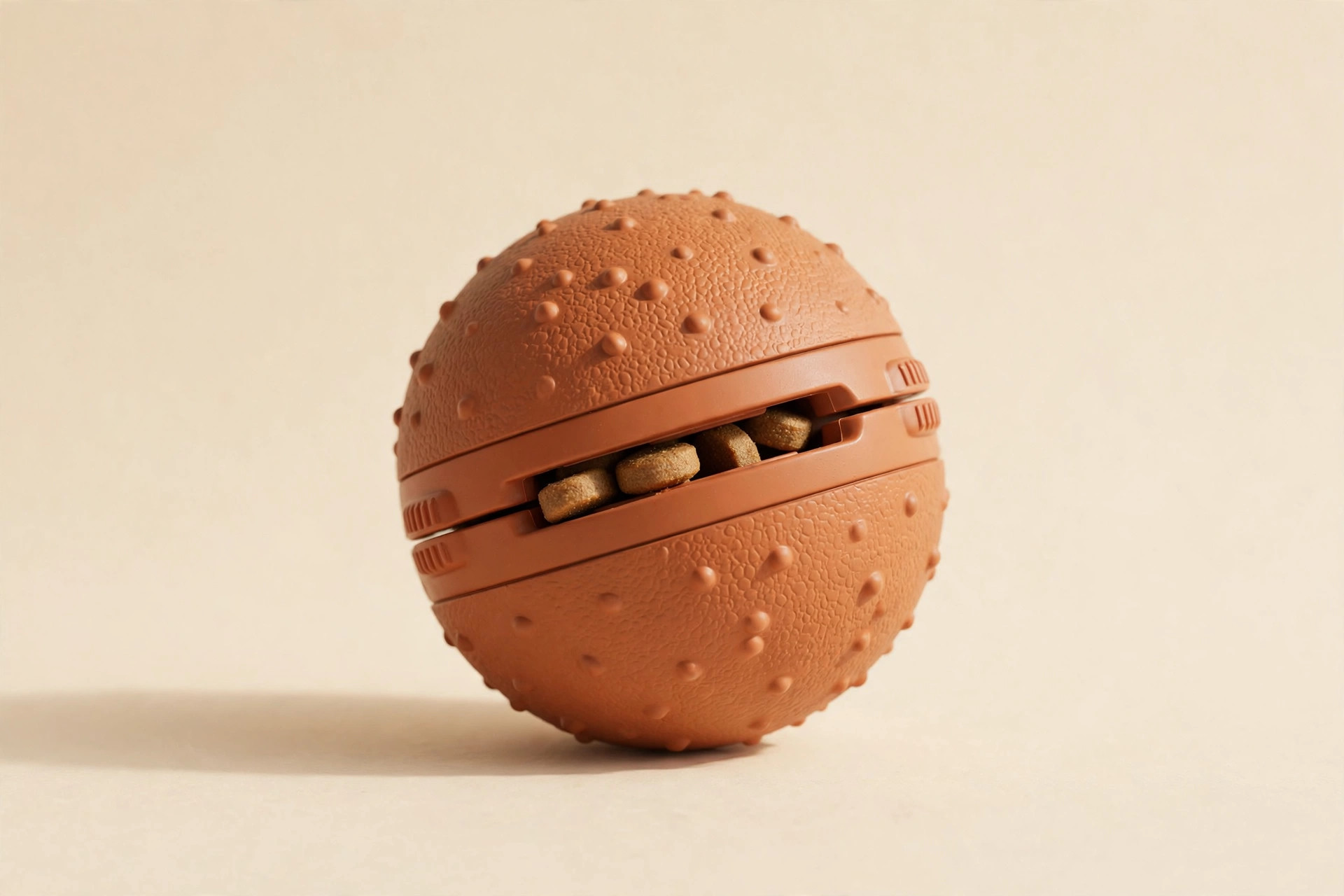
Treat-Dispensing Rubber Ball
What to look for
- Adjustable treat opening so you can set the difficulty for your dog
- Solid one-piece body — no glued halves that split open
- A bouncy, unpredictable roll that keeps dogs engaged in play
- Size appropriate to your dog — big enough not to be a choking hazard
How we evaluate
We compare opening adjustability and wall-thickness specs, favoring designs where the difficulty can be set to the dog’s skill level. We weigh owner reports on actual engagement time, since a dispenser a dog empties in two minutes is not doing its job. We also check trainer guidance on using food puzzles to redirect destructive chewing, which is the real measure of this category.
Pros
- Mental stimulation included. Kibble dispensing through an adjustable opening turns dinner into problem-solving, and a dog working for food is a dog not working on your baseboards. Behaviorists consistently rank mental enrichment among the most effective fixes for boredom-driven destruction.
- Engaging roll. The bouncy, unpredictable roll keeps fetch-loving dogs engaged far longer than a standard tennis ball. That erratic movement triggers chase instincts in a way straight throws never do.
- Solid build. The one-piece body is sturdy enough for supervised play with strong-jawed dogs, with no glued halves to split open. Just remember it is an enrichment toy first — it is not built to be gnawed on like a solid rubber chew.
Cons
- Supervision required. Heavy gnawing can crack the dispensing mechanism, so this one needs supervision rather than free access. Put it away between sessions like you would a puzzle, and it will last much longer.
- Noisy indoors. On hard floors, an enthusiastic dog bouncing this toy gets loud enough to hear through walls. Save it for carpeted rooms or the yard if you share walls with anyone.
Mental stimulation beats raw durability — a busy dog chews less.
Pick 5
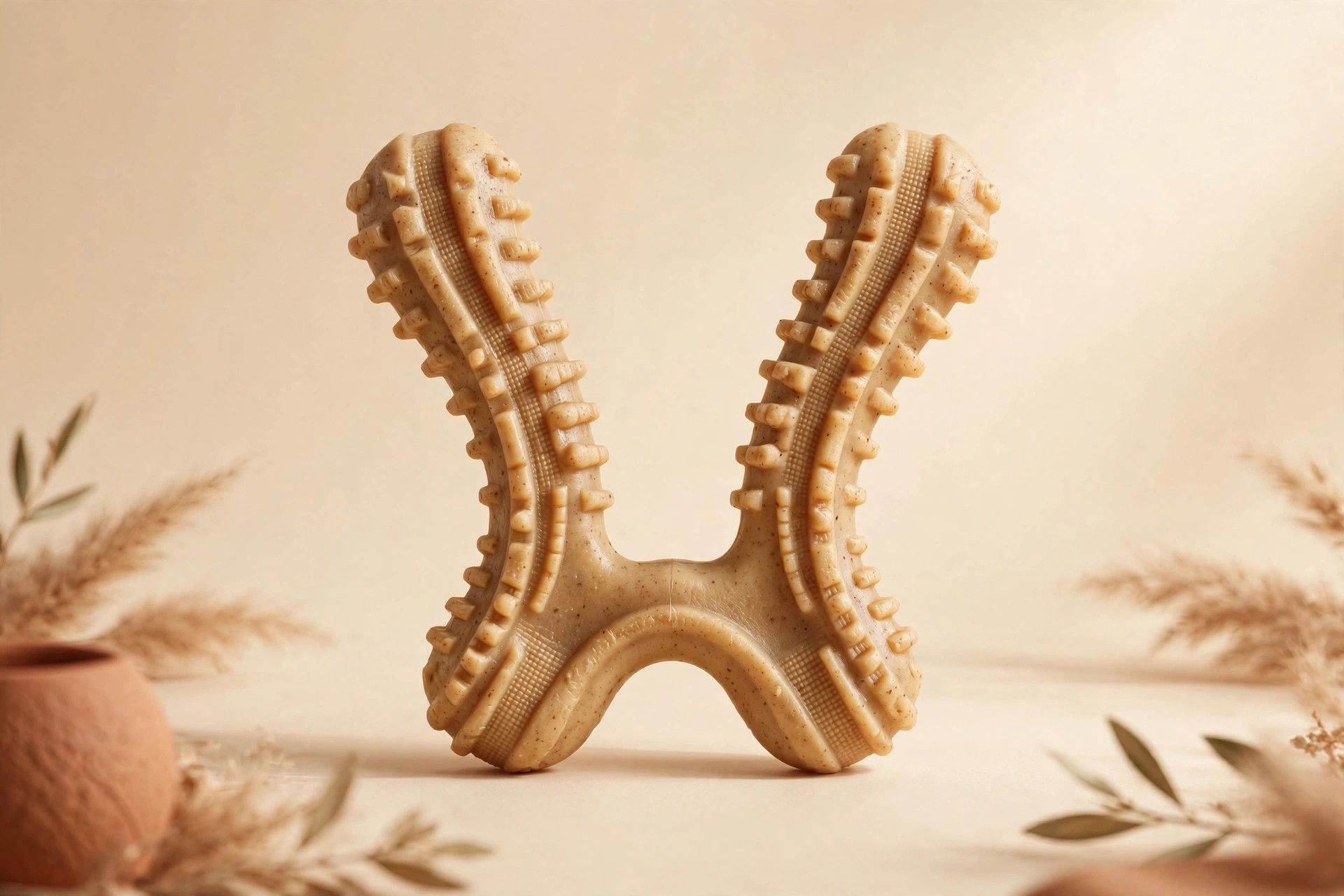
Nylon Wishbone Chew
What to look for
- Flavored nylon that encourages chewing and flakes safely in tiny pieces
- Wishbone shape that’s easy for dogs to grip between their paws
- Hardness matched to your dog’s chewing strength — not for puppies or fragile teeth
- Clear wear indicators so you know when to replace it
How we evaluate
We review nylon hardness ratings and flavor options against vet dental guidance on safe chew hardness, since the wrong hardness risks cracked teeth. We check that the nylon is designed to flake in tiny rice-sized pieces, which is the safety standard for this category. We also review owner reports on realistic wear life with daily chewers, looking for how many weeks the toy lasts before replacement.
Pros
- Built for daily gnawers. The flavored nylon is engineered for sustained daily gnawing, and owner reports consistently show it lasting weeks where rubber toys get chunked in days. For dogs that genuinely need to chew every day, that durability is the whole point of the design.
- Safe flaking. As the dog chews, the nylon sheds only tiny rice-sized flakes rather than chunks, which is the safety standard this category is built around. Those micro-flakes pass harmlessly, unlike the shards from lesser chew materials.
- Easy to grip. The wishbone shape sits naturally between the dog’s paws, giving them leverage to work it from both ends. That ergonomic design is why dogs actually pick this one up day after day instead of abandoning it in the corner.
Cons
- It wears down. This is a consumable chew, not a lifetime toy, and it genuinely gets smaller with use. Watch the wear markers and discard it once it passes the safe point — a fifteen-dollar replacement beats a vet visit.
- Rigid material. The rigid nylon is too hard for puppies, seniors with fragile teeth, or any dog with dental problems. Veterinary dentists caution that aggressive chewing on hard nylon is one of the common causes of slab fractures, so match the chew to the dog.
The long-lasting chew for dogs that need to gnaw daily.
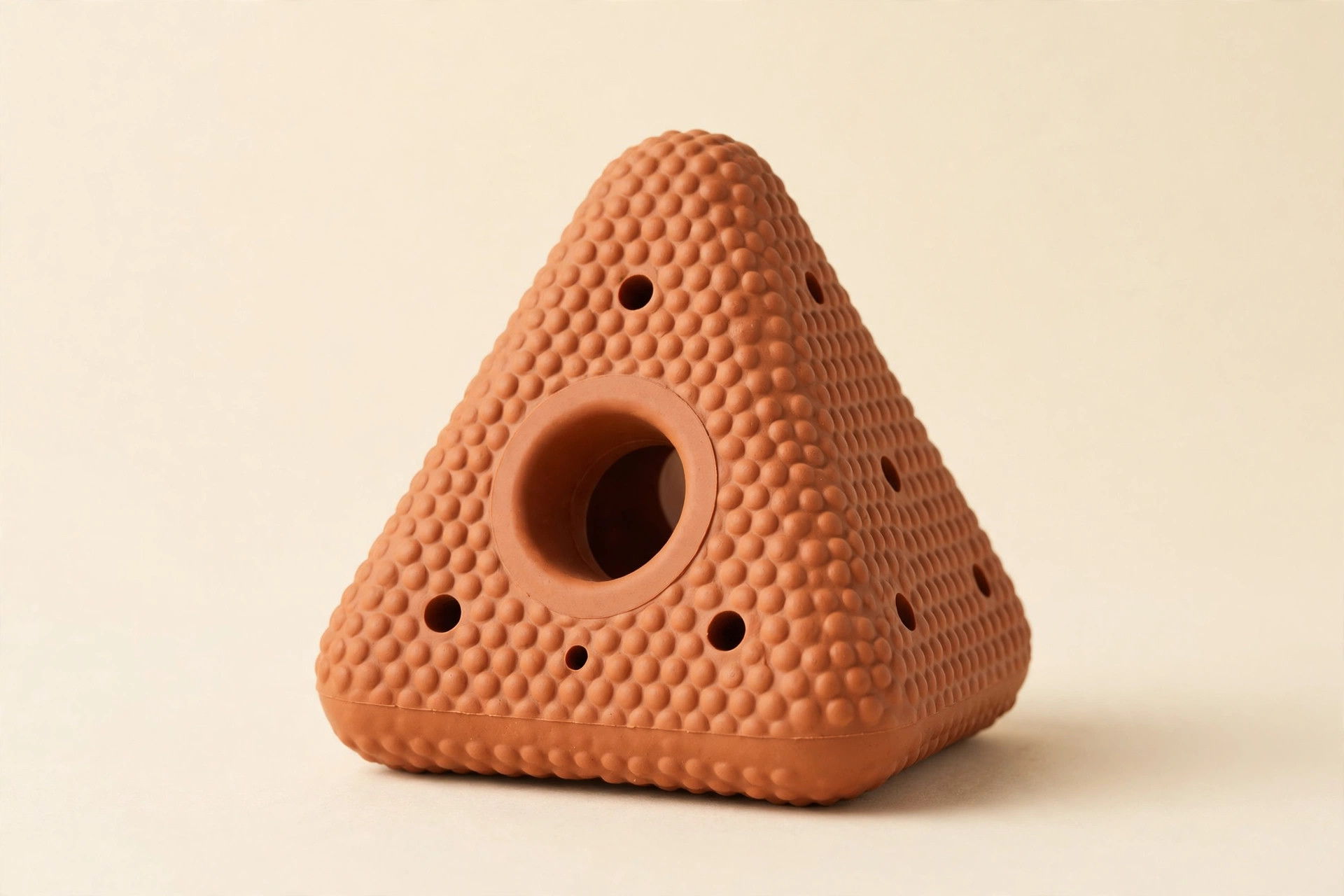
6. Rubber Treat Pyramid
What to look for
- Wobble-and-dispense design for two enrichment modes in one toy
- Thick rubber walls that survive serious jaws
- Easy-to-clean construction — food residue builds up fast
- A size your dog can’t fit fully in its mouth
How we evaluate: We compare wall-thickness and wobble-stability specs, since a pyramid that tips flat is not dispensing anything. We weigh owner reports on cleaning ease and how long the toy actually holds a dog’s attention. We also check sizing guidance carefully, because a pyramid a dog can fit fully in its mouth is a choking hazard, not enrichment.
Pros
- Two enrichment modes. The wobble-and-dispense design gives dogs two problems to solve at once, and every kibble has to be earned. That dual challenge keeps dogs engaged longer than single-mode dispensers.
- Survives serious jaws. The thick rubber walls stand up to serious jaws, which matters because food toys attract exactly the kind of attention that destroys lesser designs. Owner reports put its survival well ahead of thinner-walled dispensers.
- Easy to clean. The simple pyramid shape has no fiddly mechanisms or crevices to scrub, so a quick rinse handles most of the cleanup. That matters more than it sounds — food residue builds up fast in dispensers you cannot easily clean.
Cons
- Supervised use. Even with thick walls, this is a play-session toy rather than something to leave in the crate. A truly determined chewer left alone with it will eventually win, so supervise and put it away between sessions.
- Modest capacity. The chamber holds less kibble than dedicated slow feeders or large dispensers. For big dogs, expect to refill it mid-session, which is fine for enrichment but not a full mealtime replacement.
Verdict: Great for food-motivated destroyers.
Pick 7
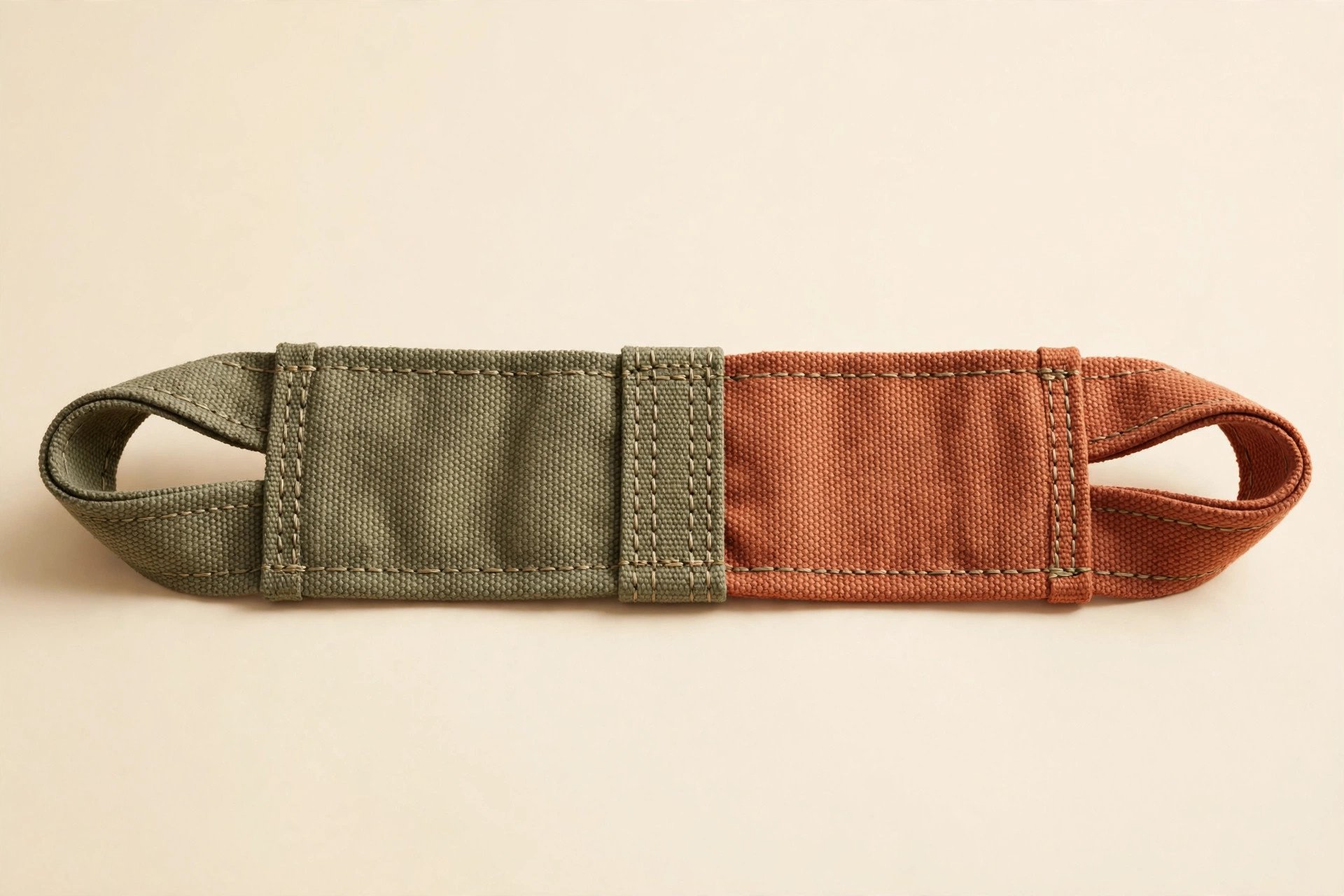
Fire-Hose Material Tug
What to look for
- Fire-hose-style woven outer layer that resists punctures
- Flat, stuffing-free construction — nothing inside to explode
- Double-stitched seams rather than single stitching
- Handles or loops for a secure tug grip
How we evaluate
We check seam-stitching specs and weave density, favoring double-stitched construction over single stitching. We weigh owner reports on whether the toy truly stays stuffing-free over weeks of tug play, since the “no mess” claim is the whole pitch. We also review guidance on rotating fabric toys out of unsupervised access, which is the single biggest factor in their lifespan.
Pros
- No stuffing explosion. The flat, stuffing-free construction means there is simply nothing inside to explode across your living room. For owners tired of picking up fluff, that absence is the entire appeal.
- Double-stitched seams. Double-stitched seams are noticeably stronger than the single stitching on most fabric toys, which is exactly where cheap tug toys fail first. It is a small manufacturing detail that makes a big difference in survival time.
- Lives up to the name. Plenty of toys print “tough” on the packaging without meaning it, but owner reports put this one in the rare group that actually earns the label. The fire-hose-style weave resists the puncturing teeth that kill ordinary fabric toys.
Cons
- Tug-only toy. The flat shape does not bounce or roll in any interesting way, so it is strictly a tug and interactive-play toy. Dogs that entertain themselves need something else for solo time.
- Not for solo chewers. A dedicated shredder left alone with it can still tear the fabric, however tough the weave. Store it with the other game toys and bring it out for play sessions only.
The “tough” toy that actually lives up to the name.
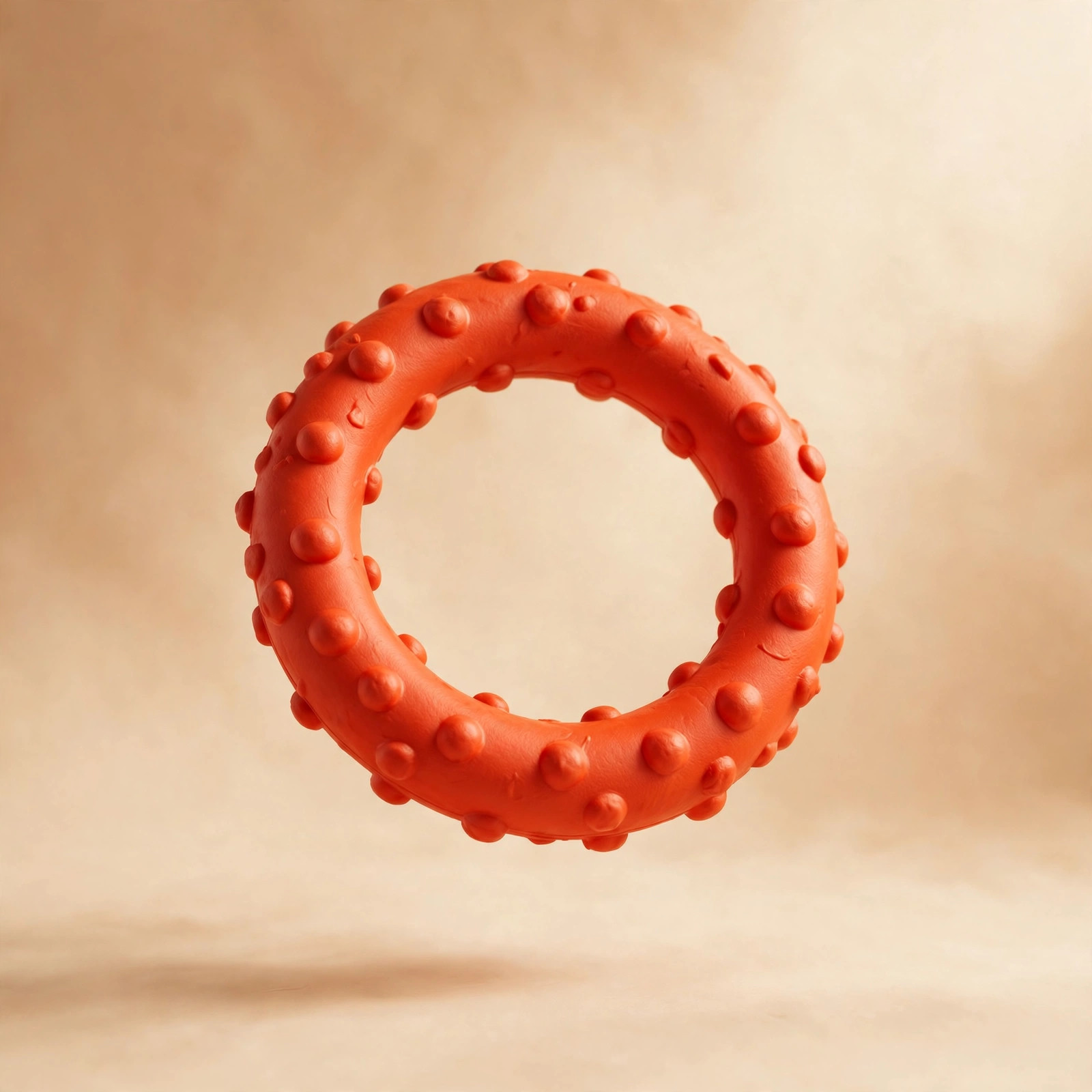
8. Floating Rubber Ring
What to look for
- Genuine buoyancy — it should float high enough to grab, not sink slowly
- Puncture-resistant skin over a soft core: gentle on teeth, tough against nails
- High-visibility color for outdoor and water play
- A diameter your dog can grip comfortably for fetch
How we evaluate: We compare buoyancy and puncture-resistance specs, checking that the ring floats high enough to grab rather than sinking slowly. We check owner reports on how the ring holds up to outdoor and water play, especially around claws on docks and pool edges. We also verify sizing guidance, since the ring needs to be grippable for the dog’s jaw without becoming a swallowing risk.
Pros
- Made for water dogs. Genuine buoyancy keeps the ring riding high enough to grab, which is the whole point of a water fetch toy. For the rare dog that both swims and destroys toys, this is one of the few designs built for both.
- Gentle on teeth. The puncture-resistant skin over a soft core gives dogs a comfortable grip without the tooth-jarring hardness of solid plastic. It is firm enough to survive fetch, soft enough not to punish the mouth.
- Easy to spot. The bright high-visibility color stays easy to spot in grass, underbrush, and open water. Anyone who has lost a dark toy in a lake at dusk knows exactly why that matters.
Cons
- Niche appeal. For dogs that do not swim, this is an oddly shaped fetch ring with no other purpose. It is a specialist tool, not an all-rounder, so buy it for the water dog in your life.
- Resistant isn’t proof. Puncture-resistant is not puncture-proof, and a determined chewer treating it like a chew toy will eventually win. Use it for fetch sessions, then put it away like the rope toys.
Verdict: For the rare dog that destroys toys AND swims.
Pick 9
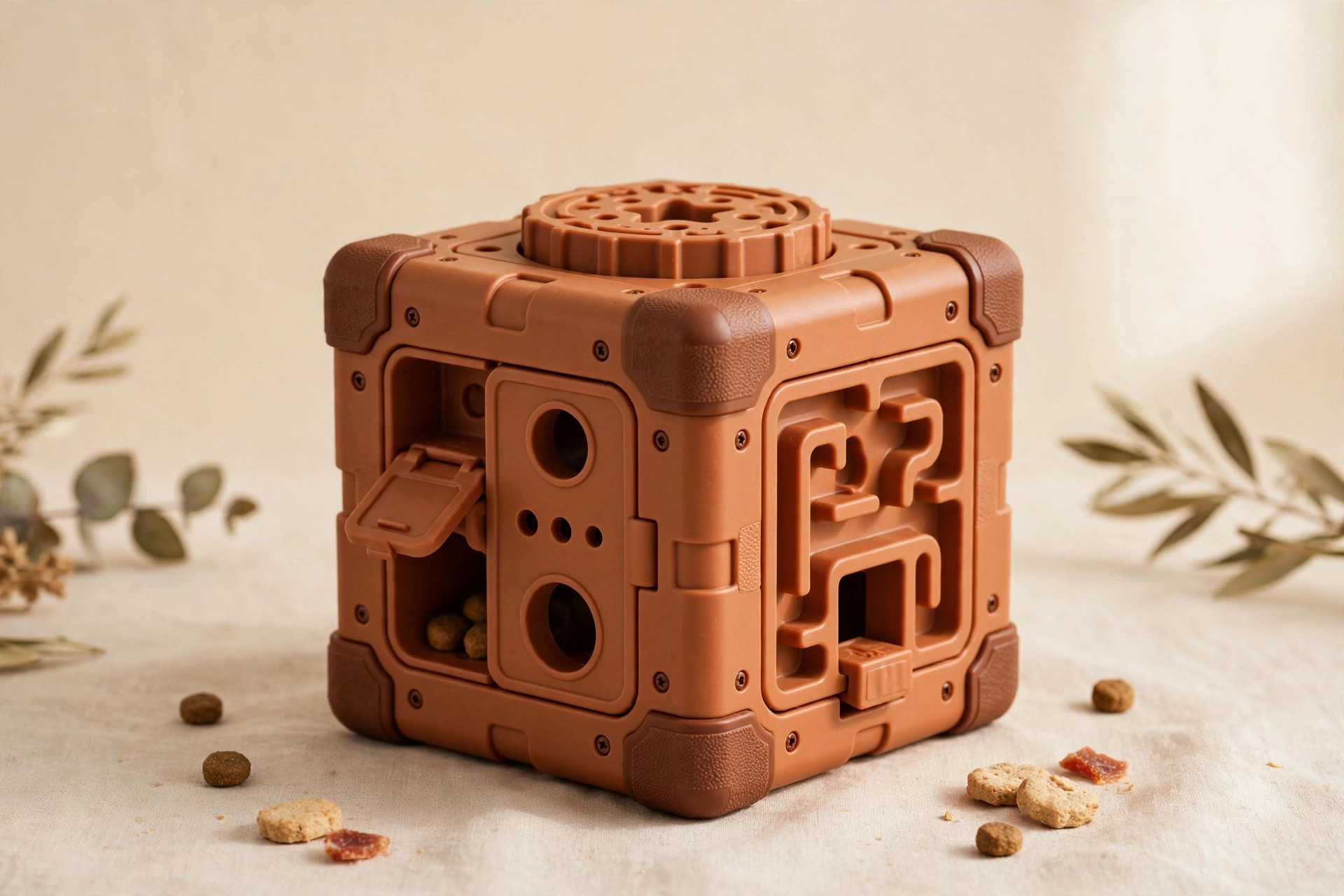
Puzzle Treat Cube
What to look for
- Multiple treat compartments with varying difficulty levels
- Heavy-duty plastic housing that survives drops and throws
- Slow-feeder function to stretch out mealtimes for gulpers
- A design you can actually clean — food gets into every crevice
How we evaluate
We compare compartment complexity levels and plastic durability specs across designs, looking for housing that survives drops and throws. We weigh owner reports on realistic engagement time and, just as important, cleaning effort, since food residue hides in every crevice. We also check guidance on matching puzzle difficulty to the dog’s experience, because a puzzle that is too easy becomes a bowl and one that is too hard becomes furniture.
Pros
- Mealtime becomes enrichment. Spreading dinner across multiple compartments turns a thirty-second gulp into a twenty-minute project. For fast eaters, that pacing also reduces the gulping that leads to bloating and vomiting.
- Built for rough play. The heavy-duty plastic housing is built to survive drops, throws, and the batting that frustrated dogs dish out. Owner reports show it outlasting thinner puzzle designs that crack under the same treatment.
- Adjustable challenge. Multiple compartments at varying difficulty levels mean the puzzle grows with the dog instead of being solved once and abandoned. Starting smart dogs on the harder settings from day one stretches the challenge considerably.
Cons
- Cleaning commitment. Kibble dust and treat residue hide in every compartment and crevice, so this one needs regular washing to stay hygienic. Factor in five minutes of cleanup per use, or the puzzle becomes a science experiment.
- Smart dogs outgrow it. Clever dogs can master the easy levels within days, at which point it is just a slow bowl. Start with the harder settings from day one to stretch the challenge.
Turns mealtime into a 20-minute project.
FAQ
Are any toys truly indestructible?
When should I throw a toy away?
Do puzzle toys really reduce destructive chewing?
This article was created with AI assistance and reviewed by our editorial team before publishing.
 5 Best Puzzle Toys for Dogs Who Get Bored Fast (2026)
 How to Choose Pet Gear That Actually Works: The Honest Buyer’s Guide
 7 Best Cat Toys for Indoor Cats (2026)