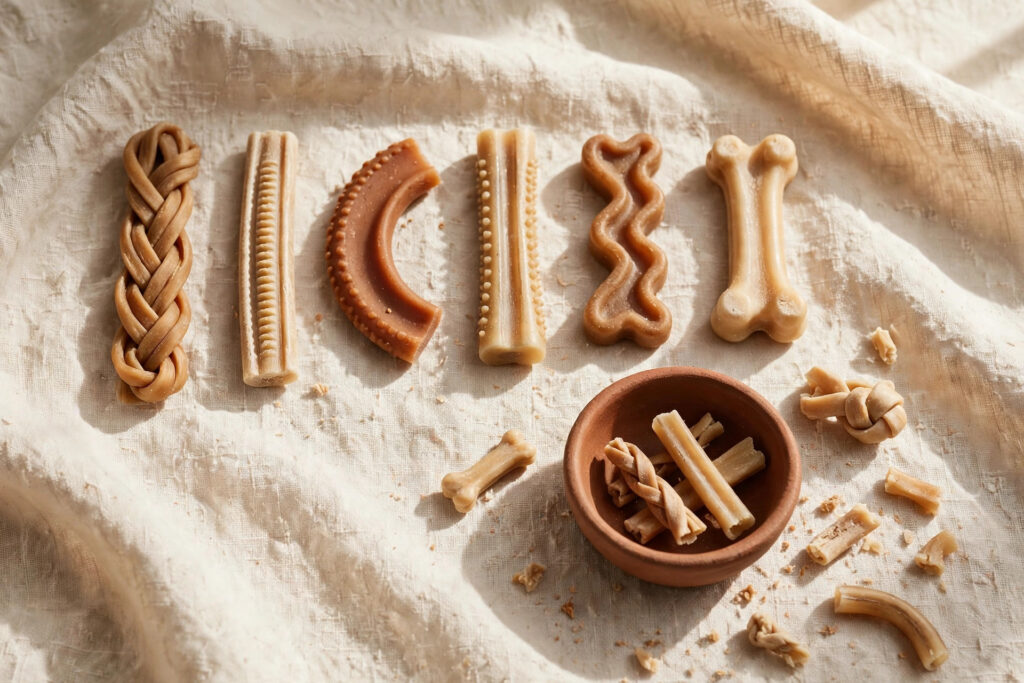
The short answer: The best dental chews combine mechanical scrubbing action (ridges, nubs, or a chewy texture) with ingredients your vet would approve of. Look for the VOHC seal — it’s the only independent certification that a dental product actually reduces plaque or tartar.
Dental disease affects most dogs by age three. Chews aren’t a replacement for brushing, but the right ones meaningfully slow plaque buildup between cleanings.
Here’s how we picked: we prioritized products with the Veterinary Oral Health Council (VOHC) seal, compared ingredient lists for red flags, and cross-checked thousands of owner reviews for palatability and digestibility. No sponsored picks.
Our picks
Pick 1
Best overall: VOHC-sealed daily dental chew
What to look for
- VOHC seal. The Veterinary Oral Health Council awards its seal only to products with real clinical evidence. It’s the single most useful thing on the package.
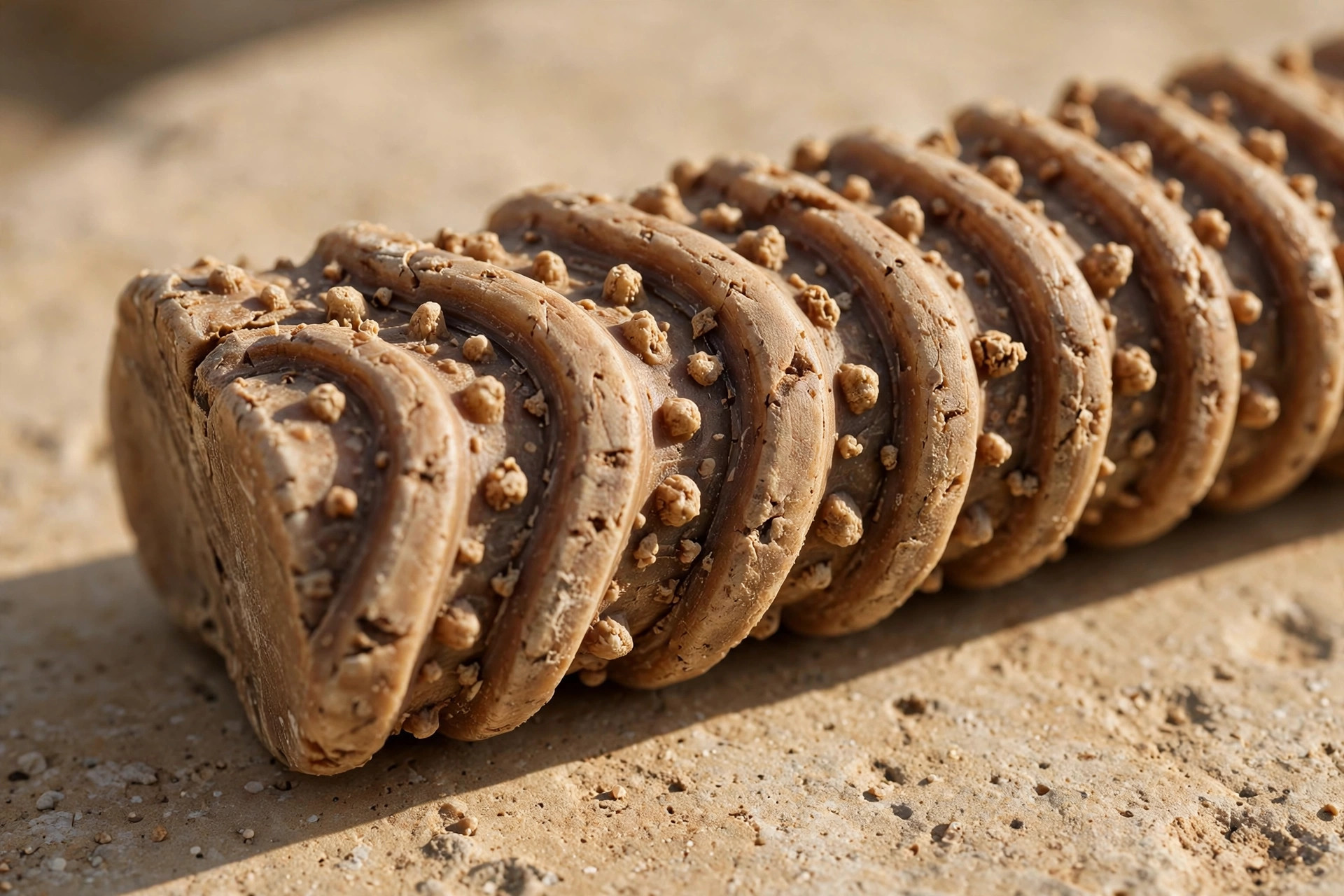
- Texture that scrubs. Ridges, nubs, or a dense chewy consistency that keeps the dog chewing — not something swallowed in two bites.
- Right size. Too small and it’s a choking risk; too big and small dogs give up. Match the chew to your dog’s weight.
- Clean ingredients. No xylitol, no mystery “animal digest” fillers. You should recognize most of the label.
How we evaluate
We checked VOHC’s published accepted-products list — the seal is only awarded after independent clinical trials show real plaque or tartar reduction. We compared ingredient panels for red flags like xylitol, excessive sugars, or vague “animal digest” fillers that signal a low-quality formula. We also weighed thousands of owner reports on palatability and stomach tolerance, since a dental chew only works if the dog actually chews it daily.
Pros
- Clinically proven. The VOHC seal means independent researchers verified actual plaque and tartar reduction — the only claim on the bag worth trusting. No other dental-chew marketing badge carries this weight, which is why vets consistently point to the VOHC list first.
- Lasts minutes, not seconds. Dense chewy texture keeps dogs working, which is where the mechanical cleaning happens. A chew that disappears in two gulps does almost nothing; sustained gnawing is what scrubs the tooth surface.
- Widely available. Multiple sizes in most pet stores — no hunting for specialty shops. That matters because consistency beats perfection: the best chew is the one you can actually buy every month.
Cons
- Premium price. VOHC-sealed products cost more than generic chews, and daily use adds up in multi-dog homes. Budget for it like a subscription — because that’s effectively what daily dental care is.
- Not for gulpers. Dogs who swallow without chewing get little benefit — and a potential choking risk. If your dog inhales treats whole, size up or choose a larger format that forces actual chewing.
Start here. The VOHC seal does the vetting for you.
Pick 2
Best for picky dogs: Highly palatable enzymatic chew
What to look for
- Real flavor appeal. Meat-based coatings or natural flavors dogs get excited about — not vague “savory” claims.
- Enzymatic action. Enzymes continue breaking down biofilm after chewing stops, extending the benefit.
- Softer texture. Important for seniors or dogs with sensitive teeth who avoid hard chews.
- Digestibility. Should break down fully in the stomach — no hard chunks passing through.
How we evaluate
We filtered for enzymatic formulas with strong palatability reports from owners of notoriously picky dogs — if a fussy eater rejects it, the formula is useless regardless of ingredients. We then checked digestibility complaints across review platforms, looking for patterns of stomach upset or incomplete breakdown. Finally, we noted which products vets actually mention by name in dental-care discussions, since clinical familiarity is a meaningful signal.
Pros
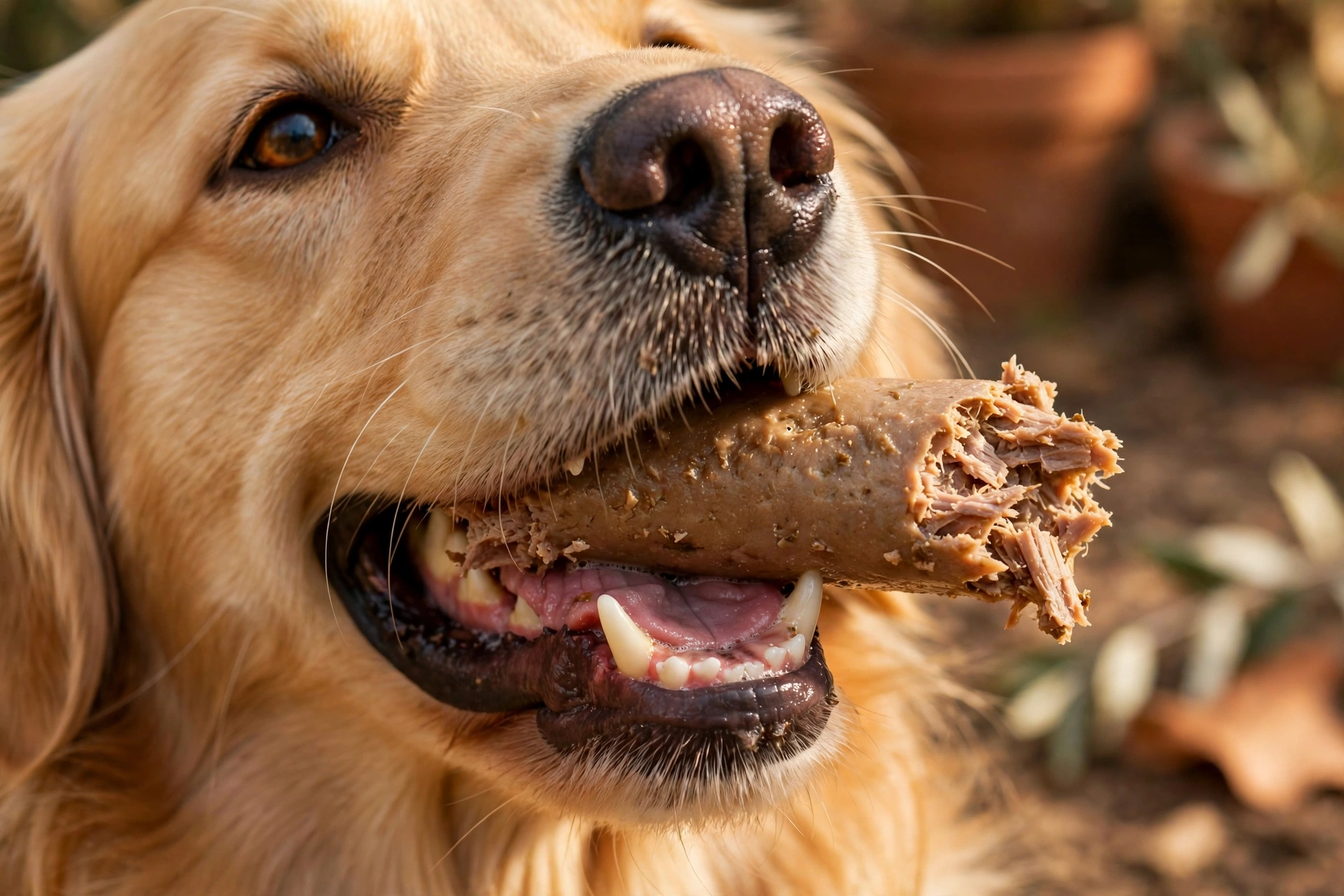
- Dogs actually eat them. The number-one failure mode of dental chews is the dog ignoring them. These solve that — meat-based flavoring and softer texture mean even picky dogs engage, and an eaten chew always beats a perfect one left in the corner.
- Gentle on teeth. Softer texture suits seniors and dogs with dental sensitivity who can’t handle hard chews. Older dogs with worn teeth or early gum disease can still get daily dental maintenance without pain.
- Enzymes keep working. The active ingredients continue acting on biofilm even after the chewing session ends. That extended action partially compensates for the softer texture’s reduced mechanical scrubbing.
Cons
- Less scrubbing action. Softer chews don’t mechanically clean as aggressively as dense ridged ones. If your dog tolerates harder textures, you’ll get more plaque removal per minute of chewing from a firmer product.
- Higher calorie count. Tastier usually means more calories — factor into daily food portions. For small dogs on strict diets, even a daily chew’s calories deserve a line in the meal plan.
If your dog ignores most dental chews, palatability wins over perfect texture.
3. Best budget: Basic ridged dental stick
What to look for
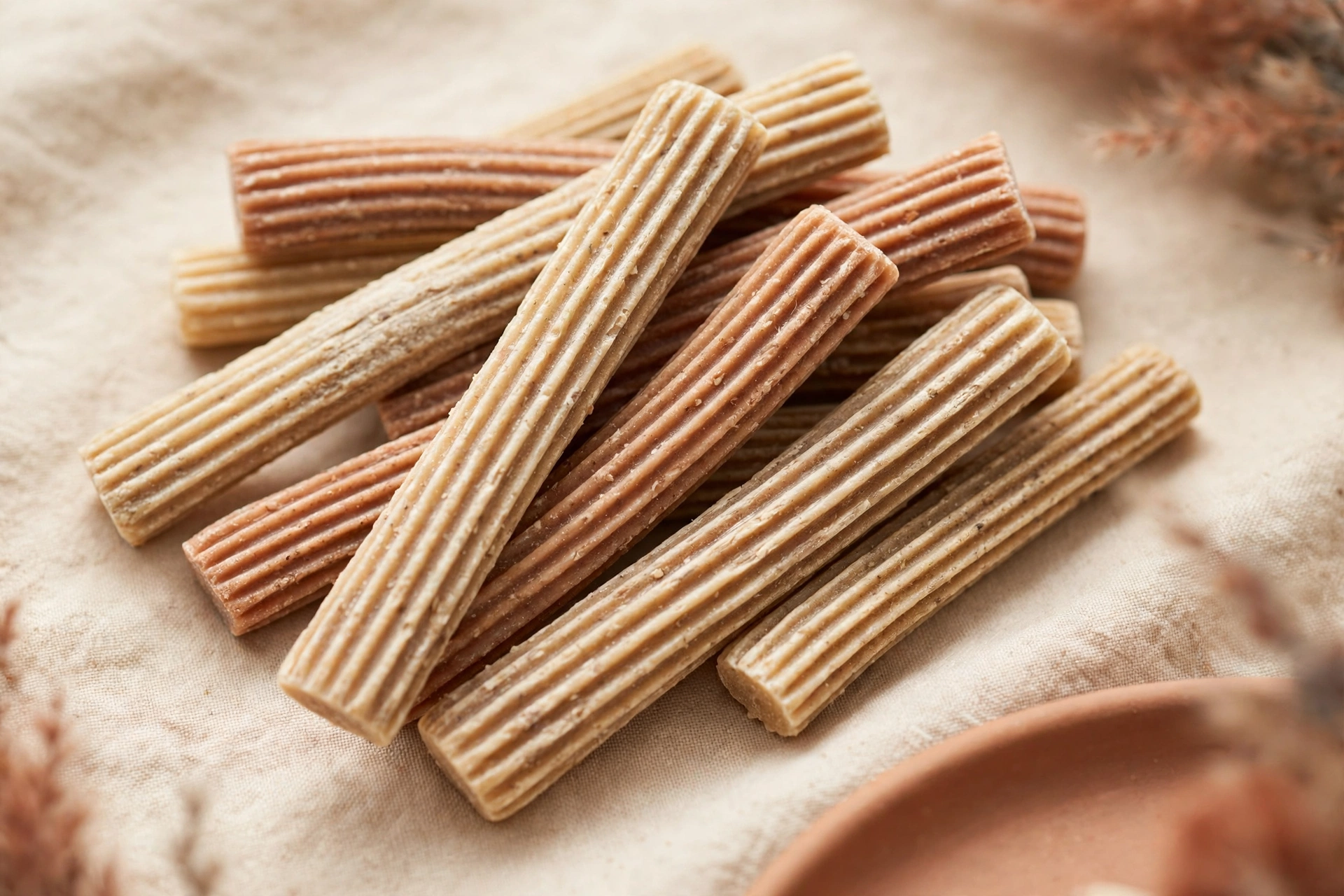
- Defined ridges. Shallow decorative bumps do nothing. Look for deep, pronounced ridges that actually contact tooth surfaces.
- Simple ingredient list. At budget prices, avoid products compensating with artificial colors and excess fillers.
- Appropriate hardness. Should give slightly under pressure — rock-hard sticks risk tooth fractures.
- Value pack sizing. Cost per chew matters when you’re giving one daily.
How we evaluate: We compared ridge depth and durability across budget options, calculated cost per daily chew, and checked for the ingredient shortcuts common at low price points. Deep, pronounced ridges that actually contact tooth surfaces scored well; shallow decorative bumps did not. We also verified that hardness gives slightly under pressure — rock-hard sticks risk tooth fractures.
Pros
- Real cleaning on a budget. Deep ridges provide genuine mechanical scrubbing at a fraction of premium prices. The design does the work here, not expensive certifications or marketing.
- Daily use becomes affordable. Consistency beats intensity in dental care — a cheap chew given daily outperforms an expensive one given weekly. Low per-unit cost removes the temptation to skip days.
- Great for multi-dog homes. The math works when you’re buying for three mouths, not one. Value packs bring the monthly cost in line with a single premium bag.
Cons
- Rarely VOHC-sealed. Budget brands usually skip the certification process, so you’re trusting the design, not clinical proof. The ridges look right, but no independent lab has verified the plaque-reduction claim.
- More crumbly. Cheaper binding means more mess on the floor and faster consumption. Dogs finish them quicker, which slightly reduces the mechanical cleaning time per chew.
Verdict: Daily use matters more than premium branding. An affordable chew given every day beats an expensive one given weekly.
🔍 Check xylitol on Eaoae
FAQ
Do dental chews replace brushing?
How often should I give dental chews?
Are rawhide chews good for teeth?
This article was created with AI assistance and reviewed by our editorial team before publishing.
 5 Best Training Treats for Small Dogs (2026)
 5 Best Cat Treats for Picky Cats (2026)
 How to Choose Pet Gear That Actually Works: The Honest Buyer’s Guide